
That's the frustrating part of yard drainage. Neglected outdoor drains can contribute to erosion, standing water, damp soil near the foundation, odors, and landscape damage. Washington State University lists ponding, water running across the yard, and downspout overflow as signs of a site-drainage problem.
This guide covers yard drain types, warning signs, common clog causes, safe DIY checks, maintenance timing, cost factors, and when to call a professional.
Key Takeaways
- A clear grate doesn't guarantee a clear line; slow drainage often signals a deeper blockage, roots, or damaged pipe.
- Clear visible debris, run a gentle hose test, and skip chemical cleaners and powered equipment.
- Cleaning frequency depends on your trees, soil, drain design, and clog history.
- Get an inspection and written price before work starts if clogs keep returning.
What Yard Drain Cleaning Involves
What counts as a yard drain?
Yard drains collect rainwater from low spots such as lawns, patios, driveways, garden beds, and areas near a foundation, then send it somewhere safe. The common types:
- Catch basin: a grated box at grade with a lower sump that collects sediment and debris
- Grated area drain: often a domed grate that keeps leaves and mulch out of the opening
- Channel drain: a long, narrow grate that collects runoff across a wide area
- French drain: perforated pipe in gravel, usually wrapped in filter fabric
- Downspout connection: an adapter that sends roof runoff into underground pipe
Performance depends on the whole chain: grate, basin, buried pipe, cleanout or inspection point, and outlet. Clearing the visible opening won't fix a problem farther down the line.
Why clean outdoor drainage systems?
Working drainage helps limit standing water, erosion, slippery surfaces, and water moving toward structures. The EPA advises grading ground away from the foundation and notes that mold needs moisture to grow. Persistent dampness is a mold-friendly condition, though not every drainage problem leads to mold.
Cleaning won't prevent every kind of water damage. It only works if the system is sound.
Cleaning versus repair or redesign
Cleaning removes debris and buildup. Repair addresses cracked, separated, collapsed, or root-damaged pipe. Poor grading, undersized drains, or a blocked discharge point may call for a broader fix.

Signs, Causes, and When a Clog Signals Pipe Damage
Visible signs of a clogged yard drain
- Water standing over the grate
- Slow drainage after ordinary rain
- Bubbling or gurgling
- Mud coming back up through the grate
- Foul odors
- Soggy strips along the pipe route
- Water surfacing in unexpected parts of the yard
Compare how the drain behaves after normal rain and after a heavy storm. One puddle may be temporary saturation. Recurring pooling means the system needs a closer look.
Common causes of frequent clogs
Usual culprits include:
- Leaves, pine needles, and grass clippings
- Mulch, trash, sediment, and soil
Catch-basin sumps collect sediment by design. County guidance from San Diego notes that accumulated sediment, vegetation, and debris can back up drainage and contribute to flooding.
Roots are another factor. A 2019 PVC root-entry study found that roots exploit existing cracks rather than creating them. That was an experiment, not a measure of how common it is in home yards.
Debris keeps returning when:
- Grates are missing or left exposed
- Loose mulch sits near inlets
- Slopes are inadequate
- Runoff from hard surfaces carries material in
Signs the blockage may be underground or structural
Get a professional diagnosis if:
- The grate is clear but water still backs up
- A hose test gives little or no flow
- Dirt keeps emerging from the pipe
- The same area stays soggy
- The clog returns soon after cleaning
The cause might be:
- A clogged pipe or blocked outlet
- Backflow from a connected stormwater system
- Bad grading
- A collapsed or separated line
Inspect the full route instead of repeatedly treating the nearest opening.
Before you call, document:
- Where water pools and which drains are affected
- How long it lasts after rain
- What the outlet looks like
- Nearby trees
- Any prior repairs
How to Clean a Yard Drain Safely
Safe first steps for homeowners
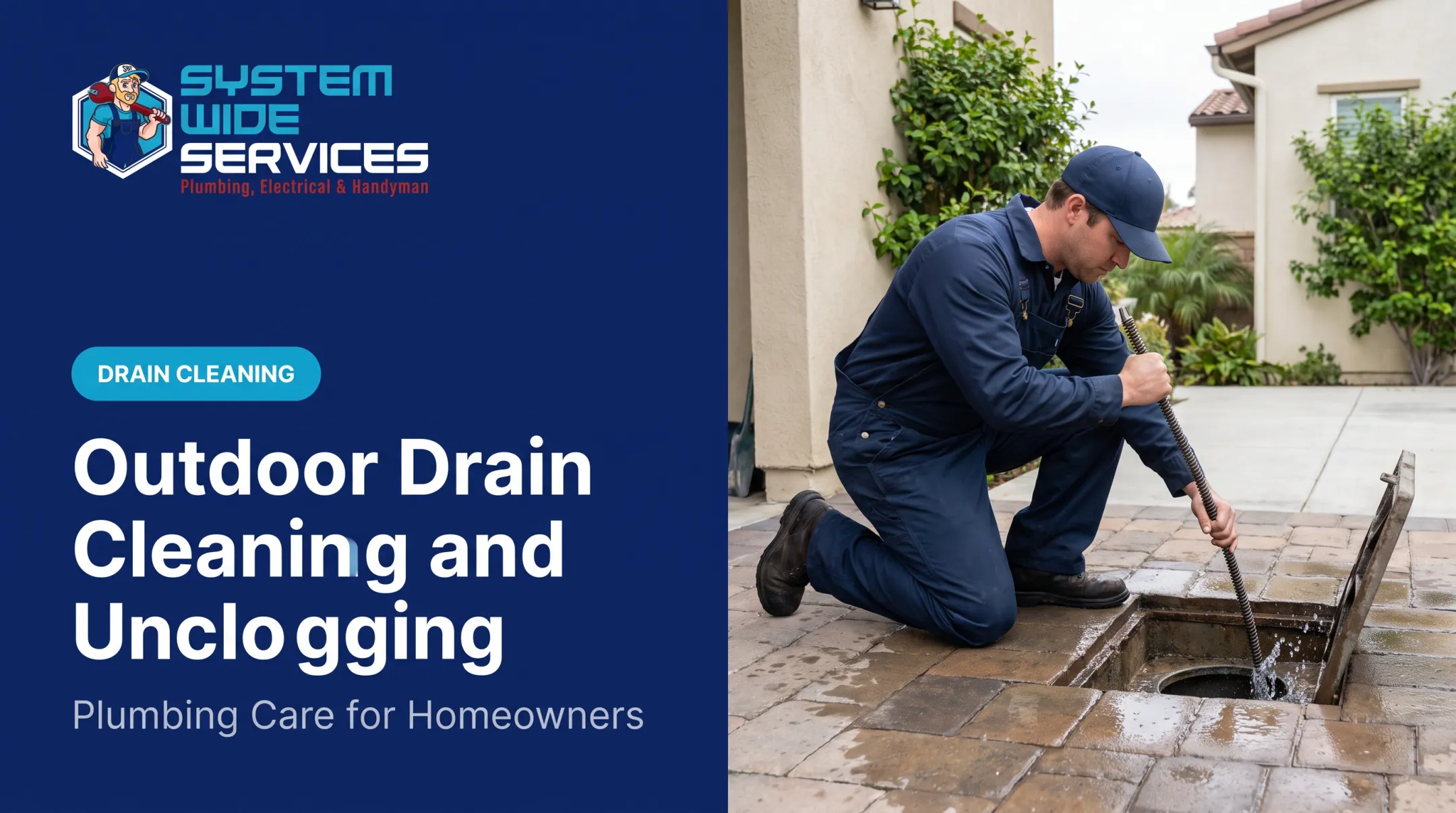
Wear gloves and eye protection, and get stable footing. Remove the grate only if you can do it safely. Clear leaves, sticks, and mulch by hand or with a small scoop, and don't reach into an unstable basin.
Look for an accessible cleanout or outlet. Use a gentle garden-hose flow only if water has somewhere safe to go. Stop if water rises, backs up toward the house, or starts undermining soil.
Testing whether the drain is flowing
Watch the inlet and the outlet during a cautious flow test. Does water move freely, drain slowly, or never reach the discharge point?
Manufacturer NDS describes pushing a hose into a surface-drain inlet to break up compacted sediment. That's a limited procedure, not a standardized pass/fail test. A successful flush doesn't prove the whole line is sound, especially if wet ground persists along the buried pipe.

Methods that require caution
Hand tools, professional augers, and hydro-jetting all depend on pipe diameter, material, access, clog type, and condition. A plastic-pipe industry guide warns that high-pressure jetting can damage any pipe material if mishandled, and assumes pipe in good condition. Forceful equipment is a risk in corrugated, cracked, separated, or fragile lines.
Skip chemical drain cleaners. They rarely clear sediment, roots, or structural problems, and they raise safety and environmental concerns. MedlinePlus lists corrosive ingredients such as lye and sulfuric acid in drain openers.
When professional cleaning is the safer choice
A pro can inspect the basin, cleanout, outlet, and underground route. Camera inspection, mechanical cleaning, or hydro-jetting make sense only if the provider confirms the method suits your specific pipe.
Call for help when:
- The clog is deep
- Water is approaching the foundation
- Multiple drains are affected
- Roots are suspected
- The pipe may be damaged
- DIY testing causes immediate backup
How Often to Clean and Prevent Recurring Clogs
Build a site-specific schedule
There's no single interval. Base your timing on site conditions such as:
- Tree cover and leaf load
- Loose soil, mulch, and sediment
- Storm intensity and drain age
- Pipe design and clog history
San Diego County recommends inspecting private drainage before each rainy season (October to April) and after storms. NDS suggests cleaning a catch-basin sump at least twice a year.

Check more often with heavy leaf fall, recurring sediment, mature trees near buried lines, or drains serving large paved areas.
Reduce debris entering the system
- Keep grates visible and clear leaves before they wash in
- Keep mulch and soil away from inlets
- Trim and maintain nearby landscaping
- Use guards or screens that don't restrict needed flow
- Keep outlets and cleanouts accessible
Don't redirect runoff onto a neighbor's property or change drainage routes without checking local requirements. California courts apply a reasonableness standard to altered drainage between parcels.
Your 2026 yard drain checklist
- Inspect grates before the wet season
- Remove visible debris
- Observe the outlet during rain
- Recheck after major storms
- Log recurring symptoms and dates
- Book a professional evaluation if cleaning doesn't restore flow
Cost and Choosing a Yard Drain Professional
What determines cost?
Pricing varies with several job factors:
- Local labor rates and site access
- Clog severity, pipe length, and diameter
- Sediment or root buildup
- Equipment, camera inspection, excavation, and disposal
- Any repairs needed
A reliable national price range for yard drain cleaning is hard to find, so ask for a quote based on your site.
A surface clearing differs from underground cleaning, root treatment, pipe repair, or redesign. Compare scope, not just the lowest advertised price.
What a professional estimate should include
Ask whether the quote covers:
- Inspection and cleaning
- Equipment and any travel or emergency charges
- Repair recommendations
- Cleanup and follow-up testing
- Warranty terms
- Possible additional work
Get the price approved before work begins. If the method changes after inspection, ask for an explanation. California's contractor board (CSLB) says home-improvement work over $500 needs a written contract, and recommends comparing at least three written bids with the same scope.
How to evaluate a company
Before you hire, verify:
- Licensing, insurance, and technician qualifications
- Experience with outdoor drainage systems
- Reviews for comparable yard or outdoor drain work
- How the crew will protect landscaping
- How they decide between cleaning and repair
System Wide Services is a licensed California plumbing contractor (CSLB #1108115) based in Cerritos, serving Long Beach and 25+ cities in Los Angeles and Orange counties. It offers upfront flat-rate pricing approved before work begins, same-day appointments, insured and background-checked technicians, and a 100% Service Guarantee.
Drain work includes camera inspection before hydro-jetting. Call (562) 269-4747 to confirm current yard drain availability.
Frequently Asked Questions
How much does yard drain cleaning cost?
Access, clog severity, pipe length, equipment, inspection needs, local labor rates, and any repairs all affect the price. Request an upfront scope and flat-rate quote before work begins.
How often should yard drains be cleaned?
Debris load, nearby trees, soil type, storms, drain design, and past clogs set how often you need service. Inspect before rainy seasons and after major storms.
What causes frequent clogs in yard drains?
Leaves, mulch, sediment, soil, roots, damaged pipes, poor slope, blocked outlets, and debris entering through an uncovered or damaged grate.
Can I clean a yard drain myself?
Removing visible debris and running a cautious flow test is reasonable. Deep clogs, backups, roots, damaged piping, and unsafe access need professional evaluation.
When should I call a professional for a clogged yard drain?
Call when water approaches the home, multiple drains back up, the clog returns, you can't find the outlet, or cleaning doesn't restore normal flow.