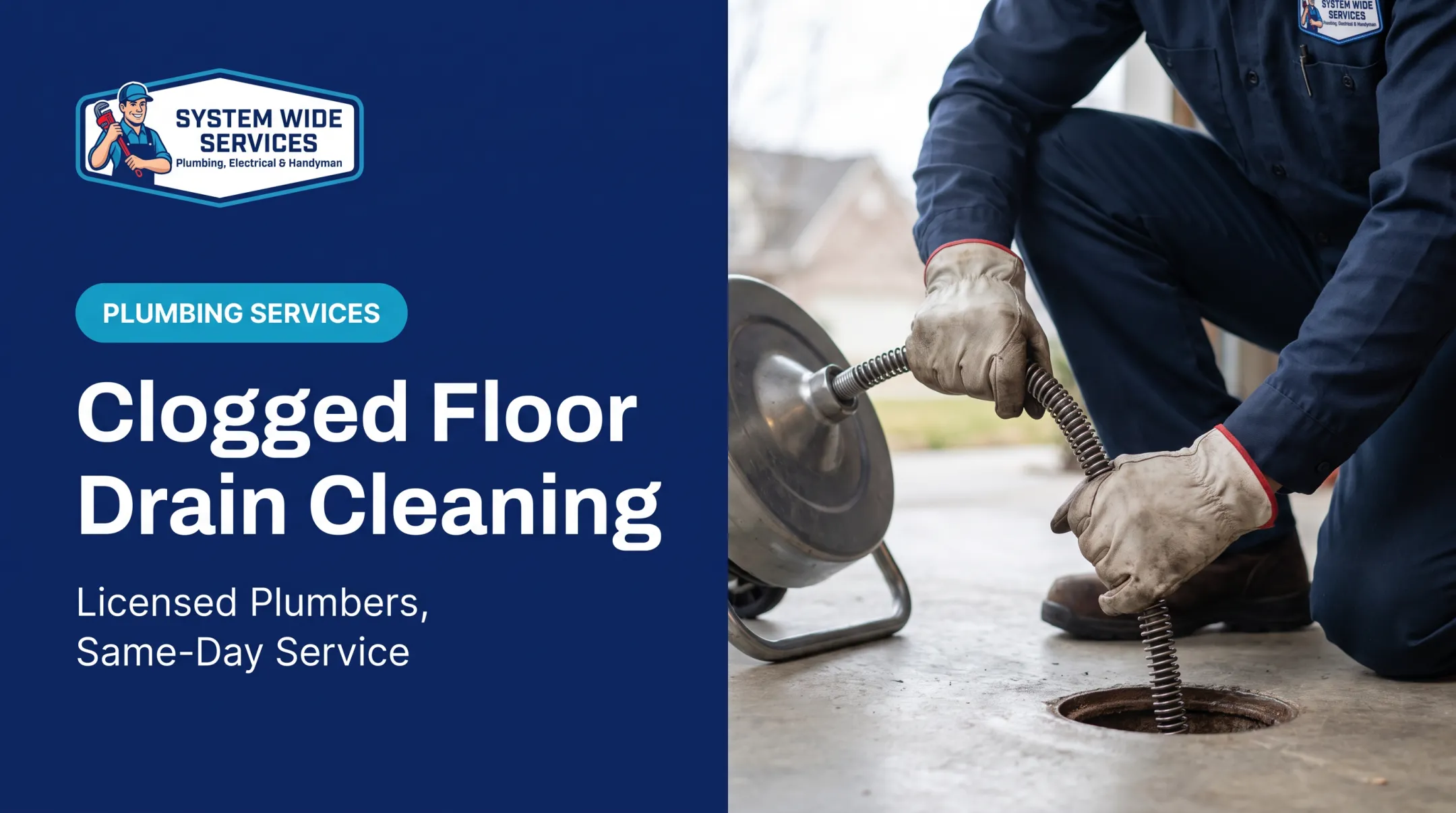

The grate you can see is rarely where the real blockage sits. Leaves on top may be the symptom, while roots, a sagging pipe, or a collapsed joint further down are the cause.
This guide covers the common outdoor drain types, safe checks you can do yourself, what a professional cleaning should include, cost factors, and when to call a licensed plumber.
Key Takeaways
- Clear visible debris from grates and basins, but don't push material deeper into the line.
- Stop DIY work if water rises, sewage appears, or several drains back up.
- Good professional service identifies the line, picks a method, and confirms flow to the outlet.
- Cost depends on drain type, access, severity, equipment, and repairs.
Why Outdoor Drains Clog and How to Recognize the Problem
Know which drainage system is affected
Outdoor drainage isn't one system. Each part may need a different cleaning approach:
- Yard drains and catch basins: grated inlets with a sump and outlet pipe that collect stormwater from driveways and other paved areas.
- Trench or channel drains: narrow troughs with a grate for surface runoff.
- French drains: gravel-filled trenches with perforated pipe, which can take buried downspouts.
- Downspout lines: pipes carrying roof water away.
- Cleanouts: capped access points. Identify whether one serves a storm line or a sewer line before opening it.
Stormwater and sanitary sewer lines are usually separate. Virginia Tech Extension notes stormwater typically discharges untreated, while sanitary wastewater goes to treatment.
That's why a sewage odor or wastewater backing into the house calls for urgent professional help. Combined sewers exist in some cities, so don't assume.
Common causes of blockages
Surface debris is the easy culprit: leaves, twigs, mulch, litter, mud, and eroded sediment entering through grates or gutters. Grease and waste from connected plumbing can add to it.
Deeper causes won't respond to surface cleaning:
- Tree roots entering cracked joints
- Separated or offset pipe sections
- Poor slope or settling soil
- Bellies (sags) that trap debris
- Collapsed lines
In older Southern California neighborhoods, roots seek moisture and work into joints, then expand and block or break the line. Ground movement can also shift and separate pipe over time.
Warning signs of a deeper problem
- Pooling water or slow drainage
- Gurgling sounds and foul odors
- Overflowing grates
- Soggy, sunken, or unusually lush strips along a buried pipe route
- Blockages that keep returning
- More than one drain affected
After rain, compare the problem area with the rest of the yard. Don't rely on a fixed drying time. If symptoms recur or get worse, get the line inspected.
Why prompt cleaning matters
Blocked drainage leads to flooding, erosion, landscape damage, and water intrusion. WSU Extension notes that runoff around foundations can cause significant damage over time. Standing water also disrupts driveways, walkways, and commercial entrances.
How to Safely Clean and Unclog an Outdoor Drain
Prepare first
- Wear gloves and eye protection.
- Keep children and pets away.
- Never climb into a catch basin or drain opening. OSHA classes sewer spaces as potential confined spaces with oxygen, gas, and engulfment hazards.
- Watch for heavy grates, traffic, contaminated water, and soft ground.
Skip chemical drain cleaners. Storm drains carry runoff to waterways untreated, so household chemicals don't belong in them. Mixed chemicals can also injure the technician who opens the line later.
Clear visible debris
- Lift the grate only if you can do it safely.
- Remove leaves, mud, mulch, litter, and sediment from the opening.
- Check any basket, trap, or basin sump. A full sump may be the whole problem.
- Bag the debris. Don't wash it downstream.
Test with a hose, carefully
Once you've found a safe outlet and confirmed water isn't already backing up, run a gentle hose test and watch where it discharges. Stop immediately if water:
- Rises or pools around the grate
- Heads toward the structure
- Doesn't appear at the outlet
Forcing more water in makes things worse.
Use hand tools cautiously
A manual auger or drain rod may clear a short, accessible blockage. Don't force it into fragile, corrugated, cracked, or unknown pipe. Powered augers and pressure washers can damage pipe, get stuck, or push roots and debris deeper.
Know when to stop
Call a professional when you encounter:
- Sewage or heavy standing water
- Sharp debris or recurring roots
- Multiple affected drains or interior backup
- Suspected collapse or an unreachable outlet
What Professional Outdoor Drain Cleaning Includes
Assessment of the whole route
A pro should inspect the inlet, basin or cleanout, buried line, and discharge point, not just the spot where water shows. Expect questions about:
- When it started and whether recent storms made it worse
- Past cleanings, odors, and which fixtures are affected
- Nearby trees and the drainage layout
Inspection before aggressive cleaning
A camera inspection, flow test, or locating equipment shows roots, silt, grease, cracks, offsets, bellies, and collapses. NASSCO's cleaning guideline recommends color CCTV inspection and says owners should be told if cleaning could damage a deteriorated pipe.
Pipe material, age, and condition should decide the method. Clearing a passage doesn't repair a damaged pipe.
Cleaning methods
- Cable or auger: Clears a localized obstruction or single clog
- Hydro jetting: High-pressure water scours grease, sludge, scale, and roots; best for heavy buildup and recurring clogs
- Root cutting: Clears intrusive roots when jetting alone is not enough

Jetting and root cutting need trained technicians and can harm fragile, damaged, perforated, or unknown pipe. At System Wide Services, a camera inspection comes before jetting to confirm the line can take it. Your provider should explain the method before starting.
Basin and sediment removal
Cleaning only the buried pipe leaves a full basin that sends the same sediment back in at the next storm. Crews should contain and dispose of sludge and debris properly, especially if sewage or pollutants are present.
Flow verification and next steps
After cleaning, the provider should test flow from inlet to outlet and, when appropriate, re-camera the line. Findings may point to a spot repair, root treatment, lining, replacement, grading correction, or a maintenance schedule. That beats repeated blind cleanings.

When to Call a Plumber and What Affects the Cost
Situations that warrant prompt help
- Sewage backup or water entering the home
- Rapid overflow near the foundation
- Several blocked drains
- Persistent foul odor
- Suspected pipe collapse
- Electrical hazards near water
Landlords, property managers, and restaurant operators should escalate recurring failures fast. Backups affect tenants, customers, inventory, and access. Responsibility for private lines is local. Riverside, California, for example, makes owners responsible for the private lateral to the property line.
What drives cost
Price depends on:
- Drain type and blockage material
- Depth and access
- Labor and urgency
- Equipment and camera inspection
- Sediment removal and disposal
- Roots or structural repairs
No universal price exists. For reference only, Angi's 2026 estimate puts sewer-line hydro jetting at $350 to $600 per visit, averaging $475. Complex jobs can reach $2,000. That range covers sewer lines, not yard or French drains, and it is indicative only, not a quote.

Comparing estimates
Ask whether the estimate covers:
- Diagnosis and basin cleaning
- Line cleaning and flow testing
- Camera work
- Cleanup and disposal
- Emergency premiums
- Recommended repairs
Verify licensing and insurance, and ask about warranty terms. In California, the CSLB advises checking the license number and requesting proof of insurance. A trustworthy company shows you the evidence for a repair recommendation instead of offering a vague "blockage" explanation.
How to Prevent Recurring Outdoor Drain Blockages
Build a maintenance routine
- Check grates, basins, gutters, downspouts, and outlets before major rain and after leaf fall or severe storms.
- Keep cleanouts accessible so lines can be opened quickly when a backup starts.
- Use suitable screens or covers on basins and outlets to block leaves and debris.
- Control nearby vegetation and fix runoff paths that wash soil into drains.
Frequency varies. Check more often during heavy leaf drop and after severe weather. Trees, debris load, drain design, and storm exposure should set your schedule.
Improve habits around the property
Keep grease, oil, food waste, wipes, and paper products out of plumbing. EPA lists fats, oils, grease, and some "flushable" wipes among sewer blockage causes. Indoor waste can end up in exterior lines.
Don't hack at landscaping to deal with roots. Recurring intrusion means a damaged pipe or open joint that needs diagnosis.
Keep records and choose a provider
Log the date, symptoms, weather, material removed, method, camera findings, and repair advice. Patterns show a chronic problem instead of isolated clogs.
For homeowners, landlords, and property managers in Los Angeles and Orange counties, System Wide Services is one option for an evaluation. It is a California-licensed plumbing contractor (CSLB #1108115) with insured technicians, upfront flat-rate pricing approved before work begins, and same-day appointments.
Its 100% Service Guarantee applies to its own work.
Frequently Asked Questions
How much does outdoor drain cleaning cost?
It depends on drain type, access, blockage severity, equipment, inspection needs, urgency, and whether pipe repairs are needed. Ask for a written flat-rate scope before work begins.
Can I clean an outdoor drain myself?
You can remove visible debris and do a cautious hose test. Call a professional for sewage, standing water, recurring blockages, roots, or unknown pipe conditions.
How do I unclog a landscape drain?
Remove the grate and debris, check the basin and outlet, and stop if water backs up. Deeper or recurring clogs need professional inspection and compatible equipment.
What causes outdoor drains to keep clogging?
Recurring debris, sediment, roots, grease, poor slope, and damaged, collapsed, or offset pipe are common causes. Surface cleaning won't fix damaged, collapsed, or offset pipe.
When should I call a plumber for an outdoor drain?
Call for overflow, sewage odor, interior backup, multiple affected drains, repeated clogs, suspected roots, damaged pipe, or a failed DIY attempt.
How often should outdoor drains be cleaned?
It depends on trees, debris, drainage design, storm exposure, and blockage history. Do routine visual checks and schedule professional maintenance based on what you find.