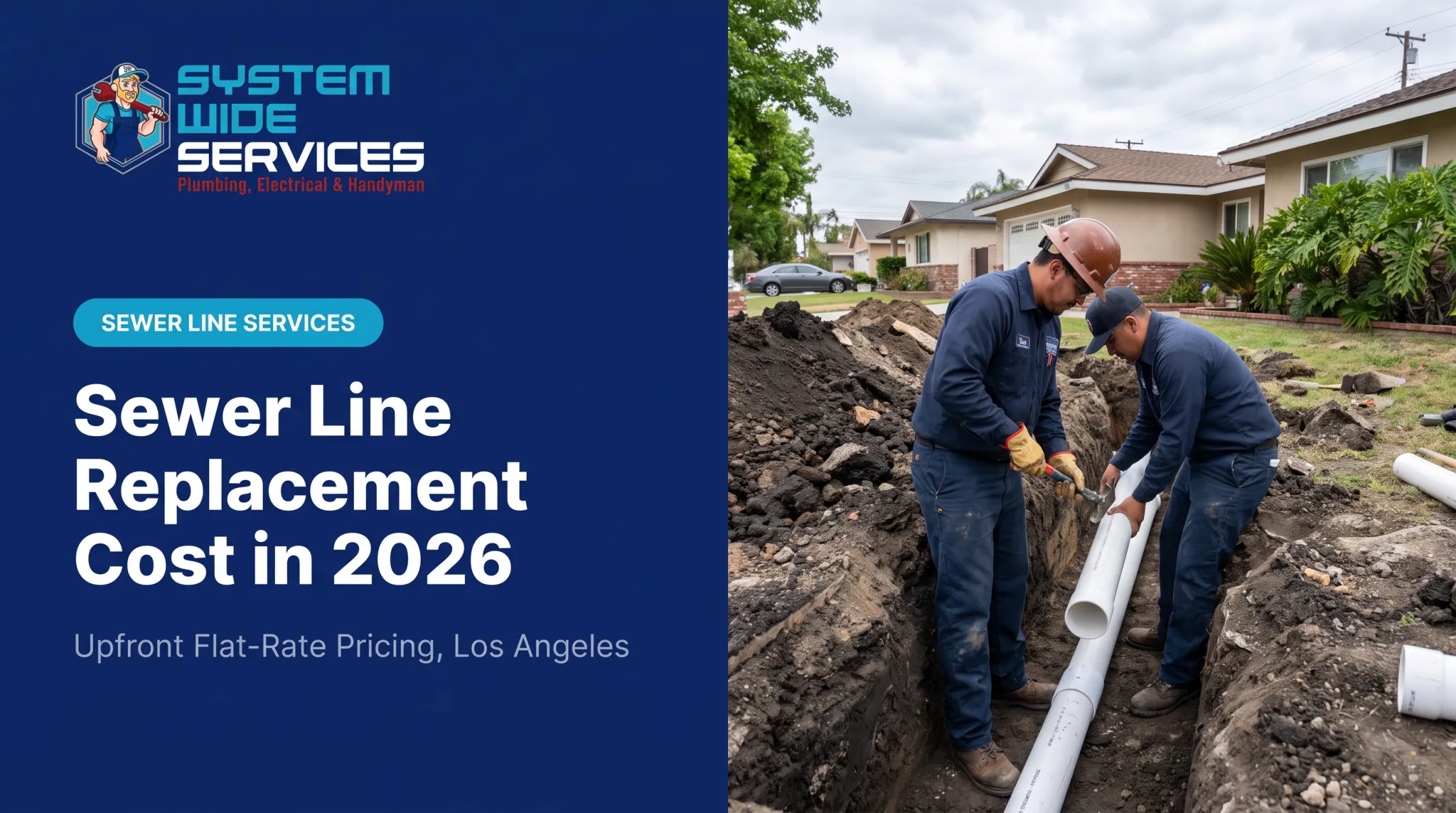

Cost swings widely because every line is different. Length, depth, access, repair method, pipe material, labor, permits and restoration all change the number. No authoritative national price survey exists, so the ranges below come from one 2026 Bay Area contractor guide. Treat them as planning figures, not quotes.
This article covers pricing ranges, warning signs, repair versus replacement, cost components, insurance and how to compare written quotes.
Key Takeaways
- Costs vary by method, so use ranges for spot repair, trenchless and open-trench work, not one average.
- Extent of collapse, footage, depth, access and restoration drive the price.
- A camera inspection separates a collapse from a clog or roots before anyone digs.
- The cheapest quote can cost more if it leaves out permits, cleanup or landscaping.
How Much Does a Collapsed Sewer Line Repair or Replacement Cost?
There is no fixed price. The job might be one accessible section or a deep run from the house to the municipal connection. Regional labor rates and site conditions can push the final quote up or down.
Typical Cost Ranges
These figures come from American's Plumbing, a Bay Area contractor's 2026 guide:
| Service | Published range |
|---|---|
| Camera inspection | $200-$500 |
| Spot repair (one failed section) | $1,500-$5,000 |
| Pipe lining | $130-$275 per linear foot |
| Pipe bursting | $120-$250 per linear foot |
| Open-trench replacement | $100-$200 per linear foot |
| Overall lateral replacement | $7,000-$18,000 |
The guide lists permits ($500-$2,500) and concrete or driveway restoration ($2,000-$8,000) separately. Don't assume per-foot rates cover permits, restoration, or cleanup. Always ask what the quote includes.

Localized or Spot Repair
A spot repair typically means exposing one damaged section, cutting out the failed pipe, installing a replacement piece, testing, backfilling and restoring a small area.
It fits when the camera shows one contained defect and the rest of the line is structurally sound. If other sections are deteriorating, a spot repair just postpones the next dig.
Trenchless Sewer Line Replacement
Trenchless work uses one or two small access pits instead of a long trench.
- Pipe lining cures a resin-saturated liner inside the existing pipe. It needs a reasonably intact host pipe.
- Pipe bursting fractures the old pipe while pulling new pipe through its path, so it can handle a more badly damaged line when access allows.
A 2024 Milpitas handout says lining shouldn't be used on collapsed or compromised piping, though that is local guidance.
Ask whether access pits, reconnections, permits, cleanout work and surface restoration are in the price.

Traditional Excavation and Full Replacement
Crews trench along most or all of the line, remove the failed pipe, install new pipe, test, backfill and restore the site.
These factors can push a job well past a basic estimate:
- Deep trenches
- Concrete or asphalt removal
- Utility conflicts or difficult soil
- Long runs and sewage remediation
Open excavation is also the practical choice when the pipe's slope or path must change, or when the pipe is too crushed for a liner or bursting.
How Is a Collapsed Sewer Line Diagnosed and Repaired?
Symptoms alone can't confirm a collapse. Get the line assessed before committing to excavation.
Signs That May Point to a Collapsed Sewer Line
- Several fixtures backing up at once
- Recurring main-line blockages
- Gurgling drains or toilets
- Sewage odors indoors or in the yard
- Wet, soggy or sunken ground
- Sewage surfacing in the yard
- Drains that suddenly stop accepting water
A single slow drain is usually a local clog. But these signs also fit root intrusion, a belly in the pipe or a cracked section, so call a professional rather than guessing.
Sewer Camera Inspection
A camera run shows where the damage is, how severe it is, the pipe material and the likely cause. It also tells a collapse apart from roots or removable debris. Industry grading separates structural defects such as cracks and collapse from roots and deposits, per NASSCO's training material.

Ask for the footage or a written diagnosis that identifies the affected section and explains why repair, lining, bursting or excavation is proposed.
Repair Versus Replacement
A contained crack or isolated break may support a spot repair. Extensive collapse, repeated failures, severe corrosion or multiple damaged sections point toward replacement.
Weigh upfront cost against expected reliability. Not every collapse needs the same method.
Trenchless Versus Traditional Work
Trenchless means fewer access points, less surface disruption and lower restoration costs, but the pipe's condition and path must suit it. Traditional digging disrupts more of the property yet works where trenchless can't.
Safety warning: Deep trenches, contaminated water and buried utilities are dangerous. OSHA names cave-ins as the primary trenching hazard. Leave this to qualified professionals.
Service Across Los Angeles and Orange County
System Wide Services is a California-licensed plumbing contractor (CSLB license #1108115) that offers upfront pricing and starts sewer jobs with a camera inspection. Homeowners in its Los Angeles and Orange County service areas can request an inspection and written quote.
Key Factors That Affect the Cost and Cost Breakdown
The invoice covers far more than pipe. Think of it as diagnostics, construction, restoration and possible follow-up work.
Scope, Length, and Depth of the Damage
Linear feet, number of damaged sections, trench depth and distance to the connection all affect labor, materials, equipment, shoring and disposal.
A short but deep or hard-to-reach repair can cost more than a longer run through an open, shallow yard. Deep digging needs shoring and more hauling.
Location and Accessibility
- Lines under driveways, patios, slabs, trees, fences or structures add breakout and restoration costs
- Buried utility locating adds time before digging can start
- Limited equipment access raises labor hours
- Traffic or pedestrian control may require extra crew and permits
- Tight staging space slows material handling and equipment setup
Pipe Material, Soil, and Site Conditions
Existing and replacement materials affect cutting, removal, compatibility and installation. The 2025 California Plumbing Code, as summarized by Sunnyvale, lists cast iron, copper DWV and Schedule 40 ABS/PVC for sewer piping outside the building. Confirm requirements with your local building authority.
Rock, groundwater, roots, unstable ground, bad weather and contaminated soil can all add labor and equipment.
Labor, Equipment, Permits, and Connections
An estimate may break out:
- Excavation, shoring, hauling and disposal
- Pipe installation, testing and reconnection
- Equipment
- Permits, inspections and utility location
Confirm whether emergency or after-hours labor, temporary bypass, municipal connection work and street permits are included. Permit fees vary by jurisdiction. Los Angeles County's unincorporated-area schedule lists a $41.35 basic fee per plumbing permit, which is not an all-in sewer permit cost.
Property Restoration and Sewage Remediation
Restoration can include backfill, soil, sod, planting, irrigation, concrete, asphalt, pavers and fencing. Interior sewage damage, such as flooring, drywall and deodorizing, usually falls to a separate restoration provider, not the sewer contractor.
Cost Breakdown by Timing
- One-time diagnostics: camera inspection, locating, access and written evaluation. Ask each contractor whether the inspection fee is credited toward repair work.
- One-time construction: spot repair, trenchless or excavation, including materials, labor, equipment, testing, permits and reconnections.
- Future costs: maintenance, follow-up inspections, root management, cleanout upgrades and repairs to older sections left out of scope.
Low-Cost vs High-Cost Repair—and How to Estimate the Right Budget
A low price can mean limited scope and easy access. A high price can mean fuller replacement, tough excavation or complete restoration.
Lower-Cost Sewer Line Work
Lower costs typically fit work with:
- One accessible damaged section
- Limited digging and minimal restoration
- A short run of pipe
- No utility conflicts or contamination problems
The trade-off is coverage. A cheap spot repair only makes sense if the camera confirms the rest of the line is sound.
Higher-Cost Sewer Line Work
These factors raise the total:
- Long or extensively collapsed lines
- Deep excavation, or concrete and asphalt removal
- Multiple connections
- Emergency conditions and full surface restoration
Paying more can be smart when it fixes widespread deterioration, prevents repeat failures, meets code or leaves no excluded work for you to handle.
How to Estimate the Right Budget
Build the budget from the camera report and these job factors:
- Affected footage, depth and access route
- Repair method and pipe material
- Permits and restoration scope
Add a stated contingency for concealed conditions. There is no universal contingency percentage, so have the contract spell out how changes are handled.
Get itemized written estimates from several licensed contractors. California's contractor board CSLB says projects over $500 need a written contract covering the work, payment schedule, permit responsibility, completion date and cleanup. Down payments are capped at $1,000 or 10%, whichever is less. Verify the license online.
Quote-comparison checklist:
- Inspection footage
- Proposed scope and method
- Materials
- Labor and equipment
- Permits
- Restoration and cleanup
- Timeline and payment schedule
- Warranty
- Who handles municipal or shared-line issues
- What can change after excavation
What Most People Miss When It Comes to Collapsed Sewer Line Cost
- The pipe isn't the whole bill. Access, excavation, landscaping, driveway or slab restoration, permits, disposal and sewage cleanup add up.
- A backup isn't a diagnosis. Don't approve full replacement from a slow drain or backup alone. Insist on camera evidence of the structural problem.
- Insurance is policy-specific. AAA's guidance notes that standard policies usually exclude sewer backups. Water backup coverage doesn't fix the line; a service-line endorsement may cover the pipe.
- Waiting costs more. Continued use can worsen backups, contamination and structural damage, and drive up the eventual repair cost.
- Ownership matters. In Los Angeles County, the owner is responsible for the lateral up to the main, including the public right-of-way portion.
Conclusion
Collapsed sewer line costs depend on damage extent, length, depth, access, method, labor, permits and restoration, not just the price of new pipe.
Start with a professional camera inspection, then get an itemized quote that balances affordability, reliability, disruption and long-term value.
Frequently Asked Questions
How do you know if your sewer line collapsed?
Watch for backups in multiple drains, gurgling, sewage odors and wet or sunken ground. Only a camera inspection can confirm a collapse.
Will a collapsed sewer line still drain?
Possibly, if the collapse is partial. But flow can worsen quickly, and slow drainage doesn't mean the line is safe.
Why would a sewer line collapse?
Documented causes include age, corrosion, deteriorated materials such as Orangeburg, and root intrusion at failed joints. Inspection is needed to find the actual cause.
Will homeowners insurance cover a collapsed sewer line?
It depends on your policy, the cause, exclusions and endorsements. Pipe repair and resulting damage are often treated differently, so contact your insurer.
What is the average lifespan of a sewer line?
It varies by material, installation, soil, roots and maintenance. A 2016 Fairfax County response put Orangeburg at about 50 years under ideal conditions and said PVC may exceed 100. Neither is a guarantee.