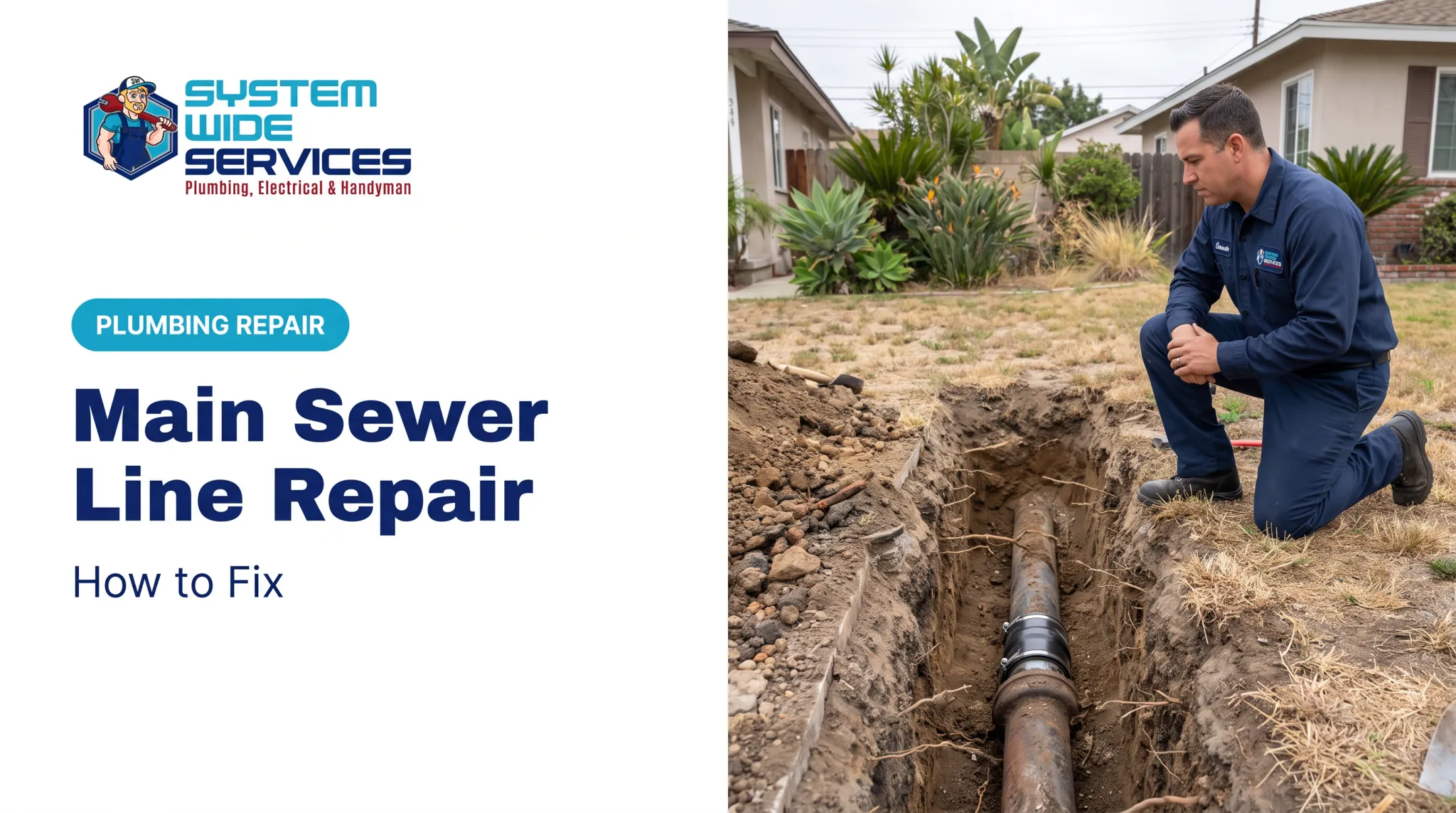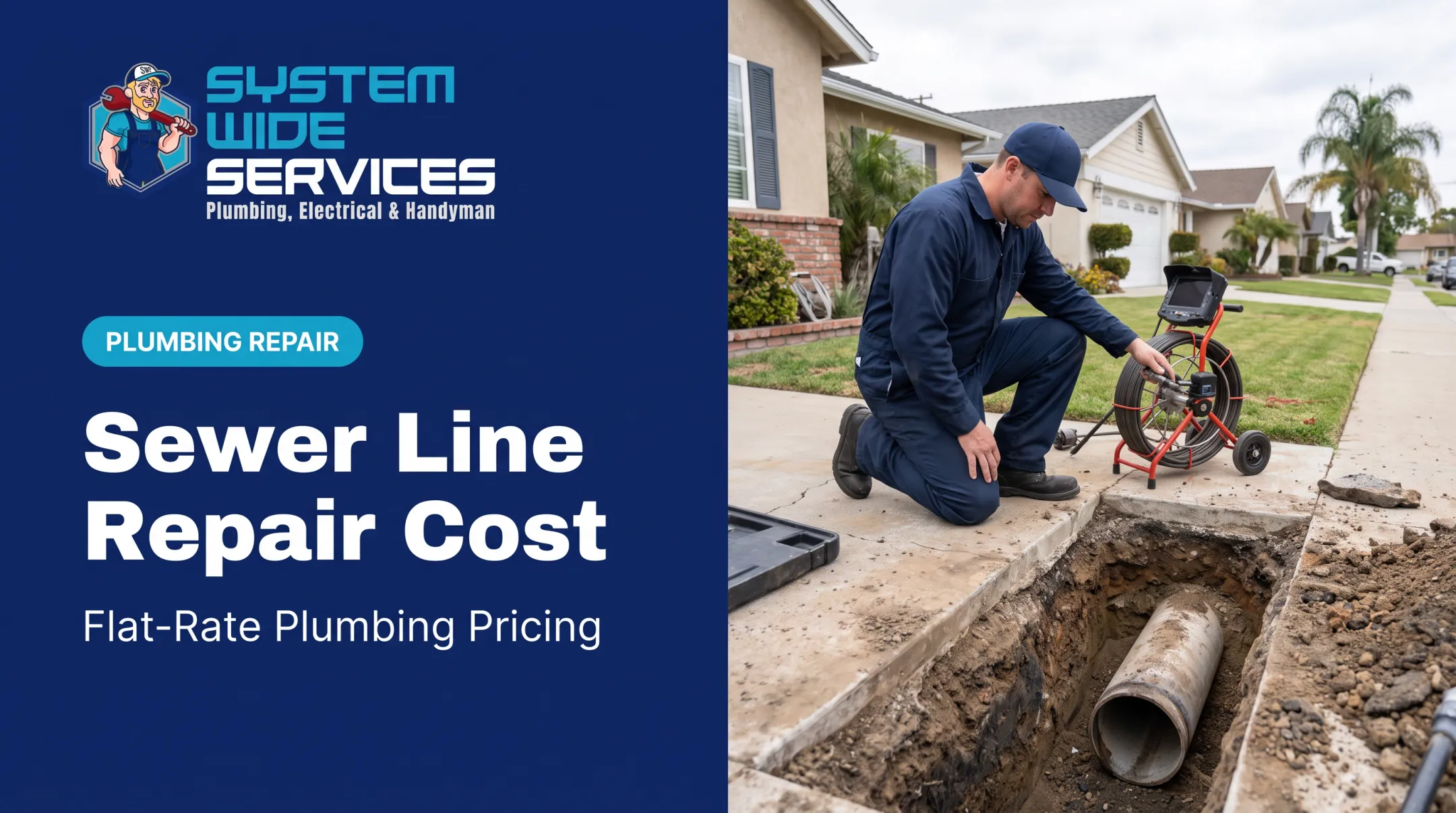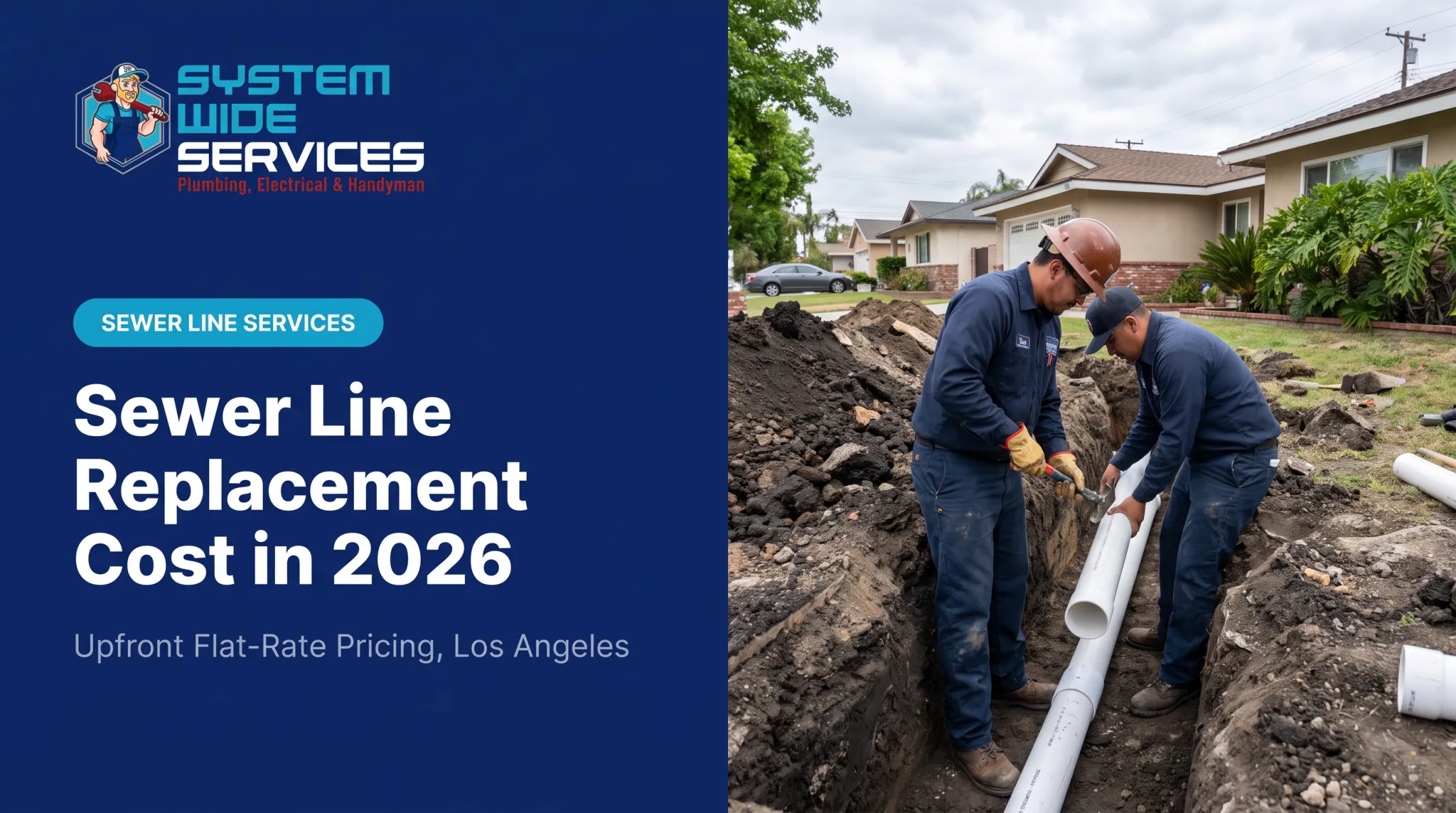

The EPA notes that cracked or broken private laterals can let groundwater and rainwater in and contribute to backups. This guide covers cleaning, spot repair, trenchless lining, pipe bursting, sliplining, internal coating, and open excavation. A camera inspection should guide which one makes sense.
Key Takeaways
- Multiple slow drains, repeat backups, odors, or wet spots signal a main-line problem; only a camera confirms the cause.
- Hydro-jetting clears buildup; it doesn't fix a cracked or collapsed pipe.
- Spot repair, lining, bursting, and excavation each match a different damage type.
- Compare full scope (permits, restoration, testing, warranty), not just the quote.
Recognizing a Sewer Line Problem and Confirming the Diagnosis
Signs that may point to sewer line damage
Watch for these warning signs:
- Several drains running slow or backing up at once
- Gurgling toilets or drains
- Persistent sewage odors
- Backups into tubs, showers, or floor drains
- Soggy or unusually lush patches in the yard, or sinkholes
- Clogs that keep returning after snaking
These signs call for evaluation. They don't prove the pipe has failed.
One slow sink is usually a local clog. When several fixtures back up together, the main sewer line becomes the likelier culprit. Even so, symptoms alone can't confirm where the problem sits.
Why a camera inspection should come first
A sewer camera shows what's wrong, where it is, and how deep the line runs. It can reveal roots, cracks, offset joints, bellies, buildup, and collapsed sections.
Treat the footage as visual condition documentation, not a complete structural test. NASSCO's CCTV guideline calls for viewing joints, tees, and structural deterioration, with the findings documented.
A good inspection should record:
- Pipe material and approximate diameter
- Location and length of the affected section
- Cleanout and other access points
- Line depth, where relevant
- Whether the remaining pipe looks suitable for a localized or trenchless repair
Sewer Line Repair Methods: What Each Option Does
Cleaning and hydro-jetting
Hydro-jetting uses high-pressure water to clear grease, sludge, scale, and some roots. It suits a structurally sound pipe, or serves as prep before lining. It is not a structural repair. NASSCO guidance says owners should be told if cleaning could compromise a weakened pipe.
Spot repair or sectional replacement
A plumber fixes one damaged section with a targeted liner, sleeve, or excavation and replacement. It works best when the defect is isolated and the surrounding pipe is stable.
Santa Barbara's lateral program, for example, describes point repair as an option when only a few distinct locations need work. Multiple defects usually call for lining or full replacement instead.
Cured-in-place pipe (CIPP) lining
A resin-saturated felt liner goes into a cleaned pipe, often through a cleanout or small access pit, and cures into a seamless inner pipe. It suits cracks, leaking joints, and some root damage.
Limits matter:
- It can't correct a belly or grade problem
- Severe collapse or heavy deformation may rule it out
- Service-life figures, such as the 50-year design basis in NASSCO specifications, are design assumptions, not guarantees
Pipe bursting
A bursting head breaks the old line apart while pulling new pipe into place from insertion and receiving points. It can work on badly deteriorated lines when the route is suitable.
The new pipe generally follows the old path and grade. Sags may remain, and some partially collapsed pipes are unsuitable. Rerouting or poor slope still calls for excavation.
Sliplining and internal coating
Sliplining pushes a smaller carrier pipe into the existing one, usually grouting the gap. It needs access, and the smaller diameter reduces flow capacity, so confirm it still meets the home's drainage needs.
Internal coating applies an epoxy barrier to the pipe interior. Don't treat it as equivalent to structural lining or replacement unless you have product-specific documentation for residential laterals.

Traditional open-trench excavation
Crews dig along the line to expose the pipe, then remove, replace, realign, regrade, or reroute it. It's the most disruptive option and sometimes the most appropriate. Plan for:
- Landscaping, concrete, or asphalt removal and restoration
- Soil removal and traffic control
- Utility conflicts
- Permits and inspections
How to Choose the Right Sewer Line Repair Method
Match the method to the damage
| Condition | Typical fit |
|---|---|
| Removable buildup | Cleaning or hydro-jetting |
| Isolated defect, stable pipe | Spot repair |
| Distributed cracks or leaking joints in a usable pipe | CIPP lining |
| Badly deteriorated pipe along a viable route | Pipe bursting |
| Collapse, severe grade problems, rerouting | Excavation |
Evaluate site and pipe conditions
Pipe material, diameter, age, depth, alignment, slope, tree roots, nearby utilities, and the surfaces above the line all affect feasibility. Older clay, cast iron, or Orangeburg pipe behaves differently from modern PVC. Age alone doesn't prove replacement is needed.
Compare price with total project cost
The lowest quote can cost more in the end. Repeated repairs, excavation, restoration, permits, cleanup, and a future failure all add up. Ask what's included.
Questions to ask before approving work
- Can I see the camera findings?
- What is the exact repair length and location?
- What method do you propose, and what are the alternatives?
- Will I get before-and-after footage?
- Who handles permits, and what's the timeline?
- What does the warranty cover, and is restoration itemized in writing?
Be cautious if a contractor recommends replacement without showing the line's condition, or claims one method fits every situation.

Choosing a licensed plumbing professional
System Wide Services holds a California C36 plumbing license (CSLB #1108115). The team can evaluate sewer issues, camera-inspect the line, and give upfront flat-rate pricing before work begins. Service covers Long Beach and communities across Los Angeles and Orange counties, including Cerritos, Torrance, Anaheim, and Irvine.
Technicians are insured and background-checked. Work is code-compliant, and same-day and emergency appointments are available depending on scheduling capacity.
Sewer Line Repair Costs and the Professional Repair Process
What determines the cost
No universal price holds up here. An itemized quote after inspection is the only reliable number. Variables include:
- Method and affected length
- Pipe depth and material
- Access and cleanout location
- Excavation, equipment, and disposal
- Permits, traffic, and utility control
- Surface restoration and post-repair testing
Fixing a few feet differs greatly from restoring a run from house to street. Union Sanitary District's homeowner brochure lists length, depth, groundwater, and surface restoration as cost factors.
What to expect during a professional visit
- Symptom review of backups, odors, and recent drain history
- Cleanout access so equipment can enter the line
- Camera inspection and diagnosis to locate defects
- Written options and your approval before work starts
- Repair or cleaning per the agreed scope
- Testing and cleanup to confirm flow and restore the area

Ask for before-and-after footage, plus a plain explanation of what was repaired, what remains, and how to maintain the line.
Timeline and service disruption
Disruption varies by method:
- Cleaning is the least disruptive option
- Spot repair and trenchless work typically need only small access points
- Open excavation affects the most ground
Don't accept a fixed completion time without caveats. Access, curing, restoration, weather, permits, and surprises all shift the schedule.

After Repair: Prevention and When to Call
Immediate steps for a suspected sewer emergency
- Stop using water and running appliances that drain into the system
- For an overflowing toilet, close the small valve behind it
- Keep people and pets away from sewage
- Call a licensed plumber promptly for any backup, overflow, or suspected contamination
The CDC recommends rubber boots, gloves, and goggles when sewage is involved.
If symptoms keep returning after snaking, stop and get a camera inspection. Repeated snaking won't reveal a structural problem.
Preventive habits that reduce future problems
- Keep grease, wipes, and non-flushable items out of drains
- Flush only toilet paper
- Schedule inspections near large trees, where roots often invade older pipes
Inspection frequency should reflect pipe age, material, tree exposure, prior repairs, and recurring symptoms. Seattle Public Utilities suggests inspecting every 8 to 10 years, and every 2 to 3 years near large trees. That's one utility's guidance, not a universal schedule.
Verify the repair and monitor the line
- Get post-repair camera footage and flow testing
- Keep written warranty terms
- Record the pipe material and repair location
A successful spot repair or liner fixes the identified defect. It doesn't guarantee an aging line won't fail elsewhere.
Frequently Asked Questions
How much does it cost to repair a crack in a sewer line?
It depends on crack location, depth, access, pipe material, method, excavation, permits, and restoration. An inspection and itemized quote beat any universal number.
What is the best way to repair a broken sewer pipe?
It depends on whether the break is isolated, the pipe is sound, and the line has collapsed or shifted. Those factors decide if lining, bursting, spot repair, or excavation is feasible.
What are some alternatives to replacing sewer lines?
Options include cleaning, spot repair, CIPP lining, internal coating, sliplining, and pipe bursting where appropriate. None can fix every collapsed or poorly graded line.
Are drain line and sewer line the same thing?
No. Fixture or branch drains serve individual sinks and toilets, while the building sewer carries everything out to the main. Several affected fixtures at once may signal a main-line issue.
What is the best material for a sewer line?
No single material wins everywhere. Local code, soil, load, diameter, and installation conditions all matter. Check the current California Plumbing Code and local amendments before choosing.
How long does trenchless sewer repair last?
It varies with method, liner or pipe material, installation quality, pipe condition, and maintenance. NASSCO specifications use a 50-year design basis for CIPP, but a 2024 review says limited long-term data prevents precise lifespan claims.