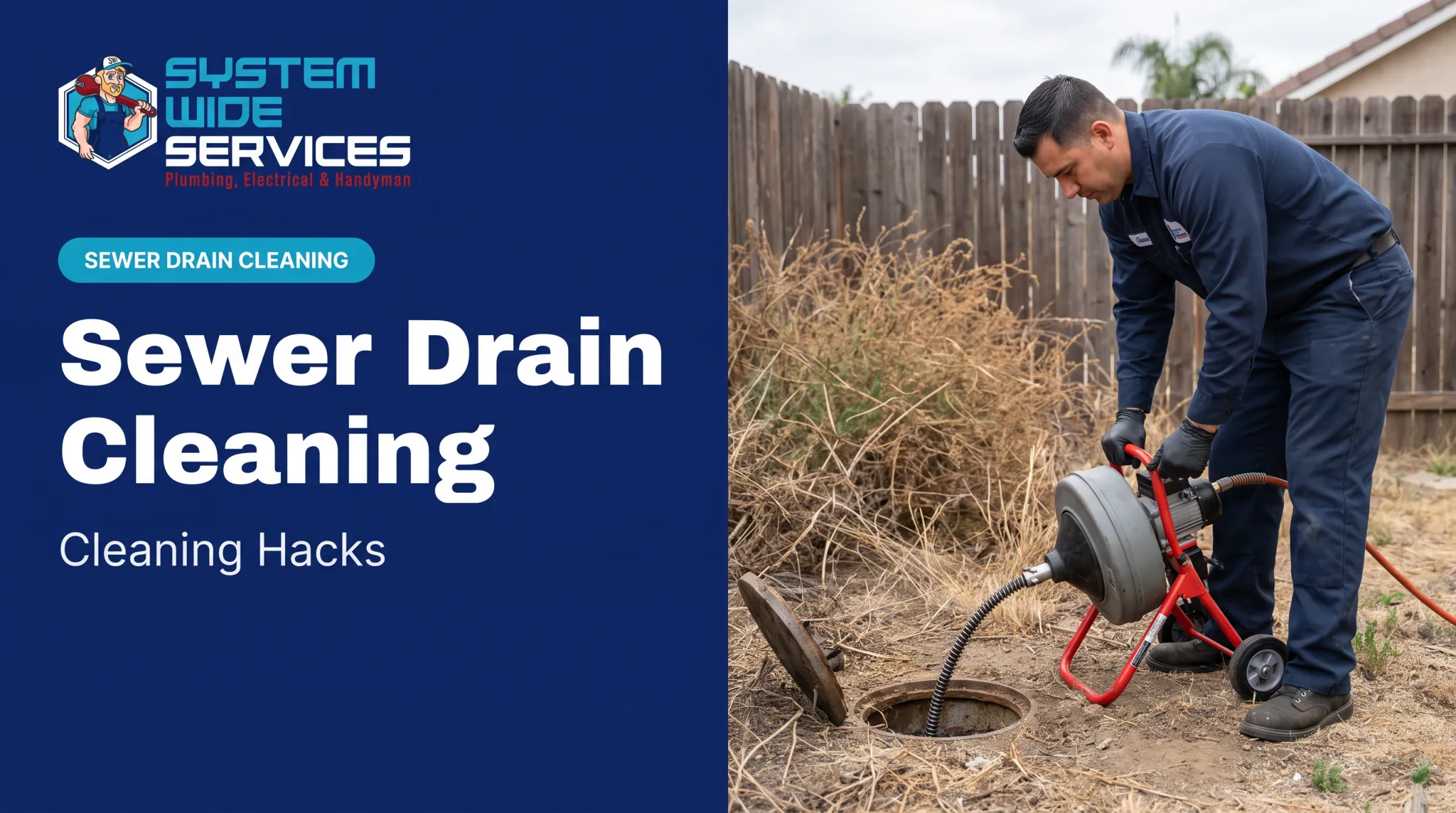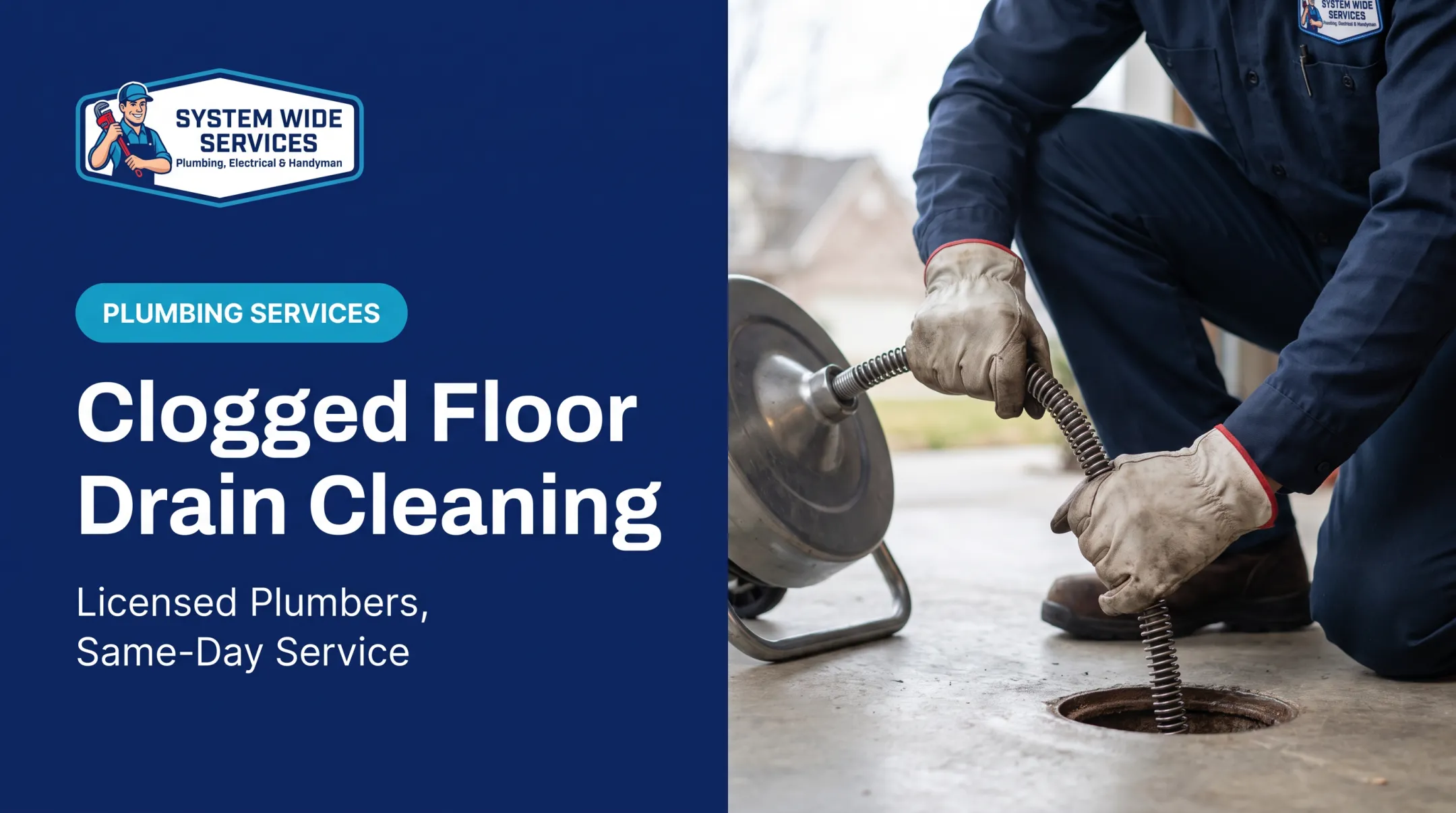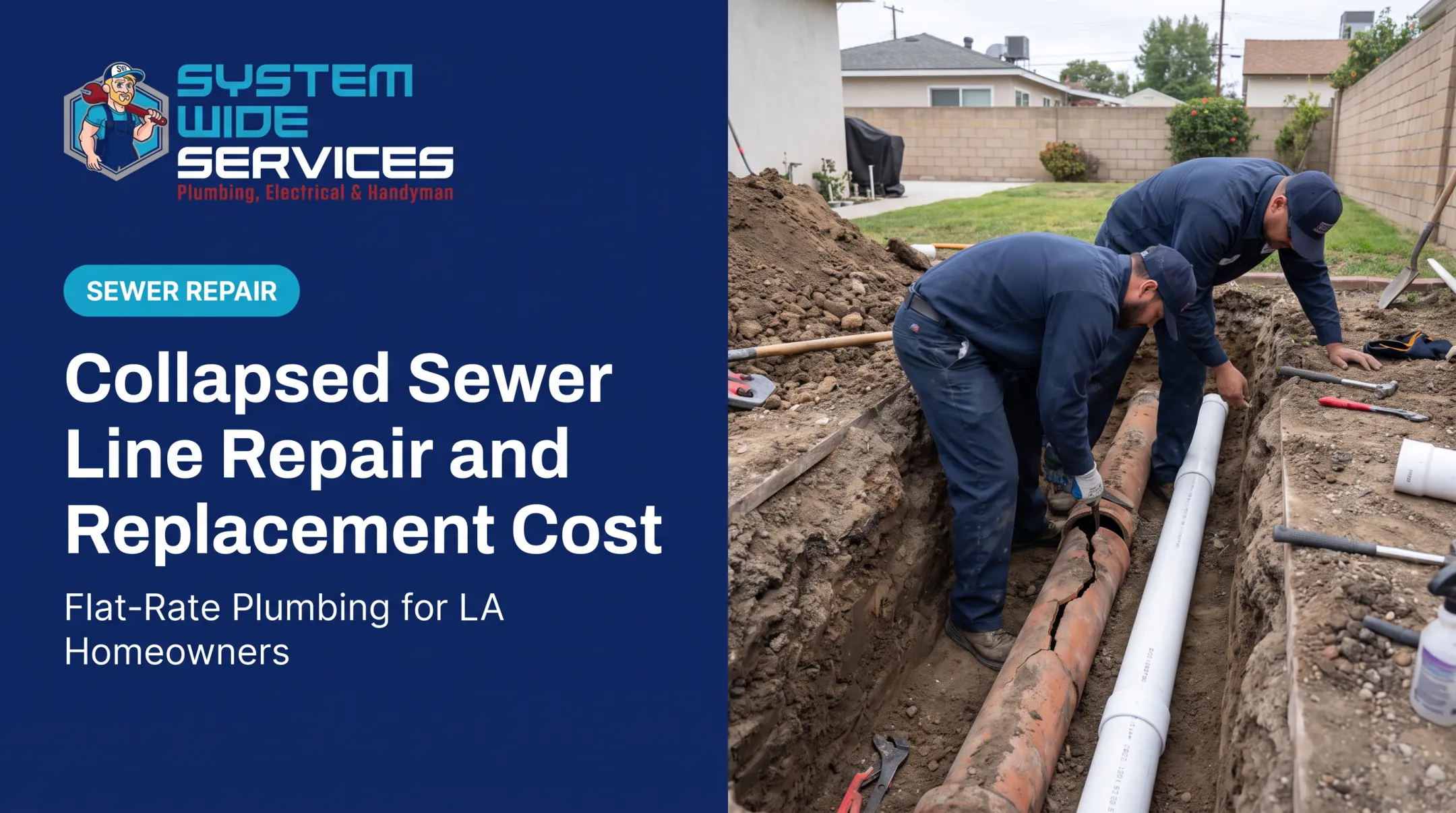

Roots, grease, aging pipe, ground movement, and poor installation all cause main line failures. Ignore them and you risk contamination and property damage. This guide covers how to spot the problem, what to do right away, how to choose between cleaning and structural repair, how trenchless and excavated methods compare, and when to call a pro.
Key Takeaways
- Multiple slow drains, gurgling, odors, and soggy yard patches signal a main line problem.
- Clogs may need snaking or hydro jetting; cracks, bellies, or collapse need repair or replacement.
- Limit water use, skip chemical cleaners, avoid sewage contact, and don't dig yourself.
- A camera inspection and ownership check determine the right fix.
What Is a Main Sewer Line?
The main sewer line is the large buried pipe that carries wastewater from your home's branch drains to the municipal sewer or a private system. The 2024 International Plumbing Code defines the building sewer as the portion running from the building drain to a public sewer, private sewer, or other disposal point.
A sink clog affects one fixture. A main line restriction affects everything downstream, so several drains misbehave together.
Because the pipe is buried, it deteriorates out of sight. Many homes have a cleanout, a capped access point that lets a plumber clear the line or run a camera. Older neighborhoods often lack one.
Common Problems With a Main Sewer Line
Patterns matter more than any single symptom. Here is what to look for.
Multiple Slow Drains or Recurring Backups
When toilets, showers, tubs, and sinks all drain slowly at the same time, the restriction is farther downstream. If snaking or jetting brings relief and the backup returns, suspect roots, damaged joints, a belly (a sag in the pipe), or another structural defect that cleaning didn't fix.
Gurgling Toilets and Unexpected Water Backup
Gurgling happens when trapped air and wastewater can't move normally through a partly blocked or damaged line. Typical examples:
- Toilet water rises when another fixture runs
- Wastewater appears in a bathtub or floor drain
- Low fixtures back up first, a symptom documented in Seattle Public Utilities guidance
Sewage Odors, Wet Ground, or Lush Yard Patches
Persistent sewage smells, soggy soil, unusually green grass, sinkholes, or dampness near the foundation can mean an underground leak. Sewage can carry disease-causing bacteria and viruses, so avoid contact and call qualified professionals.
Visible Damage or Complete Failure
Collapsed sections, severe corrosion, separated joints, heavy root intrusion, and bellies restrict flow or let soil and wastewater move in and out of the pipe. A full break can cause indoor backups, outdoor leakage, erosion, contamination, and loss of normal plumbing use.
Why a Main Sewer Line Fails
Most failures trace back to a short list of causes:
- Tree roots entering cracks or joints and forming root balls
- Grease buildup and flushed wipes or hygiene products
- Aging materials such as clay, cast iron, or Orangeburg
- Ground movement, which can shift and separate pipe in Southern California
- Poor slope or improper installation
Nearby construction can crush or shift buried pipe. Skipped maintenance lets small restrictions grow into major blockages. Los Angeles County Sanitation Districts notes that roots can clog or even rupture pipes, and that wipes sold as "flushable" cause trouble too.
Leaks also erode soil. San Luis Obispo links that erosion with bellies, low spots that trap waste with every flush.
Ignoring the cause means repeated emergency calls, worsening leaks, damaged landscaping or structures, and bigger restoration work later.
Sewage also carries health risks. Alameda County Health says it may contain disease-causing bacteria and viruses. Stay away from spills, and wear boots, gloves, goggles, and a mask if cleanup is unavoidable.
How to Fix a Main Sewer Line (Step-by-Step)
Clearing a clog without finding the cause gives temporary relief at best. A proper repair locates the defect, gauges its severity, and prevents a repeat.
You can limit immediate risk without digging. Excavating, handling sewage, or attempting structural repair takes training, equipment, permits, and utility locating. Leave that work to licensed pros.
Step 1: Identify the Exact Problem
- Observe the pattern. Note whether one fixture or several are affected, when it happens, and whether heavy water use, rain, or repeated cleaning plays a role.
- Cut back on water. Pause showers, laundry, and flushing until the line is assessed. Continued use worsens an active backup.
- Find the cleanout safely. Never force open a cleanout that may be pressurized or full of sewage.
- Know when it's an emergency. Indoor sewage backup, an active leak, flooding near the foundation, or an unusable line all warrant an emergency call.
Step 2: Confirm the Root Cause and Location
A licensed plumber runs a sewer camera to find the blockage or defect, estimate its location, and assess pipe material and condition. The footage separates a removable clog from root intrusion, a cracked or separated joint, a sag, corrosion, an offset, or a collapse.
Ownership matters too. Check with your city, sewer district, or water utility about boundaries, shared laterals, reporting rules, and permits. Los Angeles, for instance, puts the lateral from the building to the street connection on the owner, while Santa Ana directs homeowners to Public Works for a break beyond the property line.
A camera inspection also prevents unnecessary digging, repeated temporary cleanings, and replacing a line that is still repairable.
Step 3: Apply the Repair That Matches the Damage
The right method depends on inspection findings, pipe condition, depth, length of damage, surface above the line, and local code.
Removable clog. Snaking or rodding handles suitable blockages. Hydro jetting suits lines with buildup or heavy debris. Neither method repairs a cracked, collapsed, or badly corroded pipe.
Roots. Mechanical cutting or jetting can restore drainage for a while. Recurring roots call for spot repair, lining, or replacing the damaged section. Chemical root killers and repeated cleaning aren't guaranteed permanent fixes.
Localized crack or separated joint. If the surrounding pipe is sound, a spot repair or limited excavation may work. That can mean removing the damaged section, installing compatible pipe, checking slope and connections, and restoring the excavation.
Widespread damage, trenchless candidate. Cured-in-place lining inserts a resin-saturated liner that hardens into a new pipe inside the old one. Pipe bursting pulls new pipe through the old path while breaking the old one outward. Both need access points and a suitable pipe path.
NASSCO's 2025 matrix says the existing pipe must be cleared of obstructions and crushed or collapsed sections, and lining requires no more than 16% cross-sectional reduction. Some local criteria also exclude sags and offset joints. When the line qualifies, trenchless work can save your yard and driveway. Severe misalignment, collapse, connection work, and permitting can still rule it out.

Excavation and replacement. The crew locates the line, protects utilities and structures, digs to the pipe, removes the failed section, installs the replacement, tests it, and restores surfaces. Make sure concrete, driveway, and landscaping restoration appear in the written scope.
Step 4: Test and Validate the Fix
- Run water through multiple fixtures and confirm normal flow with no gurgling, backup, odor, or leakage.
- Ask for post-repair camera footage showing the section is open, connected, and clear.
- Confirm cleanouts, fittings, and surfaces are secure and required permits and inspections are closed out.
- Get a follow-up recommendation if roots, recurring blockages, or a partial repair remain possible.
When Should You Fix vs Replace a Main Sewer Line?
The decision balances upfront cost, future reliability, disruption, pipe condition, repair history, and the consequences of another failure.
When a Repair May Be Appropriate
Repair or cleaning makes sense for a single removable clog, one accessible damaged section, or a localized defect in otherwise sound pipe. A repair is more likely to hold when you see:
- Limited damage on camera
- Stable surrounding pipe
- No recurring failure history
- A method that fixes the cause, not just flow
Have the contractor document damage location, scope, materials, testing, restoration, and warranty.
When Replacement May Be Better
Consider replacement for:
- Collapse or major deformation
- Multiple cracks or separated joints
- Severe corrosion
- Extensive root intrusion
- Repeated failures
Paying again and again for temporary clearing can cost more than fixing a line that is failing along its length. Base the call on camera evidence, not age alone.
Traditional vs. Trenchless Replacement
Compare the two on surface disruption, access, pipe condition, connections, restoration, timeline, and permitting. Trenchless usually needs only one or two small access points. Traditional dig-and-replace opens a trench along the pipe path, so yard and driveway restoration run larger. Trenchless isn't available for every line, so ask the plumber to explain any limits.

Request an itemized quote covering:
- Inspection and labor
- Materials and permits
- Excavation or access points
- Surface restoration and cleanup
- Testing and warranty
Prices vary widely by location, depth, length, and method, so compare written quotes from licensed contractors instead of relying on a universal number.
Common Mistakes to Avoid When Fixing a Main Sewer Line
- Treating a recurring backup as an ordinary clog without a camera inspection
- Pouring chemical drain cleaners that corrode older pipe and leave caustic liquid in the line
- Running lots of water during a backup or opening a pressurized cleanout
- Entering sewage-contaminated areas without protective gear
- Digging without utility locating, permits, or a restoration plan
- Hiring on lowest price alone without checking license, insurance, written scope, method, testing, restoration, and warranty
Permits are a common trip-up. Los Angeles requires Building and Safety permits for private-property work and a Class A permit in the public right-of-way. Long Beach requires a plumbing permit for lateral repair or replacement.
Preventive Measures to Avoid Future Sewer Line Issues
Simple habits and timely checks cut avoidable blockages and catch problems before the main line fails.
Everyday Practices
- Don't flush wipes, paper towels, hygiene products, grease, fats, or oils
- Scrape grease into the trash, not the drain
- Use strainers where buildup is likely
- Plan trees and major landscaping around the buried line, choosing plants with less extensive roots
Inspections and Maintenance
- Book an evaluation when backups recur, roots are suspected, plumbing is older, or a prior camera inspection found damage
- Keep cleanouts accessible
- Save inspection videos, repair records, permits, and warranties for future owners and contractors

Planning and Responsibility Checks
- Confirm the private lateral and public main boundary with your city or utility before an emergency
- Get written estimates and address minor findings early
- Act sooner on small issues; that usually means a smaller fix
Conclusion
Fixing a main sewer line comes down to four moves:
- Identify the symptom
- Confirm the cause and location with a camera
- Pick a method that matches the pipe's condition
- Test the result
In Southern California, System Wide Services offers sewer camera inspections and plumbing repairs under California CSLB plumbing license #1108115. You get upfront flat-rate pricing approved before work begins, plus same-day and emergency service across Los Angeles and Orange counties. Call (562) 269-4747 to schedule.
Don't wait if sewage is backing up, leaking, or reaching your yard. Confirm early whether the affected section is yours or the local utility's.
Frequently Asked Questions
How much does it cost to fix a main sewer line clog?
Cost depends on the blockage, inspection needs, cleaning method, access, location, and urgency. Clearing a clog costs far less than repairing or replacing damaged pipe, so get an itemized written quote.
Can you repair a sewer line without digging it up?
Sometimes. Trenchless lining or bursting may work for eligible lines, but a camera inspection must first confirm pipe condition, alignment, access, connections, and local requirements.
What are the symptoms of a clogged main sewer line?
Look for multiple slow drains, recurring backups, gurgling toilets, shifting water levels, foul odors, wastewater in unexpected fixtures, and soggy or unusually lush yard patches.
What should you do if a sewage pipe is leaking?
Stop using water and keep people and pets away from contaminated areas. Avoid direct contact, protect property where safe, and call a licensed plumber or the responsible utility.
What happens if your main sewer line breaks?
Wastewater can back up indoors or leak into soil, causing odors, sanitation hazards, and damage to landscaping or structures. It needs urgent inspection, cleanup, and repair or replacement.
Who is responsible for a broken sewer pipe?
Homeowners commonly maintain the private lateral, while the city or utility maintains the public main, but boundaries vary by city. Confirm with your local sewer authority before authorizing work.