
Whole House Surge Protection: $15,000 at Risk for Homeowners
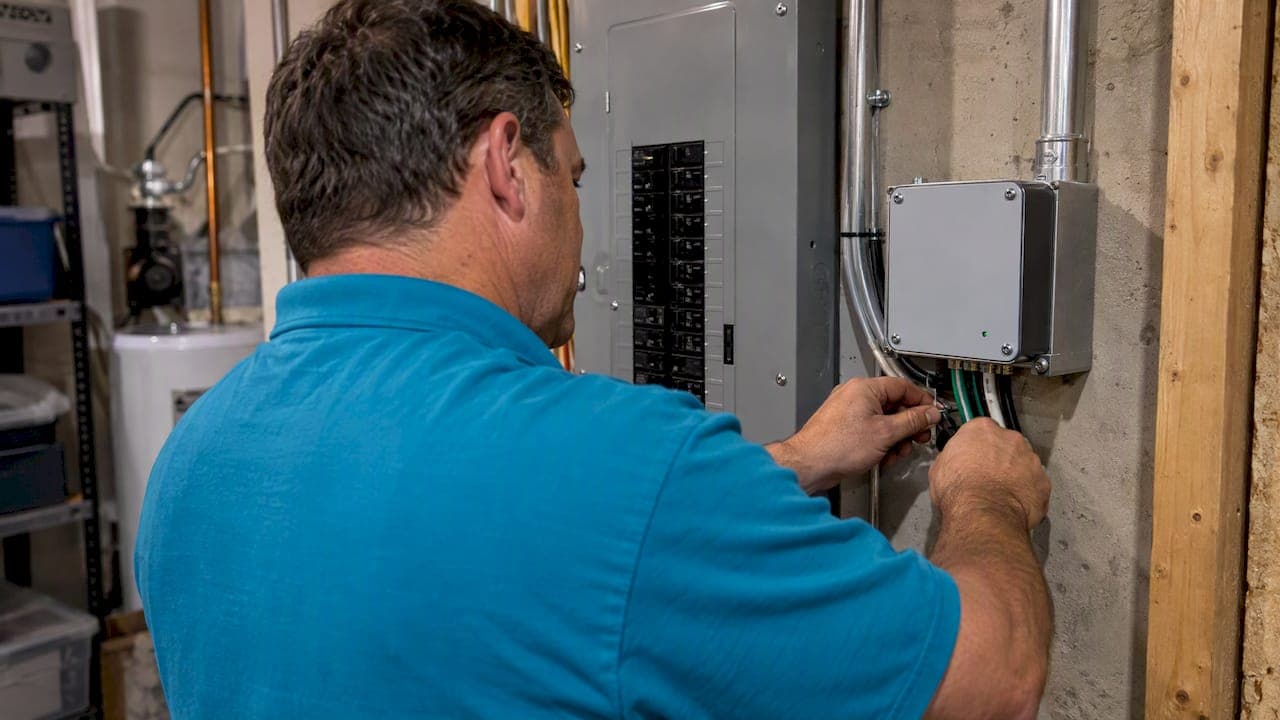
A whole house surge protector is worth installing for most homeowners because it shields every circuit, from your HVAC system to your home office, against the electrical surges that quietly damage equipment over time. The 2020 National Electrical Code now requires these devices in new and renovated homes, and industry estimates put roughly $15,000 of electronics at risk in the average household. The one thing it cannot do is stop a direct lightning strike.
TL;DR:
- New residential services and significant renovations require listed Type 1 or Type 2 devices under the 2020 NEC, so panel upgrades may trigger installation.
- Pair a whole house unit with outlet protectors: the panel device covers hardwired HVAC and water heaters, while strips add defense for computers and televisions.
- Equipment costs $125 to $500, while installed protection generally costs about $500; higher surge current ratings raise the price, and panel work can affect quotes.
- Proper grounding and short, direct conductor runs affect performance, and a whole house unit cannot guarantee protection against a direct lightning strike.
Table of Contents
- What a whole house surge protector is and how it works
- Key benefits for homeowners and household systems
- Limits and what surge protectors do not do
- Typical costs, lifespan, and maintenance
- Installation, code, and safety considerations
- Is a whole house surge protector worth it for your home?
- Potential impact on home insurance or warranties
- Publisher perspective: our approach to surge protection
- How we can help with surge protection and electrical safety
- FAQ
- Sources
What a whole house surge protector is and how it works
A surge protective device, or SPD, sits between your electrical panel and the outside power source to catch dangerous voltage spikes before they reach your outlets. Electricians classify these devices by where they’re installed: Type 1 units mount ahead of the main breaker or at the utility meter, Type 2 units install inside or next to your panel, and Type 3 devices are the point-of-use power strips you plug directly into an outlet.

Inside an SPD, components called metal oxide varistors, or MOVs, act like pressure valves. Under normal voltage, they stay inactive. The moment voltage spikes past a safe threshold, they conduct that excess energy away from your wiring and into the ground, a process rated by the device’s voltage protection rating, or VPR.
Placement matters as much as the device itself. Short, straight grounding conductors let excess energy travel out fast, while long or coiled wiring adds resistance that slows the response and reduces how much protection you actually get.
Key benefits for homeowners and household systems
Whole-house protection covers the systems you’d hate to replace out of pocket: HVAC compressors, water heaters, refrigerators, home entertainment systems, and the growing list of smart thermostats, security cameras, and connected appliances wired into a modern home.
The bigger benefit shows up over years, not during one dramatic storm. Most surge damage isn’t a single catastrophic event. It’s a slow accumulation of small voltage spikes from grid switching, large appliances cycling on and off, and nearby construction, each one shaving a little life off your circuit boards until something fails without warning.
An average home carries about $15,000 in electronics and appliances exposed to surge damage, which puts the cost of a single ruined HVAC control board or refrigerator compressor in perspective against the price of a protective device.
Whole-house units and point-of-use power strips work best together rather than as substitutes:
- Whole-house SPDs protect hardwired equipment like HVAC systems and water heaters that can’t be plugged into a power strip.
- Point-of-use devices add a second layer of defense for sensitive electronics like computers and televisions.
- Both layers reduce the cumulative wear that shortens appliance lifespan.
Limits and what surge protectors do not do
Whole-house surge protection meaningfully reduces risk from the surges homeowners actually encounter: utility switching, grid fluctuations, and internal surges from appliances cycling on and off. What it cannot promise is protection against a direct lightning strike, since that kind of energy can overwhelm any residential device.
A few factors can weaken an SPD’s performance even under normal conditions:
- Poor grounding at the panel reduces how quickly excess voltage dissipates.
- Long conductor runs between the device and the grounding point add resistance.
- Repeated large surges wear down the internal components faster than occasional small ones.
ESFI guidance recommends pairing a whole-house unit with point-of-use protectors and solid grounding practices rather than treating either one as a complete solution on its own.
Typical costs, lifespan, and maintenance
Budgeting for surge protection is straightforward once you know the ranges. Equipment alone typically runs $125 to $500, and NFPA research notes that a reasonable level of installed protection generally lands around $500, with higher surge current ratings pushing the price up.
Lifespan depends on how hard the device works. A unit in a storm-prone area or one that absorbs frequent large surges wears out faster than one in a milder climate, since each surge event consumes some of the MOV’s capacity.
Watch for these signs that it’s time to check or replace your unit:
- The indicator light shows a fault or has gone dark.
- You’ve experienced a known major surge event, such as a lightning strike nearby.
- The unit is past its warranty period, which commonly spans several years depending on the manufacturer.
- You notice visible scorching, cracking, or a burning smell near the device.
A quick annual visual check and a glance at the status indicator are usually enough to confirm your system is still doing its job.
Installation, code, and safety considerations
The 2020 NEC requires listed Type 1 or Type 2 surge protective devices on new residential services and on services that undergo a significant renovation, which is why many homeowners now encounter this requirement when upgrading a panel.
Correct installation involves more than mounting the device. Grounding conductors need to stay short and direct, the unit needs a location that allows it to coordinate properly with the panel’s overcurrent protection, and surge current ratings should be matched to your home’s exposure.
NEMA specification guidance recommends choosing a surge current rating with margin, since geographic exposure to lightning and grid instability affects how hard the device works over its lifetime.
Before hiring anyone, ask:
- Does my panel have the capacity and grounding needed for this installation?
- Which Type of SPD fits my home’s setup?
- Is the warranty registered after installation, and what does it cover?
Is a whole house surge protector worth it for your home?
Run through this short checklist before deciding:
- Estimate your household’s electronics and appliance value at risk, often close to the $15,000 industry estimate.
- Consider how often your area experiences storms, grid switching events, or power fluctuations.
- Check whether your panel and grounding are in good condition or need updating first.
- Note whether you already rely only on point-of-use strips without whole-house coverage.
If you check two or more of these, the math tends to favor installation: protecting a $15,000 electronics portfolio against an installed cost that typically falls in the $300 to $800 range is a reasonable trade. The next step is a panel and grounding inspection to confirm your home is ready.
Potential impact on home insurance or warranties
Surge protection can interact with your insurance and warranty coverage in a few practical ways, though specifics vary by provider. Many homeowners insurance policies cover surge-related appliance damage after the fact, but a documented whole-house SPD installed to code can support a claim by showing you took a reasonable precaution, and some insurers offer modest discounts for homes with recognized protective equipment.
Appliance and electronics manufacturers often tie warranty claims to proof that the equipment wasn’t damaged by an unprotected power event. A whole-house SPD installed and documented by a licensed electrician gives you a paper trail if you ever need to show that your electrical system met code and included surge protection at the time of a loss.
None of this replaces reading your specific policy or warranty terms, since coverage details differ between insurers and manufacturers. What a documented, code-compliant installation does is put you in a stronger position if a surge-related claim ever comes up, rather than leaving you to explain an undocumented loss after the fact.

Publisher perspective: our approach to surge protection
We are an electrical and plumbing team based in Cerritos, serving homeowners across Los Angeles and Orange County. We’ve found that a whole-house SPD only performs as well as the panel and grounding behind it, which is why we pair surge protector installation with a full panel inspection rather than treating it as a standalone add-on. When you’re unsure whether your home is ready, scheduling an inspection is the simplest place to start.
— Van Castaneda
How we can help with surge protection and electrical safety
If your panel is older or your grounding hasn’t been checked in years, we handle the full picture: electrical inspections, panel upgrades, surge protector installation, and generator or battery storage coordination for homes that want backup power alongside surge protection.
Getting started is simple:
- We schedule an inspection to check your panel, grounding, and existing protection.
- You receive an itemized quote before any work begins.
- Our licensed electricians complete the installation and register your warranty.
If you’ve noticed flickering lights, tripped breakers, or signs your wiring may be outdated, that’s worth addressing before adding surge protection on top. Every visit comes with upfront pricing and clear communication from our licensed team, and our VIP Club membership is available for homeowners who want ongoing electrical maintenance built in. Reach out through our electrical services page to get a quote.
FAQ
Is it worth getting a whole house surge protector?
For most homeowners, yes: it protects hardwired systems like HVAC and water heaters that point-of-use strips can’t reach, and it guards against the cumulative small surges that shorten appliance lifespan. The 2020 NEC now requires these devices in new and renovated homes, which reflects how standard the practice has become.
What are the downsides of using a surge protector?
A whole-house unit cannot guarantee protection against a direct lightning strike, and its effectiveness depends on proper grounding and short conductor runs. Homeowners should pair it with point-of-use protection and have it installed by a qualified electrician to get the expected performance.
What is the average cost of a whole house surge protector?
Equipment alone typically costs $125 to $500, and a reasonable level of installed protection generally runs around $500, with higher surge current ratings costing more. Final pricing depends on your panel setup and the device’s rated capacity.
What is the typical lifespan of a whole house surge protector?
Lifespan varies based on how often the device absorbs surges and how large those surges are, since each event uses up some of its internal capacity. Checking the unit’s status indicator periodically and replacing it after a known major surge event or once it reaches the end of its warranty period are reasonable practices.
Sources
- Changes to the 2020 NEC that impact how we install residential electrical services — NFPA blog
- 2020 National Electrical Code — ESFI (context and guidance)
- Data Assessment for Electrical Surge Protection Devices — NFPA Research/Foundation report
Recommended
Need a hand with this? We've got you covered.
System Wide Services handles plumbing, electrical, and handyman work across Long Beach and LA & Orange County.