
Homeowners: 4 Causes of Sewer Line Backups and How to Stop Fatbergs
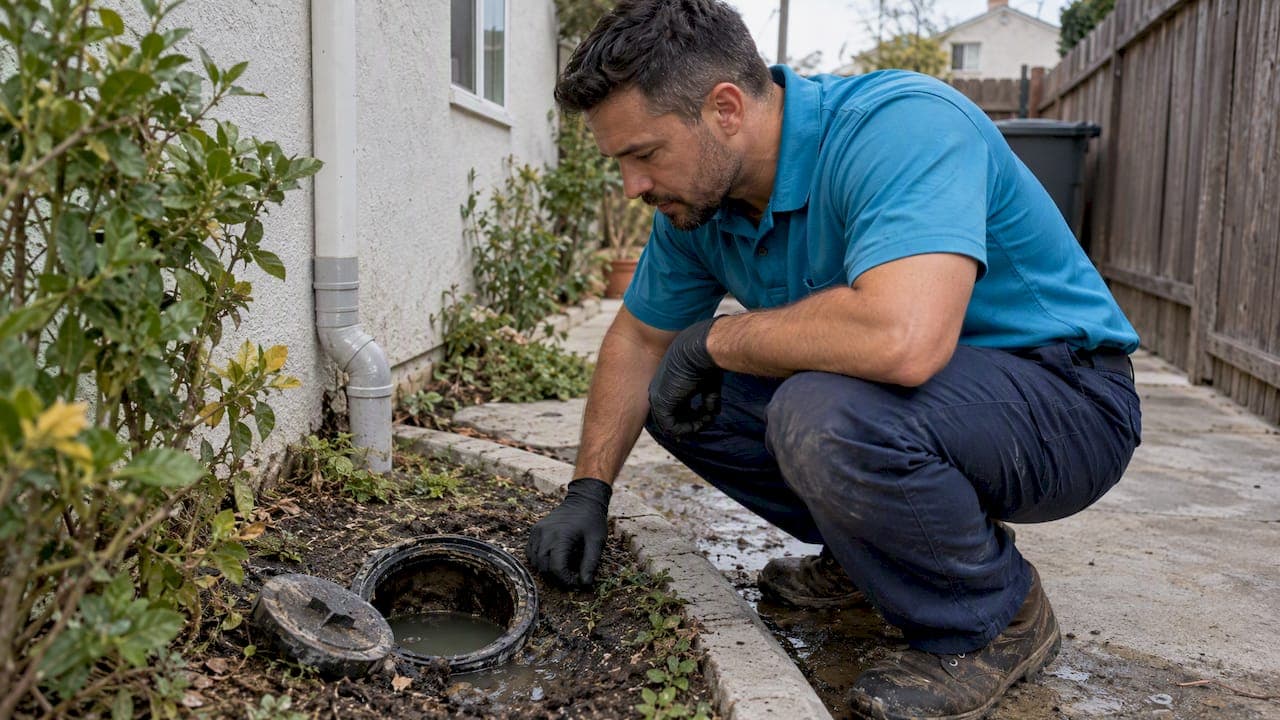
Most sewer line backups trace back to four culprits: grease and fat buildup, flushed wipes and other non-flushable items, tree roots, and aging or damaged pipes, often made worse by heavy rain overwhelming the system. If sewage is coming up through a drain or toilet right now, stop using water at every fixture in the house, keep everyone away from the affected area, and call a licensed plumber immediately.
TL;DR:
- Grease buildup and flushable wipes combine to form hard, concrete-like blockages that often cause main sewer line backups.
- Tree roots penetrate cracked or leaking pipes, creating root mats that trap debris and worsen sewage flow restrictions.
- Aging pipes with cracks, bellies, or corrosion are more susceptible to collapse and can exacerbate backup issues, especially during heavy rains.
- Multiple household drains slowing simultaneously typically indicate a blockage in the main lateral, requiring professional inspection and repair.
- Preventative measures include avoiding flushing non-biodegradable items, scheduling regular camera inspections, and installing backwater valves in low-lying areas.
Table of Contents
- What Causes Most Sewer Line Backups
- Signs Your Sewer Line Is Backing Up
- Who’s Responsible: Your Lateral vs. the Public Main
- What To Do Right Now If You Suspect a Backup
- How To Prevent Sewer Backups Before They Start
- When To Call a Professional and What Repairs Look Like
- A Contractor’s Honest Take on Sewer Backups
- How System Wide Services Can Help With Sewer Line Issues
- FAQ
- Sources
What Causes Most Sewer Line Backups
Grease is the biggest repeat offender. Every time fat, oil, or grease goes down a kitchen drain, it cools and clings to the inside of the pipe. Layer after layer builds into a hardened mass that narrows the opening until almost nothing flows through.
Fatbergs form when that grease combines with wipes, paper towels, and other non-biodegradable material that never breaks down. According to Johns Hopkins Bloomberg School of Public Health, these hardened blockages can grow large enough to force sewage back into basements and pose real public health risks. The fat acts as glue, the wipes act as structural fiber, and together they create something closer to concrete than sludge.

Packaging that says “flushable” is part of the problem. Wipes marketed that way routinely fail to break apart in the pipe, so they snag on rough joints or root intrusions and start collecting grease almost immediately.
Tree roots cause damage from the outside in. Roots chase moisture and nutrients, and a sewer lateral leaking even a small amount of wastewater is exactly what they are looking for. Once a root finds a crack or loose joint, it grows into the pipe, then spreads into a mat that traps paper and debris.
Aging infrastructure adds a structural layer to the problem. Clay and cast iron lines installed decades ago develop cracks, bellies (low spots where the pipe has settled), and corrosion over time. The EPA points to pipe blockages and structural failures, cracks, and root intrusion as primary drivers of sanitary sewer backups, often worsened by heavy rainfall or groundwater seeping into the system.
That rainfall connection matters more than most homeowners realize. Stormwater that infiltrates aging sewer pipes, or flows in through illegal downspout connections, can overload a system’s capacity in minutes.
- Grease and FOG deposits narrow pipe diameter until flow stops
- Wipes and “flushable” products bind with grease to form rigid blockages
- Tree roots exploit cracks and grow into root mats that trap debris
- Aging or corroded pipes develop cracks, bellies, and collapse points
- Heavy rain and inflow/infiltration overload system capacity and trigger overflows
The U.S. EPA estimates that tens of thousands of sanitary sewer overflows occur annually nationwide, releasing between 3 and 10 billion gallons of wastewater, a figure that excludes private building backups entirely. That scale shows how much of this problem sits in municipal infrastructure, not just individual homes.
Signs Your Sewer Line Is Backing Up
Backups rarely arrive without warning. The signs usually show up in the lowest plumbing fixtures first, since wastewater follows gravity and looks for the lowest exit point when a main line is blocked.
- Gurgling sounds from toilets or drains when other fixtures are in use
- Multiple drains running slow at the same time, not just one sink
- A basement toilet or floor drain backing up or overflowing
- A persistent sewage smell near drains, the basement, or the yard
- Water pooling around a floor drain, cleanout, or yard cleanout cap
A single slow sink usually points to a localized clog in that fixture’s branch line. When several fixtures across the house slow down together, especially low ones like basement drains, the blockage sits further downstream in the main lateral, which is a bigger job and a stronger signal to call a plumber rather than reach for a plunger.
Who’s Responsible: Your Lateral vs. the Public Main
Homeowners are typically responsible for the sewer lateral running from the house to the connection at the public main, while the municipal utility maintains everything beyond that point, including backwater valve requirements in some jurisdictions according to Los Angeles County Public Works. Knowing where that line falls helps you figure out who to call first.
- Locate your cleanout, usually a capped pipe near the foundation or in the yard, to identify where your lateral begins.
- Check whether the backup affects only your property or several homes on the street, which usually points to the public main.
- Photograph any visible damage or standing water before cleanup begins, since documentation supports insurance claims later.
Our guide to finding your sewer cleanout walks through exactly what to look for and what a plumber checks once it’s located.
What To Do Right Now If You Suspect a Backup
- Shut off water to the lowest fixtures in the house and stop using any drains, toilets, or appliances that feed into the sewer line.
- Keep people and pets away from standing water or sewage, since raw sewage carries bacteria and pathogens that require professional cleanup rather than home remedies.
- Locate your cleanout but avoid removing the cap unless a plumber instructs you to, since pressure inside the line can cause a forceful release.
- Call a licensed plumber right away, and contact your water utility too if the backup seems to involve the public main rather than your private lateral.
- Photograph the damage for insurance purposes before any cleanup begins, and avoid pouring chemical drain treatments into a line that’s already backed up.
Pro Tip: Skip the store-bought drain chemicals during an active backup. They rarely clear a blocked main line and can create a hazardous mix when combined with standing sewage.
If water damage reaches flooring, drywall, or belongings, a restoration contractor’s emergency guide to who to call lays out a sensible sequence for getting both plumbing and cleanup handled without duplicating effort.
How To Prevent Sewer Backups Before They Start
Prevention comes down to a handful of habits that cost nothing and a few maintenance steps that pay for themselves.
- Scrape plates into the trash instead of rinsing grease down the sink, and let cooking oil cool in a container before tossing it
- Never flush wipes, diapers, paper towels, or feminine hygiene products, regardless of what the packaging claims
- Run the garbage disposal sparingly, and keep coffee grounds and fibrous scraps out of it entirely
- Schedule a CCTV camera inspection every few years for older laterals so cracks and root intrusion get caught early
- Ask about hydro-jetting for lines with recurring grease buildup, since it clears pipe walls more thoroughly than a standard snake
- Install a backwater valve if your home has a basement or sits at a low point relative to the street main
- Keep trees and large shrubs away from the lateral’s path, and use root barriers where mature trees already sit close to the line
- Never connect downspouts or sump pumps to the sanitary sewer line, since that’s exactly the kind of inflow that overwhelms municipal systems during storms
Pro Tip: A grease trap under the kitchen sink sounds like a fix, but research from the University of Hawaiʻi found that microorganisms inside some traps can actually increase fatty acid content in the effluent, so it’s not a substitute for simply keeping grease out of the drain.
Municipal guidance echoes nearly all of this. The City of Bellevue’s sewer backup prevention page lists the same culprits, FOG, wipes, diapers, and sanitary products, and recommends the same combination of routine maintenance and smart landscaping.
When To Call a Professional and What Repairs Look Like
A plumber’s first move on a recurring or unexplained backup is usually a CCTV inspection, which shows exactly where a blockage, crack, or root mat sits inside the line. Smoke or dye testing can confirm illegal connections or locate where groundwater is getting in.
- Snaking clears a localized clog fast but doesn’t remove grease coating the pipe walls
- Hydro-jetting blasts away grease and root mats more thoroughly, though a camera inspection should come first on older, fragile lines
- Spot repair fixes an isolated crack or break without replacing the whole lateral
- Cured-in-place pipe (CIPP) lining rehabilitates a damaged line from the inside with minimal digging
- Full replacement becomes the right call when a lateral has multiple failure points, severe bellies, or repeated collapses
Municipal programs follow the same logic at scale. NYC’s DEP sewer backup prevention plan uses CCTV inspections paired with targeted cleaning or repair to address the root causes behind recurring backup locations, rather than treating each incident as a one-off. If your home has backed up more than once in the same spot, that pattern usually means a structural issue that cleaning alone won’t solve. Our sewer line repair and replacement page breaks down how we evaluate which of these options fits a given lateral.
A Contractor’s Honest Take on Sewer Backups
The biggest mistake we see is waiting. Homeowners notice a slow drain, pour in a liquid cleaner, and assume it’s handled, when a root mat or a structural crack doesn’t respond to chemicals at all. A responsible first visit means a camera down the line, a clear explanation of what it shows, and a written quote before any work starts.
— Van Castaneda
How System Wide Services Can Help With Sewer Line Issues
When a backup points to something beyond a simple clog, we handle the full range of diagnosis and repair under one roof: CCTV inspection, hydro-jetting, drain cleaning, sewer line repair and replacement, cleanout installation, and emergency plumbing response across Cerritos and the surrounding Long Beach area.
As a licensed, veteran and woman-owned team, we handle the camera work, the cleaning, and the repair without passing you off to a separate contractor for each step. If a drain is slowing down or a backup has already started, schedule a plumbing inspection and we’ll walk you through exactly what we find.
FAQ
What is the most common cause of sewer line backups?
Grease buildup combined with flushed wipes is one of the most frequent causes, since the two bind together into hardened blockages known as fatbergs. Tree roots and aging, cracked pipes follow close behind as leading causes of sewer backups.
Why do multiple drains slow down at the same time?
When several fixtures slow down together, especially low ones like basement drains, the blockage usually sits in the main sewer lateral rather than a single branch line. A single slow sink, by contrast, typically points to a clog isolated to that fixture’s own drain.
Is a sewer backup my responsibility or the city’s?
In many jurisdictions, homeowners maintain the lateral from the house to the connection at the public main, while the utility maintains the main line itself, according to Los Angeles County Public Works. If the backup affects only your property, it’s likely your lateral; if neighbors are affected too, it’s worth contacting the utility.
Can I use a chemical drain cleaner to fix a sewer backup?
Chemical cleaners rarely clear a blocked main line and won’t address root intrusion or structural cracks, since roots and cracks typically sit higher in the pipe than where a chemical treatment settles. A camera inspection and mechanical cleaning or repair resolve the underlying cause far more reliably.
How can I prevent a sewer backup in the future?
Keep grease, wipes, and non-flushable items out of drains entirely, and schedule a camera inspection every few years if your home has an older lateral. Installing a backwater valve and keeping trees away from the sewer line, as recommended by the City of Bellevue, further reduces the risk.
Sources
- Sanitary sewer overflow (SSO) frequent questions | EPA
- Fatbergs remind us of water infrastructure’s critical role | Johns Hopkins Bloomberg School of Public Health
- Plan to prevent confirmed sewer backups | NYC DEP
- Preventing sewer backups | City of Bellevue
Recommended
Need a hand with this? We've got you covered.
System Wide Services handles plumbing, electrical, and handyman work across Long Beach and LA & Orange County.