
Prove a High Water Bill Leak Fast: 2 Cheap Tests Homeowners Can Run
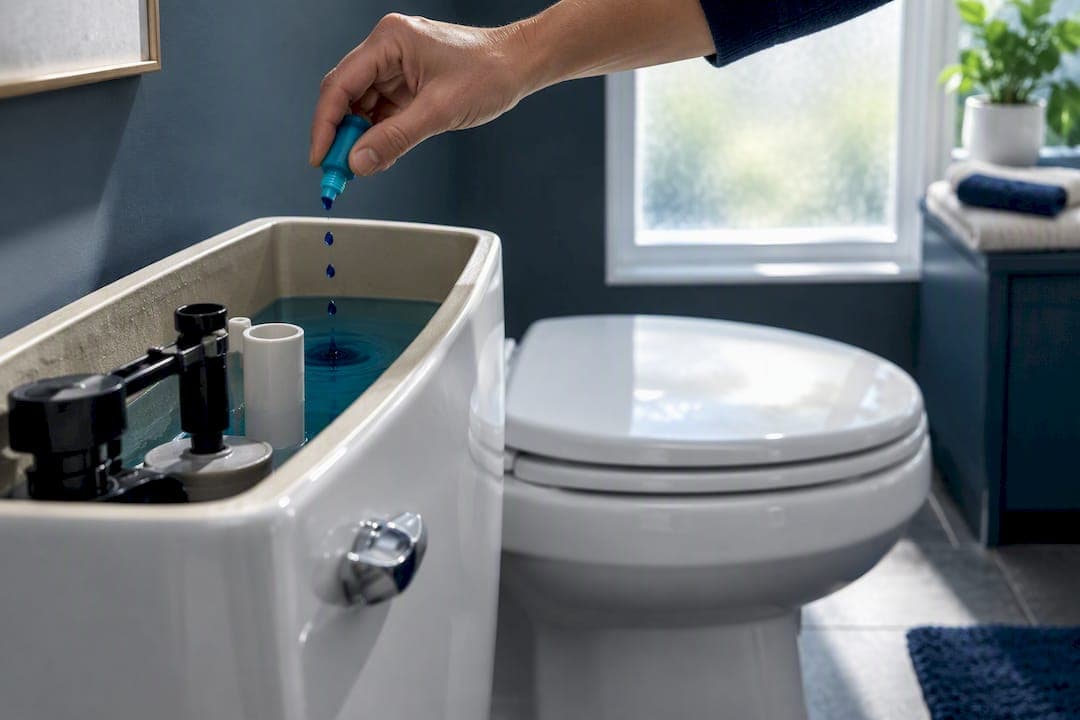
If your water bill jumped and nothing else changed in your house, shut off every fixture and watch the meter for two hours. If the dial moves, you have a leak, no debate needed. If it stays still, drop a dye tablet in every toilet tank and check back in ten minutes. Between those two tests, the odds point heavily at a running toilet, a stuck irrigation valve, or a leaking appliance line.
TL;DR:
- Most household leaks involve toilets, whose flappers can leak silently and waste thousands of gallons annually, often without visible overflow.
- Conducting a no-use meter test and dye tests in toilets are quick, free methods that can identify leaks before involving a plumber.
- Inspection of supply lines, fixtures, appliances, and irrigation zones can reveal pinhole leaks, cracked tubing, or broken sprinkler heads causing hidden losses.
- Confirm utility billing accuracy by checking for estimated reads, billing period length, and tiered rate increases before requesting a formal meter test.
- Professional leak detection is necessary if DIY tests show activity but the source remains unidentified, especially for underground or structural leaks.
Table of Contents
- What’s the Fastest Way to Confirm a High Water Bill Leak?
- Checking Toilets, Faucets, Appliances, Irrigation, Pools, Water Heaters, and Softeners
- Reading Your Meter and Bill Correctly
- Spotting Leaks You Can’t See
- When a Professional Needs to Take Over
- Why the Cheap Tests Should Always Come First
- Get a Leak Confirmed and Fixed Without the Guesswork
- Where This Guidance Comes From
- Sources
- FAQ
What’s the Fastest Way to Confirm a High Water Bill Leak?
You don’t need a plumber’s toolkit to figure out whether you have a leak. You need six steps, most of which take under ten minutes each, and a notebook to track what you find.
1. Pull your last three bills and compare units, not dollars. Utilities sometimes shift billing periods or estimate a read instead of taking an actual one, which can make a bill spike without a drop more water actually flowing through your pipes.
2. Run the no-use meter test. Shut off every faucet, appliance, and irrigation system in the house. Write down the meter reading, wait two hours without using any water, then read it again. Any movement means water is leaving your property somewhere.
3. Do the toilet dye test in every bathroom. Drop food coloring or a dye tablet into each tank, wait 10 to 15 minutes, and check the bowl. Color in the bowl without a flush means the flapper is letting tank water leak through.
4. Kill anything automatic and retest. Water softeners, ice makers, and irrigation controllers can run on hidden cycles. Turn them off at the source, then repeat the meter test to isolate their effect.
5. Test irrigation zones one at a time. If you have a timed sprinkler system, run a single zone and watch the meter. A systematic ranking of causes puts irrigation near the top of the list because it runs unattended, often before dawn.
6. Photograph every reading. Keep timestamped photos of the meter and notes on which tests you ran. This becomes your evidence if you request a leak adjustment from your utility or call in a professional.
- Confirm billing accuracy before assuming a leak
- Isolate the house, then isolate the systems inside it
- Document everything as you go
Checking Toilets, Faucets, Appliances, Irrigation, Pools, Water Heaters, and Softeners
Toilets cause more silent water waste than any other fixture in the home, and the EPA’s Fix a Leak Week guidance exists largely because flappers wear out quietly and homeowners rarely notice until the bill arrives. A worn flapper, a misaligned overflow tube, or a fill valve that won’t fully shut can all leak tank water into the bowl without ever triggering a visible overflow. The dye test catches all three. If you see color in the bowl, lift the tank lid and watch the fill valve. If water keeps trickling into the overflow tube even after the tank fills, that’s your answer.
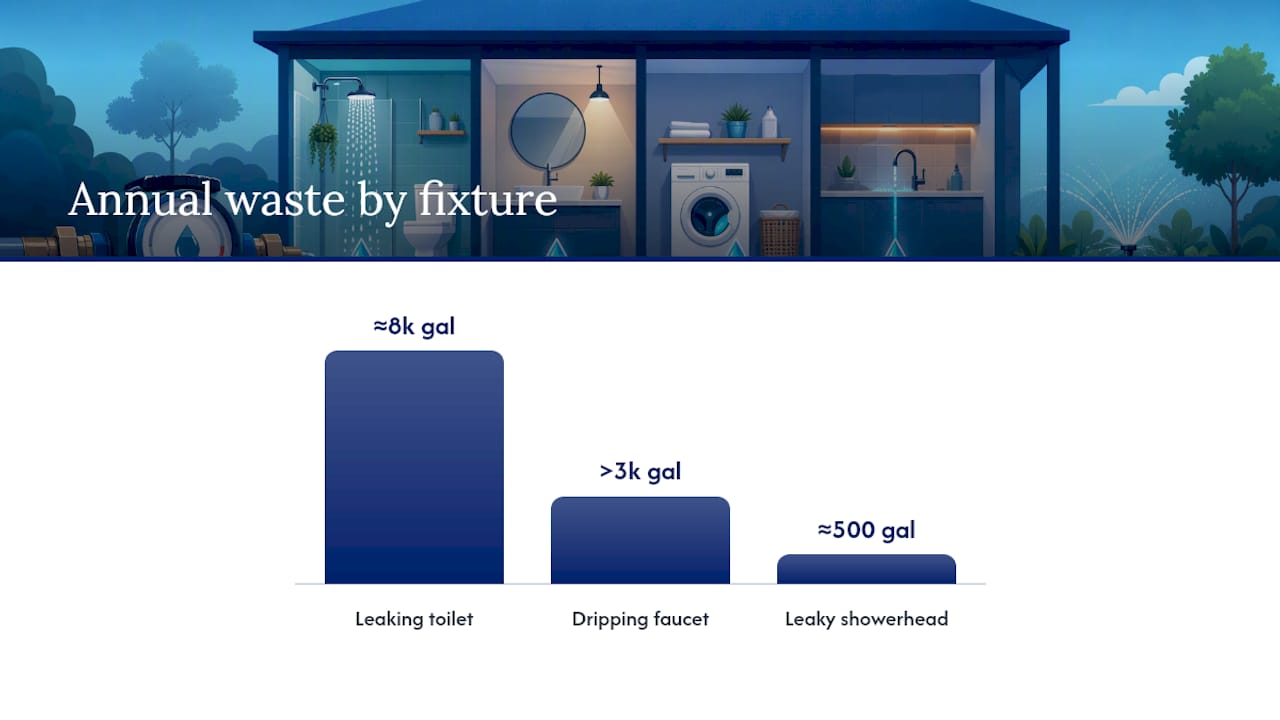
The scale of the loss surprises most people. The USGS notes that a toilet leaking about 22 gallons a day can waste roughly 8,000 gallons a year, enough to noticeably shift a quarterly bill on its own. Faucets add up just as fast in smaller increments. According to the EPA’s Fix a Leak guidance, a faucet dripping once per second wastes more than 3,000 gallons a year, and a showerhead leaking just 10 drips a minute adds another 500 gallons annually. Multiply either number across several fixtures and you’re looking at real money, not a rounding error.
Pro Tip: Run your fingers along every visible supply line under sinks and behind the washing machine. A damp connection often shows up as a faint mineral ring before it ever drips onto the floor.
Faucets and showerheads are the easy checks. Look at the base of each fixture for a slow weep, run your hand along exposed supply lines, and check the shutoff valves under sinks for corrosion or moisture. Braided steel supply hoses fail more often than people expect, especially past the eight-year mark, and a pinhole leak there can waste water for weeks before anyone spots it.
Appliances deserve their own pass. Ice makers and refrigerator water lines run on thin plastic tubing that cracks with age and vibration. Dishwashers can leak from a worn door gasket or a failed inlet valve. Water heaters leak from the tank itself, the pressure relief valve, or the connections at the top, and a slow tank leak often shows up as a damp spot on the floor near the base before it becomes a flood. If you notice rust-colored water, a hissing sound near the tank, or a puddle that reappears after you dry it, treat it as an emergency rather than something to monitor for a week.
Irrigation systems deserve special attention because they’re built to run without anyone watching. A cracked lateral line, a valve that won’t fully close, or a broken sprinkler head can dump hundreds of gallons overnight while the controller quietly logs a normal cycle. Test each zone individually with the meter running, and inspect heads for pooling, unusually green patches, or spray patterns that don’t match what the controller says should be happening. Checking the controller’s programming matters too. A rogue extra cycle added during a battery reset or a firmware update is more common than most homeowners assume.
If you have a pool or spa, check the auto-fill valve. A stuck float can let the fill valve run continuously, adding hundreds of gallons a day without ever triggering an obvious overflow, since the water simply disappears down the overflow drain along with any actual leak in the pool shell itself.
Water softeners are the most overlooked culprit. Municipal guidance on potential causes of high water usage flags stuck regeneration valves as a common source of large, quiet water loss, since a softener cycling repeatedly can run through hundreds of gallons in a single day without any visible sign inside the house. Turn the unit off at the bypass valve for a full day and rerun your meter test. If usage drops sharply, the softener’s control head or valve needs service.
Homeowners dealing with older copper supply lines should also watch for pinhole leaks, which tend to show up as small greenish stains on pipe insulation or ceiling drywall well before they become an active drip. If that sounds like your situation, testing your water chemistry before patching a pinhole leak can help you understand whether the corrosion will keep recurring.
Reading Your Meter and Bill Correctly
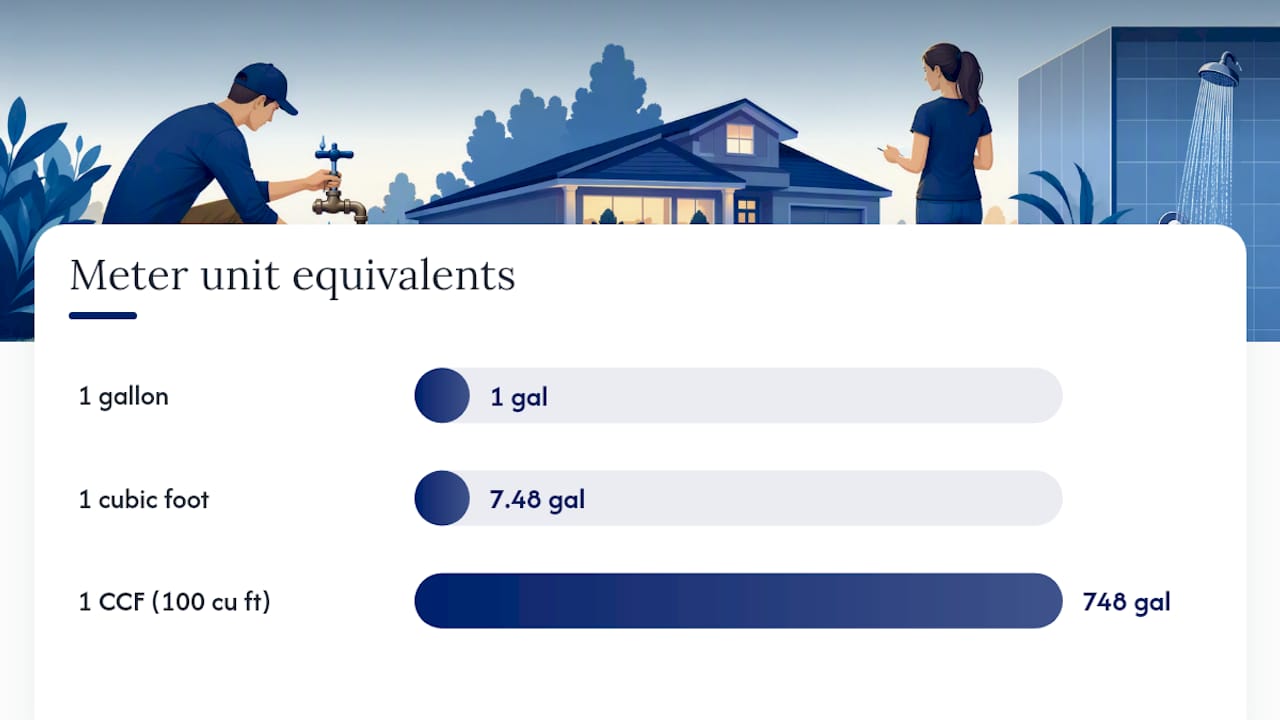
The meter test only works if you read it correctly, and the billing side only makes sense once you convert units into something you can actually compare; for more detailed insights, see Water Quality Plumbing: What Every Homeowner Must Know. Most residential meters display either gallons directly or CCF, which is 100 cubic feet and roughly equals 748 gallons. Some older meters use cubic feet alone. Check your bill’s unit column before you do any math, because comparing a CCF figure to a gallon figure without converting will make a normal bill look alarming.
Here’s how to read the dials for a no-use test:
| Meter Feature | What to Watch | What It Means |
|---|---|---|
| Sweep hand or small triangle | Any movement during a zero-use window | Water is flowing somewhere on the property |
| Digital odometer numbers | Numbers ticking up over two hours | Confirms a leak; note the exact gallon change |
| Leak indicator dial (if present) | A spinning or flashing icon | Most modern meters flag active flow automatically |
Once you have a daily-use figure, compare it to your last few bills’ average daily use rather than the total. A municipal cost breakdown shows how quickly small daily losses compound into a meaningful annual cost, which is useful for putting your own numbers in context.
Before you assume the worst, rule out billing mechanics. Estimated reads happen when a meter reader can’t access the meter and the utility guesses based on past usage, which can create a spike that has nothing to do with your pipes. A shortened or lengthened billing period does the same thing. And if your usage crossed into a higher tiered rate, the dollar amount can jump even when gallons used only rose slightly.
- Ask your utility whether the read was actual or estimated
- Confirm the exact number of days in the billing period
- Check whether you crossed a usage tier that raised your per-gallon rate
If your numbers still don’t add up after all that, request a formal meter test from your water provider. Bring your own meter photos and readings. Most utilities will recheck accuracy for free or at low cost, and a documented mismatch between your reading and theirs strengthens any adjustment request.
Spotting Leaks You Can’t See
Hidden leaks announce themselves through secondary signs long before anyone finds standing water. A strip of lawn that stays damp or unusually green days after your irrigation last ran often sits directly over a broken lateral line. A musty smell in a closet or hallway with no obvious source, especially near an exterior wall, points to moisture trapped inside a wall cavity. Bubbling paint, a soft spot in drywall, or a ceiling stain that keeps reappearing after you repaint all suggest water traveling somewhere it shouldn’t.
A handful of low-cost tools help narrow the search before anyone opens a wall or digs up a yard:
- Pinless moisture meters read dampness through drywall or wood without leaving a mark, which makes them useful for scanning a suspect wall before committing to repairs.
- Infrared thermometers spot temperature differences on flooring or walls, since a slab leak often creates a warm patch where hot water is escaping underground.
- Acoustic listening devices pick up the sound of water moving through pipe under concrete, though these take practice to interpret correctly.
Isolation matters more than any single tool. Shut off the branch line feeding a suspect area, or shut off the whole-house valve and watch the meter to confirm whether the leak sits on your side of the service line or the utility’s side. That single distinction changes who pays for the fix.
Slab leaks and buried service-line leaks are worth taking seriously because a leaking toilet you can fix with a $15 flapper is a very different problem from water eroding soil under a foundation. Acoustic locators and tracer-gas methods can pinpoint an underground leak’s exact location without trenching the entire yard, which keeps repair costs and landscaping damage far lower than blind digging. Treat exploration as a last resort. Isolate first, confirm the general area with a moisture or thermal check, and let the actual repair be the only destructive step in the process.
When a Professional Needs to Take Over
Some situations move past DIY the moment they appear. If the meter moves during a no-use test and you can’t locate the source after working through faucets, toilets, and appliances, stop guessing and call a professional. The same goes for structural dampness, any hint of a slab-edge leak, soil that’s visibly sinking or eroding near your foundation, or a sustained high reading that persists across two full billing cycles.
Licensed plumbers reach for tools most homeowners don’t own. Acoustic ground microphones pick up the distinct sound of pressurized water escaping underground. Tracer dye and camera inspection let a technician see inside sewer and drain lines without excavation. Pressure testing isolates sections of pipe to find exactly where a system loses pressure, and dedicated slab leak detection methods locate leaks under concrete without unnecessary demolition.
Pro Tip: Bring your meter photos, dye-test results, and a list of what you’ve already ruled out to the appointment. It shortens the diagnostic visit and keeps the scope, and the bill, smaller.
Before scheduling, gather what you already have: baseline meter readings, dye-test photos, and clear access to crawl spaces or utility closets. A technician who starts with your documentation instead of your entire house saves time on-site, which shows up directly in the final invoice.
Why the Cheap Tests Should Always Come First
Homeowners lose money in two directions on a high bill. They either ignore it and let a leak run for months, or they panic and pay for an inspection that a $5 dye tablet would have solved. The meter test and the toilet dye test cost nothing and take under an hour combined, yet they resolve the majority of high-bill cases before anyone touches a wall or a shovel.
Documentation is the part homeowners skip and later regret. Photograph your meter readings, save your dye-test results, and note the date and time of every test. That record supports a utility adjustment request if the leak was inside your service line, and it hands a plumber a head start instead of a blank slate.
— Van Castaneda
Get a Leak Confirmed and Fixed Without the Guesswork
If you’ve run the meter test and the dye test and still can’t pin down where the water is going, a professional service can handle the next step without the runaround. Such companies often have licensed plumbers to handle leak detection, repair, and any drywall or flooring work the leak left behind, avoiding the need to juggle separate contractors.
Bring your meter photos and dye-test notes to the visit and the diagnostic goes faster, which keeps the scope and the cost down. System Wide Services offers dedicated water leak detection using acoustic and pressure-testing methods that avoid unnecessary digging or demolition, plus documentation you can hand to your utility if you’re pursuing a bill adjustment. If the leak turns out to be at the water heater or the main line rather than a fixture, the team can move straight into water heater repair or line replacement without bringing in a second company.
For an active leak or sudden flooding, call for emergency plumbing response now. For everything else, schedule a diagnostic visit through the main plumbing services page and get a same-day answer instead of another guessing month.
Where This Guidance Comes From
The checks in this guide draw on the EPA’s Fix a Leak Week program, USGS water-loss research, and municipal high-bill investigation checklists used by utilities like Fort Wayne City Utilities. Contact your own water provider directly for a formal meter recheck or billing review specific to your account.
Sources
- EPA — Fix a Leak: Save Water and Money
- USGS — Does a little leak in my house really waste water?
- NYC DEP — Leaks and their cost
- Fort Wayne City Utilities — High bill investigation checklist (PDF)
FAQ
Why Is My Water Bill So High With No Leaks?
Check your billing period length and whether the read was estimated, since either can inflate a bill without any change in actual usage. Seasonal irrigation is the other common cause. Outdoor watering can account for a large share of household use, so a bill that spikes in warmer months often reflects sprinkler schedules rather than a hidden leak.
What Is the Most Common Cause of a High Water Bill?
A running or leaking toilet is the single most common cause, since a worn flapper can leak continuously without ever overflowing the bowl. The USGS estimates a toilet leaking around 22 gallons a day can waste about 8,000 gallons a year, which is often enough to double or triple a normal bill on its own.
How Much Can a Leaky Faucet Raise Your Water Bill?
A faucet dripping once per second can waste more than 3,000 gallons a year, and a showerhead leaking 10 drips a minute adds another 500 gallons annually. Multiple dripping fixtures in the same home can add up to a noticeable jump in your quarterly total.
How Do I Know If It’s a Leak or Just Higher Usage?
Run the no-use meter test: shut off every fixture, note the reading, wait two hours, and check again. Any movement confirms water is escaping somewhere, while a still meter usually points to a billing issue or a genuine increase in household use.
When Should I Call a Plumber Instead of Testing Further?
Call a professional if the meter moves during a no-use test and you can’t locate the source after checking toilets, faucets, and appliances, or if you notice structural dampness, soil erosion, or a leak that persists across two billing cycles. System Wide Services offers water leak detection using acoustic and pressure-testing tools that pinpoint the source without unnecessary digging.
Recommended
Need a hand with this? We've got you covered.
System Wide Services handles plumbing, electrical, and handyman work across Long Beach and LA & Orange County.