
Test Your Water Before Patching Copper Pinhole Leaks for Homeowners
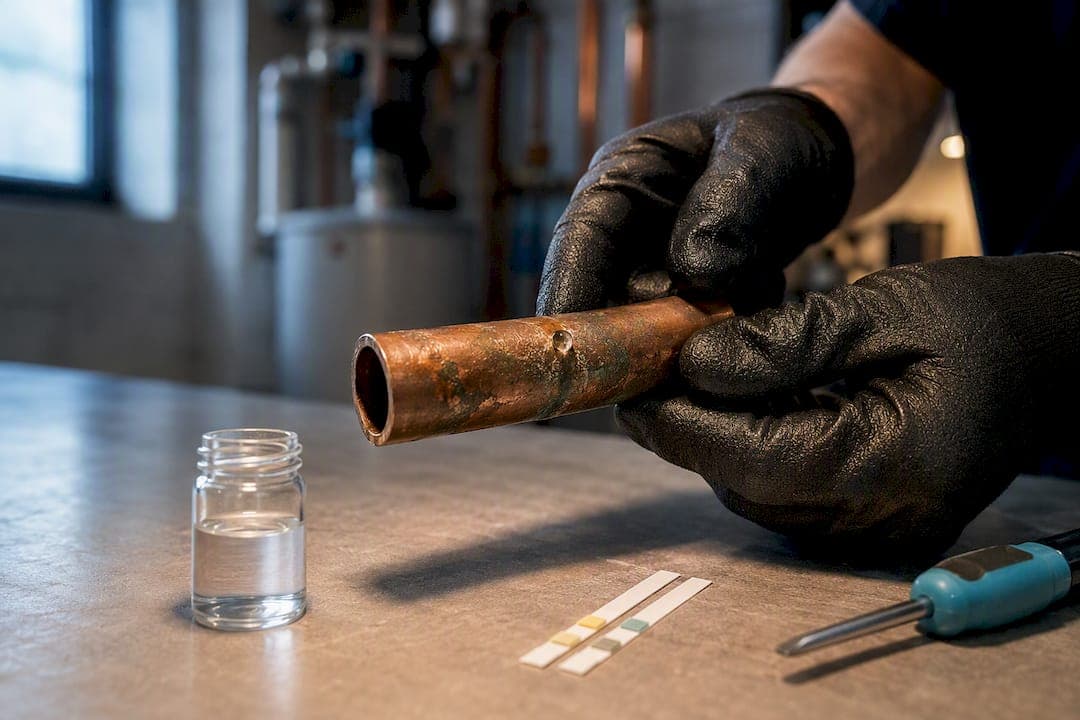
A pinhole leak is a small hole caused by pitting corrosion eating through a copper pipe wall from the inside out, usually driven by aggressive water chemistry combined with installation flaws or electrochemical stress. The most likely culprits are low-pH water, chloride or chlorine exposure, flux residue, or stray electrical current. If you spot one, shut off your main water valve, photograph the damage, and apply a temporary patch or call a plumber before the pipe fails somewhere you can’t see.
TL;DR:
- Most pinhole leaks occur due to localized corrosion driven by acidic water, chlorides, flux residue, electrical currents, and high water velocity, especially in hot water lines.
- Early detection relies on visual signs like blue-green stains, water bills spikes, faint sounds, and moisture, with professional tools helpful for hidden leaks.
- Immediate action involves shutting off the water, photographing damage, applying a temporary patch, and calling a plumber for a proper fix or full replacement if leaks persist.
- Repair methods vary from sleeve patches or push-fit fittings for isolated leaks to full re-piping in systems with multiple or recurring failures, but fixing the pipe doesn’t address underlying water chemistry issues.
- Long-term prevention requires testing water chemistry, using treatments like pH neutralizers, dielectric unions, and avoiding stagnation, with professional inspection recommended after repeated leaks or in old systems.
Table of Contents
- What Causes Pinhole Leaks in Copper Pipes?
- How Do You Detect a Pinhole Leak Early?
- What Should You Do the Moment You Find a Leak?
- Should You Patch, Replace a Section, or Repipe the Whole House?
- Can You Prevent Pinhole Leaks From Coming Back?
- When Should You Call a Professional Plumber?
- Our Take: Chasing Symptoms Doesn’t Fix Corrosive Water
- Get Your Copper Pipes Inspected Before a Small Leak Becomes a Big Repair
- Sources
- FAQ
What Causes Pinhole Leaks in Copper Pipes?
Pinhole leaks form through pitting corrosion, a process where a tiny, aggressive spot on the pipe’s interior wall corrodes faster than the surrounding metal until it punches through. It’s localized damage, not the slow, even thinning you’d expect from age alone. That’s why a 15-year-old pipe can fail while the pipe next to it, installed the same day, stays intact for decades.
Several factors drive this process, often in combination:
- Acidic water with a pH below roughly 6.8 strips copper’s protective oxide layer, according to plumbing specialists at Mid Atlantic Water.
- Chlorides, sulfates, and chlorine or chloramine disinfectants in municipal water accelerate localized attack.
- Flux residue, burrs, and rough soldering left inside joints create weak points where corrosion concentrates.
- High water velocity or turbulence at fittings erodes protective scale and exposes fresh metal.
- Stray electrical currents and galvanic corrosion, often from grounding wires attached to copper plumbing, speed up metal loss at specific points.
Hot water lines tend to fail first because heat accelerates every one of these reactions. A 30-year peer-reviewed review estimates roughly 750,000 pinhole leaks occur in U.S. copper plumbing systems every year, yet the exact mechanisms behind any single failure often remain hard to pin down. Municipal utilities, including Indian River County’s Department of Utility Services, list the same overlapping factors, which tells you this is rarely a single-cause problem.
How Do You Detect a Pinhole Leak Early?
Copper pinhole leaks rarely announce themselves loudly. They tend to weep slowly, which means the earliest clues are visual or acoustic rather than obvious flooding.
- Check for blue-green stains on pipes, walls, or ceilings. Copper corrosion byproducts leave a distinctive teal residue.
- Watch your water bill. An unexplained spike often means water is escaping somewhere behind a wall or under a slab.
- Listen for faint hissing or dripping near exposed pipe runs, especially in basements, crawl spaces, and utility closets.
- Notice pressure drops or musty, mold-like smells in rooms near plumbing chases.
- Run a simple dye test in suspect fixtures, or feel along hot and cold lines for unexplained dampness or discoloration.
- Call in professional detection when signs point to a hidden leak. Plumbers use thermal imaging, pressure testing, and acoustic listening equipment to pinpoint a leak’s exact location without tearing open every wall. Services like water leak detection exist specifically for cases where the leak is suspected but not visible.
What Should You Do the Moment You Find a Leak?
Speed matters here. Water damage compounds fast, and mold can start growing within 24 to 48 hours of sustained moisture.
- Shut off the main water valve immediately to stop the flow at its source.
- Move valuables away from the affected area and photograph the damage for insurance purposes before you clean anything up.
- Apply a safe temporary patch if the leak is small: a slit section of garden hose secured with hose clamps, a rubber patch kit, or plumbing epoxy putty for a tiny weeping hole.
- Consider a plumber-installed quick fix, like a SharkBite push-fit coupling, which stops the leak without soldering and buys time until a permanent repair.
Pro Tip: Never attempt to solder a repair yourself near old wiring or in a space with trapped moisture. Heat combined with dampness or nearby electrical lines is a real safety hazard, and it’s exactly the kind of job a licensed plumber handles routinely.
If the leak is behind drywall or under a slab, don’t cut into structural elements without guidance. Our burst pipe emergency guide walks through what to do while you wait for help.
Should You Patch, Replace a Section, or Repipe the Whole House?
The right fix depends on how many leaks you’ve had, how old your plumbing is, and what’s actually happening to the pipe walls. A single isolated pinhole in an otherwise sound system is a different problem than a house that’s had three leaks in two years.
- Soldered sleeve repair cuts out the damaged section and solders in new copper. It’s durable and blends with existing lines, but it requires exposing the pipe and working with an open flame.
- Push-fit couplings (SharkBite-style) replace a section without soldering. They’re faster and safer in tight spaces but generally seen as a strong interim solution rather than the most permanent one.
- PEX section replacement swaps a length of copper for flexible PEX tubing, which resists the same pitting corrosion since it’s plastic, not metal.
- Whole-house repipe replaces all or most of the supply lines, usually with PEX. This becomes the practical choice when a home has had repeated pinholes, visible pitting in multiple locations, or copper plumbing that’s aging past 20 to 40 years.
Repair costs for a single pinhole typically run in the low hundreds of dollars for a straightforward patch, climbing higher for slab or wall access. A full repipe costs considerably more but resets the clock on the entire system. Our whole-home repipe page breaks down what that process involves.
One thing worth repeating: patching a leak doesn’t fix corrosive water. If the water chemistry that caused the first pinhole hasn’t changed, a second one is often just a matter of time.
Can You Prevent Pinhole Leaks From Coming Back?
Prevention starts with knowing what’s actually in your water. A basic water test checks pH, chloride, and sulfate levels, and it’s the single best diagnostic step before choosing a long-term fix.
- Acid neutralizers, typically calcite beds, raise water pH and are a common whole-house treatment that often stops further copper pitting once installed and maintained.
- Phosphate inhibitors have reduced pinhole outbreaks in some municipal systems, though research on phosphate dosing shows it can also alter scale chemistry and biological activity in pipes, so it’s not a fix to apply casually.
- Dielectric unions at connections between copper and dissimilar metals interrupt galvanic corrosion pathways.
- Reducing water stagnation in rarely used lines and using proper flux and soldering technique during installation cuts down on the workmanship-related causes utilities flag most often.
A 30-year review of pitting corrosion notes that the interaction between these factors is still not fully mapped, which is exactly why a professional water test beats guessing. Systems like smart water monitoring can also flag abnormal flow patterns before a slow leak becomes a big one.
When Should You Call a Professional Plumber?
Some situations don’t leave room for a wait-and-see approach.
- Call immediately if you suspect a hidden leak behind a wall, under a slab, or in a location you can’t inspect yourself.
- Escalate fast if you’ve had more than one pinhole leak in the past year. That pattern usually points to a system-wide water chemistry issue, not bad luck.
- Ask for a water-chemistry test, a written leak-locate report, and separate estimates for a spot repair versus a full repipe, so you can compare costs and long-term value.
- Keep every document you receive: photos, the plumber’s report, and water test results. These matter if you file an insurance claim later.
Local service history counts for more than it might seem. A plumber who’s worked on pipes fed by your specific municipal water supply has already seen how that water behaves in copper, which narrows the guesswork considerably.
Our Take: Chasing Symptoms Doesn’t Fix Corrosive Water

Most guides treat pinhole leaks as a repair problem. We see it more often as a water chemistry problem that happens to show up as a repair. Van Castaneda, drawing on System Wide Services’s plumbing work across Cerritos and the greater Long Beach and Orange County area, notes that a single patched pinhole with no water test behind it is often just a placeholder for the next leak.
The typical approach starts with inspection and leak detection, moves to a water chemistry test, and only then lands on a recommendation: targeted repair when the pipe and water are otherwise sound, or repipe when pitting shows up in multiple spots or the water itself is clearly the problem. That order matters. Fixing the pipe before understanding the water is treating the symptom and hoping the cause goes away on its own. It usually doesn’t.
— Van Castaneda
Get Your Copper Pipes Inspected Before a Small Leak Becomes a Big Repair
A full diagnostic service that pairs leak detection with water chemistry testing can provide a fix that addresses why the pipe failed in the first place, not just where.

If you’ve spotted a stain, heard a hiss behind a wall, or you’re on your second pinhole leak this year, it’s worth scheduling an inspection rather than patching and hoping. A service visit typically includes a visual and instrument-based inspection, a written estimate outlining repair versus repipe options, and a realistic timeline before any work begins. Homes with recurring leaks or older copper systems often benefit from a full evaluation rather than another spot repair, and if the damage has already reached the point of affecting drywall or flooring, our handyman services can handle the restoration once the plumbing is sorted. In cases where water damage is severe enough to affect a sale, AAS Home Buyers offers guidance on options for water-damaged homes. For most homeowners, though, the better move is catching it early. Visit our plumbing services page to schedule an inspection or request a written estimate today.
Sources
- A 30‐year review of copper pitting corrosion and pinhole leaks: Achievements and research gaps
- The mystery behind pinhole leaks in Copper Piping — Indian River County Department of Utility Services
- Pinhole Leaks in Copper Pipes: The Real Cause (And the Permanent Fix) — Mid Atlantic Water
- What type of water damage is covered by homeowners insurance? — Allied Public Adjusters
FAQ
How Common Are Pinhole Leaks in Copper Pipes?
They’re widespread enough that a 30-year peer-reviewed review estimates roughly 750,000 pinhole leaks occur in U.S. copper plumbing systems each year, though researchers still don’t fully understand every mechanism behind them.
How Much Does It Cost to Fix a Pinhole Leak in Copper Pipe?
A single spot repair typically runs in the low hundreds of dollars, while costs climb if the leak is behind a wall or under a slab and requires access work; a full repipe costs considerably more but addresses the whole system at once.
How Do You Fix a Pinhole Leak in Copper Pipe Without Soldering It?
A push-fit coupling like a SharkBite fitting or a slit garden hose secured with hose clamps can stop a leak without any soldering, though these work best as temporary or interim fixes rather than permanent ones.
Does Insurance Cover Pinhole Leaks?
Homeowners insurance usually covers sudden, accidental water damage but commonly excludes gradual damage from wear, tear, or corrosion, so documenting the leak immediately with photos and a plumber’s report improves your chances of a successful claim.
Recommended
Need a hand with this? We've got you covered.
System Wide Services handles plumbing, electrical, and handyman work across Long Beach and LA & Orange County.