
How to Shut Off Water to Your House Fast
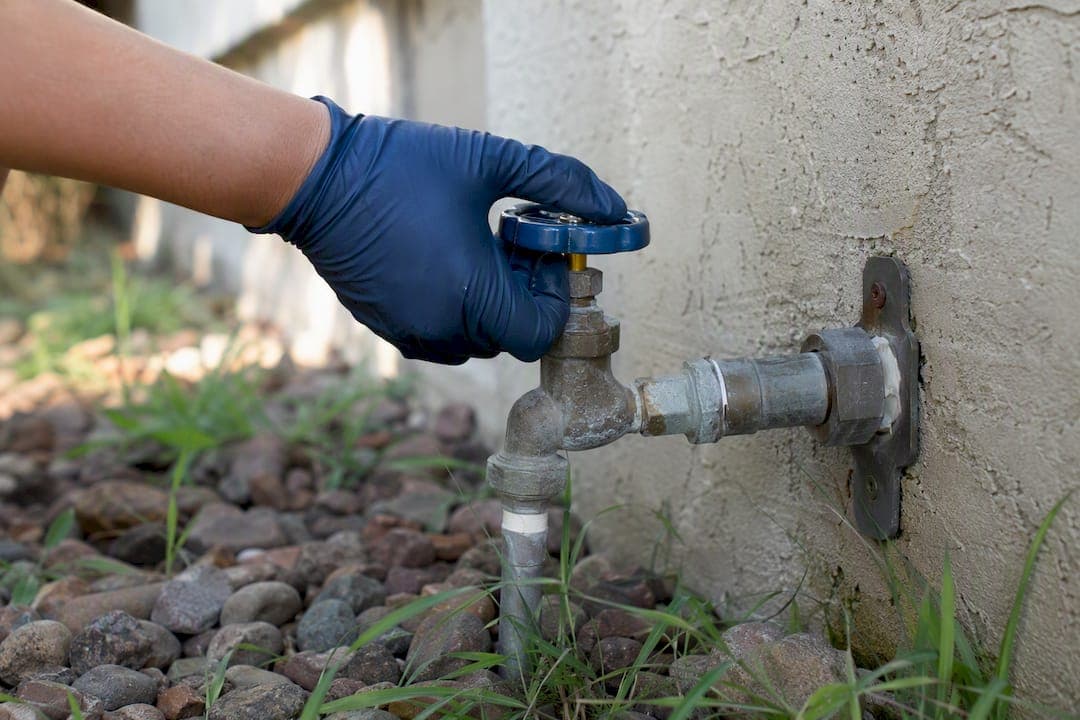
To stop water flowing into your home right now, find the main shut-off valve, usually located where the supply line enters the house, near the water meter, or in a basement, crawlspace, or garage. Turn a lever handle a quarter-turn until it sits perpendicular to the pipe, or turn a wheel handle clockwise until it stops. Before you touch anything else, cut power to an electric water heater so it never runs dry while heating.
TL;DR:
- Most main shut-off valves are located near the entry point of the water line, such as the foundation wall, water heater, or meter box, and should be turned clockwise or a quarter-turn perpendicular to stop the flow.
- Different valve types require specific operation: quarter-turn for ball valves, multiple rotations for gate valves, and a curb key for outdoor utility valves, with seized valves needing professional replacement.
- Isolating water to individual fixtures is recommended for repairs, using small valves under sinks or behind toilets, which can be closed with a simple twist and verified by running the fixture.
- After shutting the main valve, always drain pipes by opening faucets from top to bottom, run toilets to empty tanks, and cut power to electric water heaters, then slowly reopen in reverse order to prevent pressure surges.
- Call a licensed plumber if a valve refuses to turn, is cracked, locked, or if you suspect internal damage, as forcing a frozen valve can cause further damage and leaks.
Table of Contents
- Where to Find Your Home’s Main Water Shut-Off Valve
- How Do You Turn Off Different Types of Water Valves?
- Can You Shut Off Water to Just One Fixture?
- What to Do After You Shut Off the Water
- When a Stuck Valve Means It’s Time to Call a Plumber
- Build Your Own Emergency Water Shut-Off Checklist
- Practice Beats Panic When a Pipe Bursts
- Need a Valve Replaced or Fixed Today?
- Sources
- FAQ
Where to Find Your Home’s Main Water Shut-Off Valve
The valve is almost always near the point where the water line enters your house, which narrows your search fast if you know your home’s layout.
If you have a basement, check within three to five feet of the foundation wall closest to the street. That’s typically where the supply pipe first breaks through. Homes on a slab or without a basement usually hide the valve near the water heater, under the kitchen sink, or inside a garage utility closet. In many cases it sits on the same side of the house as the meter, so walk the perimeter near your water meter box if you’re not finding it indoors.
Outside meter setups add a wrinkle. The meter box, often a rectangular plate in the yard or sidewalk near the curb, houses a valve that usually requires a curb key rather than your hands.
- Basements: near the foundation wall, close to where the pipe enters
- Slab homes: near the water heater, under the kitchen sink, or in a garage closet
- Outdoor setups: inside the meter box, often near the curb or property line
- Older or remodeled homes: sometimes hidden behind drywall or cabinetry, so check your home inspection report first before tearing into walls
Pro Tip: Once you find it, snap a photo, tag the location with a bright zip tie or label, and text that photo to whoever else lives in the house. Five seconds now saves ten panicked minutes later.
How Do You Turn Off Different Types of Water Valves?
Not every valve operates the same way, and knowing which type you have changes how much muscle and patience the job takes.
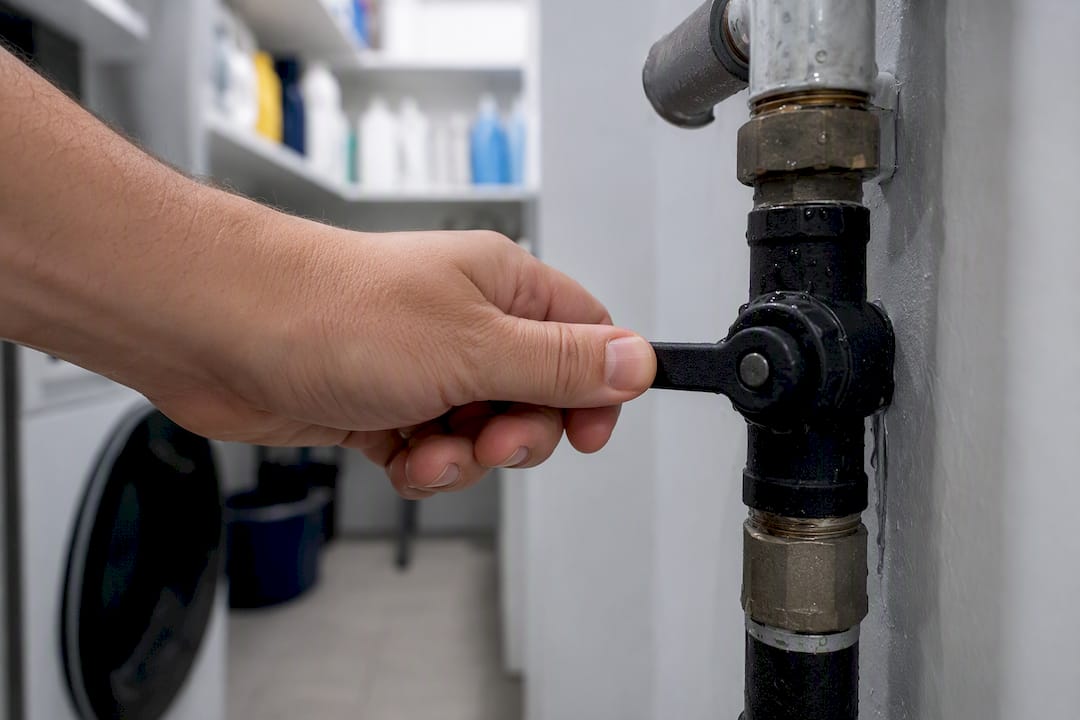
Ball valves are the easiest. A single quarter-turn does the job. When the handle sits parallel to the pipe, water flows; turn it 90 degrees until it’s perpendicular, and the water stops. Ball valves close quickly and hold up well even after sitting untouched for years, which is why most modern homes and plumbers favor them over older styles.
Gate valves, the round wheel-style handles common in older houses, need several full rotations clockwise. Expect more resistance than a ball valve, and don’t be surprised if it takes real effort near the end.
Curb or municipal valves sit inside the meter box and usually require a curb key, a long metal tool that fits over the valve stem below ground. Turn it clockwise until it feels snug.
- Locate the valve type by handle shape: lever means ball valve, wheel means gate valve.
- For a lever, rotate a quarter-turn until perpendicular to the pipe.
- For a wheel, turn clockwise steadily until it stops moving.
- For a curb valve, insert the key and turn clockwise until snug, then check for water flow at an indoor faucet.
- If the valve doesn’t budge, stop turning immediately rather than forcing it.
Pro Tip: If a gate valve feels frozen, spray penetrating oil on the stem, wait ten minutes, then tap the handle gently with a wrench before trying again. Cranking harder on a seized valve is how stems snap off.
Some utilities require a formal request or charge a fee to operate the curb-side valve, so if the meter box valve is buried, locked, or clearly utility property, call them instead of digging around with a screwdriver.
Can You Shut Off Water to Just One Fixture?
Yes, and for most repairs, you should. Cutting water to the entire house is overkill when you’re only fixing a leaky faucet or replacing a toilet fill valve.
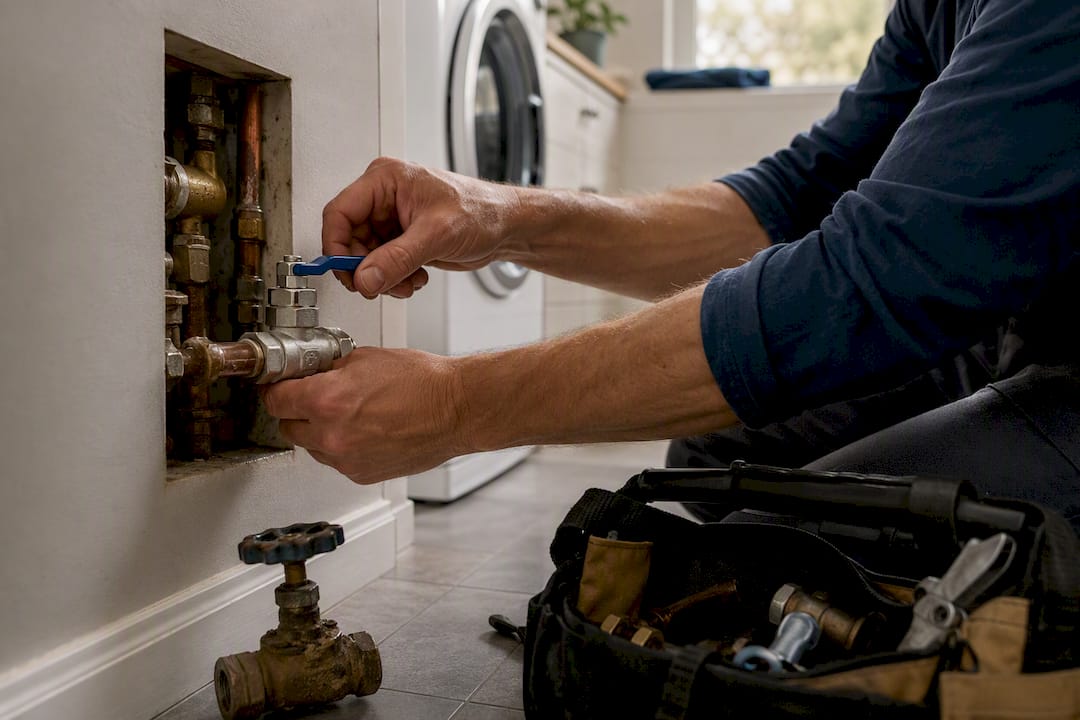
Look for a small oval or round handle directly under sinks, behind toilets, and behind washing machines. These are called isolation valves or angle stops, and they let you isolate a single fixture without touching the main supply.
- Quarter-turn angle stops close with a 90-degree twist, just like a ball valve
- Older multi-turn stops need several rotations clockwise
- After closing, run the fixture above the valve to confirm the water actually stopped
- Washing machines and dishwashers usually have two supply valves, hot and cold, both need to be closed for a full appliance shutoff
What to Do After You Shut Off the Water
Closing the main valve doesn’t finish the job. Pressure and standing water are still sitting in your pipes, and skipping the drain step is how basements flood during “simple” repairs.
- Open the highest faucet in the house first, then work down to the lowest, letting gravity drain the lines and release trapped pressure.
- Flush every toilet once to empty the tanks, and keep flushing until they stop refilling.
- Cut power to an electric water heater at the breaker before draining it; an empty tank with power still running to the heating element can burn out fast.
- For gas water heaters, switch the control to pilot mode or follow the manufacturer’s shutdown instructions before draining.
- When you’re ready to restore service, open the main valve slowly and let air bleed out of faucets one at a time, then wait until the system is fully refilled before powering the water heater back on.
Skipping the slow reopening step is a common mistake. A valve thrown open too fast sends a pressure surge through empty pipes, which is exactly the kind of water hammer that loosens joints and starts new leaks.
When a Stuck Valve Means It’s Time to Call a Plumber
Most valves respond to patience: a shot of penetrating oil, a short wait, and a gentle tap with a wrench handle. What you shouldn’t do is lean on a wrench or pipe for extra leverage. Gate valve stems are often brass, and brass under too much torque snaps rather than bends.
Call a licensed plumber when you hit any of these signs:
- The handle turns but water keeps flowing, which usually means a worn or broken internal seat
- The stem cracks, strips, or spins freely without resistance
- The curb valve is buried, locked, or clearly the utility’s responsibility
- You’re dealing with a major burst and need the whole system isolated immediately, not diagnosed
Pro Tip: Before you call, have your address, the valve’s exact location, and a photo of the valve or leak ready. It cuts diagnosis time in half and helps the plumber bring the right parts on the first trip.
System Wide Services fields these calls regularly across its Los Angeles and Orange County service area, and a seized gate valve is one of the most common reasons homeowners reach out. Licensed plumbers typically replace a failing gate valve with a modern ball valve during the repair, which solves the seizing problem for good instead of leaving you fighting the same stuck handle next year.
Build Your Own Emergency Water Shut-Off Checklist
Print this and tape it near your electrical panel or valve location:
- Find the main shut-off valve.
- Turn it off: quarter-turn for a lever, clockwise for a wheel.
- Open faucets top to bottom to drain the lines.
- Cut power to the water heater.
- Photograph the damage and call a plumber if needed.
Note the valve type, its exact location, and your plumber’s number on the same sheet. Pro Tip: Practice the shutoff once when there’s no emergency. The first time you touch that valve shouldn’t be during a flood.
Practice Beats Panic When a Pipe Bursts
Most emergency plumbing calls share the same story: a pipe bursts at 11 p.m., and the homeowner spends the first ten minutes hunting for a valve they’ve never touched. Plumbing professionals consistently point to the same fix: find the valve, operate it once, and label it, before you ever need it under pressure.
Labeling and practicing costs you five minutes on a calm Saturday. It saves gallons of water and drywall repair bills during an actual emergency. And when a valve is seized, buried, or simply refuses to cooperate, that’s not a DIY failure. That’s what licensed plumbers exist for.
— Van Castaneda
Need a Valve Replaced or Fixed Today?
If your main shut-off is seized, cracked, or missing entirely, a temporary fix isn’t worth the risk of a repeat emergency next month. System Wide Services is a direct, local alternative to guessing your way through a valve repair. As a veteran and woman-owned company serving Cerritos, Long Beach, and the surrounding Los Angeles and Orange County area, System Wide Services handles valve replacement, emergency shutoff assistance, leak isolation, and main line repair with the kind of same-day response homeowners need when water is already on the floor.
Backed by a 5.0 average customer rating, the team shows up ready to swap out a failing gate valve for a modern ball valve, trace a hidden leak, or isolate damage before it spreads to drywall and flooring. When you call, have your address, the valve’s location, and a photo of the issue ready, it speeds up diagnosis and gets a technician moving with the right parts already on the truck. Visit the plumbing services page to check availability in your city, or find your local page, including Torrance, Rossmoor, or La Palma, and get a technician scheduled today.
Sources
How to find and operate your home’s water shut off valve — MWUA Where is the water shut-off valve? — AHS Types of water shutoff valves and how to choose one — The Spruce How to turn off the water to your house — The Home Depot Gurgling pipes problem solving — J&M Septic
- Where is the water shut-off valve? — AHS
- How to find and operate your home’s water shut off valve — MWUA
- How to turn off the water to your house — The Home Depot
FAQ
How do I shut the main water off to my house?
Find the main shut-off, usually near the foundation wall, water heater, or meter box, then turn a lever handle a quarter-turn or a wheel handle clockwise until it stops.
Can I shut off water to just one faucet?
Yes. Most sinks, toilets, and appliances have a dedicated isolation valve, or angle stop, that lets you cut water to that fixture alone without touching the main supply.
What is a water shut-off valve called?
The main valve is often called a main shut-off, stop valve, or curb valve when it sits in the meter box; fixture-level valves are called isolation valves or angle stops.
Is it a good idea to shut off water to the house?
Shutting off the main is the right move during an active leak, burst pipe, or major repair, but for a single fixture repair, use that fixture’s isolation valve instead so the rest of the house keeps running water.
What if the shut-off valve won’t turn?
Try penetrating oil and a gentle tap first, and never force it. A stem that won’t budge or breaks off is a job for a licensed plumber, not extra elbow grease.
Recommended
Need a hand with this? We've got you covered.
System Wide Services handles plumbing, electrical, and handyman work across Long Beach and LA & Orange County.