
1–2 Hours to Pass Inspection: California Expansion Tank Rules
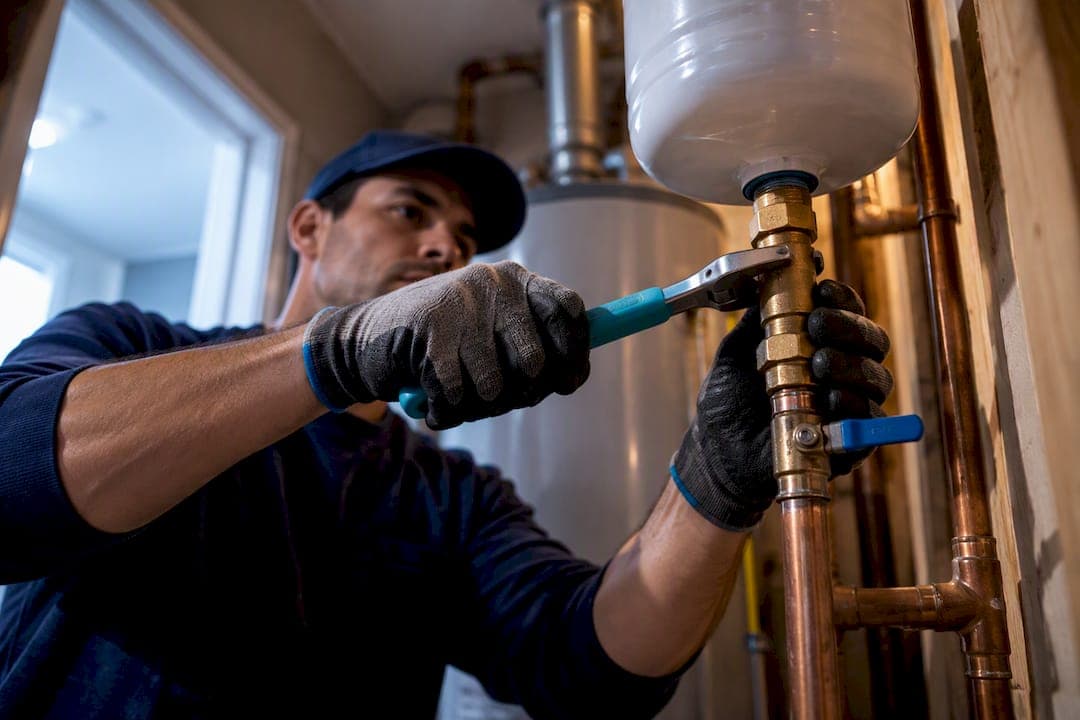
Yes, an expansion tank requirement in California kicks in whenever your water system is closed, meaning a check valve, pressure-reducing valve, backflow preventer, or certain water meters block pressure from escaping back into the main. The requirement comes from the California Plumbing Code, mirrored in IPC Section 608.3. Skip it, and you’re not just risking a code violation. You’re risking a failed inspection and a stalled home sale.
TL;DR:
- Homes with check valves, pressure-reducing valves, or backflow preventers installed are required to have an approved expansion tank to prevent pressure buildup.
- Proper installation requires placing the tank downstream of the valves, adjusting its pre-charge to match static pressure, and securing it with seismic bracing to pass local inspections.
- An improperly sized or mounted tank, especially if mounted horizontally or without correct pre-charge, is a common reason for inspection failure in California.
- Missing or wrongly placed expansion tanks may cause inspection delays, especially during home sales, emphasizing the importance of professional installation and verification before permitting.
Table of Contents
- What The Expansion Tank Requirement In California Actually Says
- How To Tell If Your Home Needs An Expansion Tank
- Installing An Expansion Tank The Right Way
- Choosing The Right Size Expansion Tank
- What Permits, Inspections, And Cost Actually Look Like
- Spotting A Failing Expansion Tank Before It Fails You
- Why This Keeps Showing Up On Inspection Reports
- Get Your Expansion Tank Installed Right The First Time
- Sources
- FAQ
What The Expansion Tank Requirement In California Actually Says
The code language sounds technical, but the idea behind it is simple. When cold water flows through a check valve, pressure-reducing valve, or backflow preventer before reaching your water heater, that valve traps pressure inside your plumbing system instead of letting it escape back toward the street. Heat that trapped water, and pressure spikes. The IPC Section 608.3 standard requires a thermal expansion control device connected downstream of those valves, sized according to the manufacturer’s instructions.
Local building departments across Los Angeles and Orange County build this straight into their inspection checklists. Inspectors look for the tank on the building side of any closed-system component, confirm it’s rated for potable water, and verify it matches the water heater’s capacity.
Three things trigger enforcement almost every time:
- A visible check valve or backflow preventer near the water meter or main shutoff
- A pressure-reducing valve installed on the incoming water line
- A water heater replacement or system alteration that requires a new permit
Statistic to remember: A water system with any normally closed device preventing pressure from dissipating into the main must have an approved, listed expansion tank or equivalent device sized to the system. That’s not optional language in the code. It’s a mandate tied directly to whether your system is open or closed.
How To Tell If Your Home Needs An Expansion Tank
A closed system is any plumbing setup where a device stops water pressure from flowing back out to the municipal main once it enters your home. An open system lets pressure equalize naturally in both directions, and rarely needs a tank at all. Most homes built or renovated in the last two decades fall into the closed category, often without the homeowner realizing it.
Here’s how to check your own setup:
- Look at your water meter for a check valve or dual-check backflow device, common on newer municipal connections.
- Trace your main water line for a pressure-reducing valve, usually a bell-shaped fitting near where the line enters the house.
- Check for a water softener or irrigation backflow preventer, both of which quietly close the system even if your main line looks open.
- If you see none of these but pressure still seems to fluctuate, call a plumber for a pressure test before assuming you’re clear.
The biggest misconception homeowners run into is assuming an open-looking system is actually open. Many modern water meters install internal check valves that aren’t visible from outside the box.
Pro Tip: If your city upgraded its water meters recently, ask your plumber to check for an internal check valve before you rule out needing a tank. Many California municipalities added them during meter replacement programs without notifying homeowners.
Installing An Expansion Tank The Right Way
Placement is where most installs go wrong, and it’s the single biggest reason a job fails inspection. The tank has to sit on the building side, downstream of the check valve, PRV, or backflow preventer. Mount it upstream and you’ve defeated the entire purpose. The trapped pressure never reaches the tank, and your inspector will send you back to square one.
Pre-charge matters just as much as placement. Every expansion tank ships with a factory air charge, but that number rarely matches your home’s actual static water pressure. A licensed plumber measures your incoming pressure with a gauge and adjusts the tank’s air charge to match before connecting it. Skip that step, and the tank waterlogs early, sometimes within months.
Common mistakes that trip up inspections:
- Mounting the tank horizontally without proper support brackets
- Skipping seismic straps, which many California jurisdictions require for tanks near water heaters
- Leaving the factory pre-charge unadjusted
- Installing on the wrong side of the backflow device
Seismic bracing shows up repeatedly on municipal checklists because California’s building code treats tank stability as a safety issue, not a cosmetic one.
Choosing The Right Size Expansion Tank

Expansion tanks for residential use are almost always diaphragm or bladder-style tanks listed for potable water contact, meeting standards like IAPMO Z1088. That listing isn’t a technicality. It confirms the tank’s internal materials won’t leach into your drinking water supply.
A widely used starting guideline is roughly 1.5 US gallons of expansion tank capacity per 50 gallons of water heater storage. Treat that as a planning number, not a final answer. Your home’s static water pressure, incoming water temperature, and the heater’s actual thermostat setting all shift the math.
- Standard 40 to 50 gallon tank water heaters typically pair with a 2 to 4.5 gallon expansion tank
- Higher static pressure, common in hillside neighborhoods with gravity-fed lines, pushes sizing upward
- Manufacturer sizing charts always override rule-of-thumb estimates for final selection
Statistic worth noting: Manufacturer sizing tables factor in tank volume and static pressure together, and inspectors generally expect the installed tank to match that chart, not a generic estimate pulled from a size guide.
What Permits, Inspections, And Cost Actually Look Like
Replacing a water heater or altering your plumbing system in most California cities requires a permit, and that permit triggers an inspection where the expansion tank gets checked directly. Missing or incorrectly placed tanks are one of the most common reasons inspections stall, which becomes a real problem if you’re mid-escrow on a home sale.
- Permit fees and requirements vary by city, so check with your local building department before starting work
- A missing expansion tank found during a home sale inspection routinely triggers renegotiation or repair credits
- Expect a professional installation to take one to two hours as part of a water heater job
- DIY installation is possible for confident homeowners, but pre-charge adjustment and code placement are easy to get wrong without training
For permit-related headaches around water heater work, getting it right the first time avoids a second inspection visit entirely.
Spotting A Failing Expansion Tank Before It Fails You
A waterlogged tank is the most common failure, and it happens when the internal bladder loses its air charge or ruptures.
- Watch for your temperature and pressure relief valve dripping repeatedly. That’s often the first visible sign the tank isn’t absorbing expansion anymore.
- Tap the tank gently. A healthy tank sounds hollow on top and solid on the bottom, where water sits.
- Check for visible moisture or rust around the tank’s mounting bracket, a sign of a slow leak.
- Have a plumber verify pre-charge pressure with a gauge every few years. Most tanks last 5 to 10 years depending on water quality and usage.
- Shut off water supply and power to the water heater before any hands-on inspection, and call a licensed plumber for anything beyond a visual check.
Why This Keeps Showing Up On Inspection Reports
Missing or misplaced expansion tanks are one of the most repeated callbacks we see across Los Angeles and Orange County plumbing inspections. Homeowners assume their system is open when a hidden meter valve or softener has quietly closed it. Getting a licensed plumber to verify placement and pre-charge before your inspection saves a second trip and keeps your sale timeline intact.
— Van Castaneda
Get Your Expansion Tank Installed Right The First Time
Expansion tank installation should be handled as part of full water heater service, not as an afterthought bolted on after a failed inspection. A qualified installation includes placing tanks on the correct side of backflow devices, matching pre-charge to the home’s static pressure, and adding seismic bracing where required, to help ensure inspections pass the first time.
Homeowners and property managers in the Los Angeles and Orange County area can find services with same-day response for urgent water heater needs. If you’re weighing whether to hire a licensed contractor versus handling installation yourself, understanding what plumbing compliance actually requires is worth a few minutes before you decide.
Whether you need a new expansion tank added to an existing water heater or a full replacement with permit handling included, schedule a water heater inspection or estimate and we’ll confirm exactly what your system needs before any work begins.
Sources
- Expansion Tanks, and Combination Temperature and Pressure-Relief Valves | UpCodes
- How To Guide #2 - Water Heater Replacement (OSHPD/HCAI guide)
Always confirm jurisdiction-specific rules with your local building department before starting work.
FAQ
Are Expansion Tanks Mandatory In California?
Yes, when your water system is closed, meaning it has a check valve, pressure-reducing valve, or backflow preventer. The California Plumbing Code and IPC Section 608.3 require a thermal expansion control device in these conditions.
Is It Code To Have An Expansion Tank On Every Water Heater?
No, only closed systems require one. Open systems without a check valve or backflow preventer generally don’t trigger the requirement, though inspectors may find non-visible closed conditions during a water heater replacement.
When Did Expansion Tanks Become Required In California?
The requirement has been part of the plumbing code for years and applies whenever a closed system exists, not tied to a single recent change. It’s enforced consistently now during permitted water heater replacements and new installations.
Do You Really Need An Expansion Tank If Your Water Pressure Seems Fine?
Stable pressure day to day doesn’t mean your system is open. A hidden check valve at the meter can still close the system, and a plumber’s pressure test is the only reliable way to confirm it either way. System Wide Services can verify this during a routine water heater installation or repair visit.
What Happens If An Inspector Finds No Expansion Tank?
The inspection typically fails, and you’ll need to install a properly sized, correctly placed tank before the permit closes out. During a home sale, this often surfaces during escrow and delays closing until it’s corrected.
Recommended
Need a hand with this? We've got you covered.
System Wide Services handles plumbing, electrical, and handyman work across Long Beach and LA & Orange County.