
Battery Storage Cost in California: 2026 Price Guide
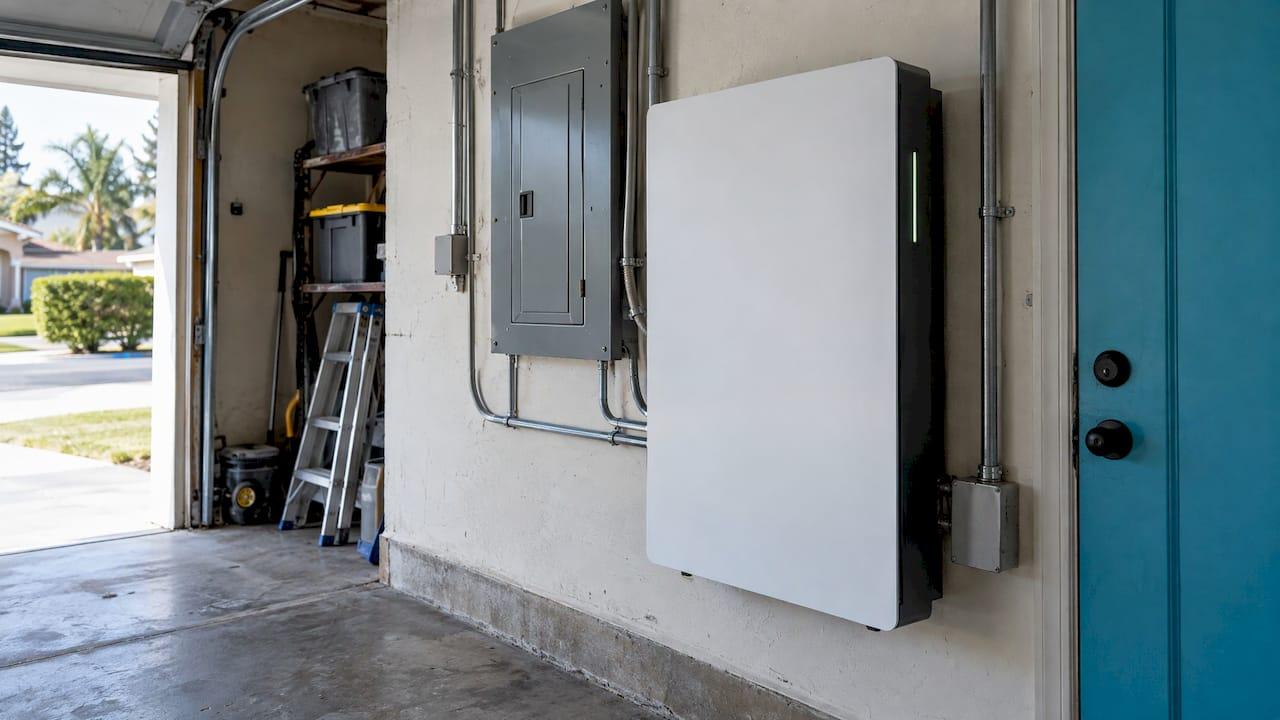
Most California homeowners should plan on roughly $8,000 to $18,000 installed for a single home battery. Larger whole-home systems can run well past that. The final number depends on battery size, the hardware chosen, whether your electrical panel needs work, and your city’s permit process. Federal tax credit money is no longer part of the picture in 2026, but California programs can still bring the cost down for qualifying households.
This guide breaks down where the money goes, what the tiers look like, and what to confirm in a quote before you sign. We are an electrical and plumbing contractor serving Cerritos, Long Beach, and the Los Angeles and Orange County area, so the focus is on Southern California homes.
TL;DR
- Southern California contractor data puts single-home battery jobs at $8,000 to $30,000+, with most landing between $12,000 and $18,000 installed.
- The battery itself is only part of the bill. Panel upgrades, permits, interconnection, and labor can add thousands.
- The federal 30% residential credit expired on December 31, 2025. State programs such as SGIP are the main source of help now.
- A quote should list the exact hardware, permits, panel work, and inspection, so two bids can be compared fairly.
Table of Contents
- What a home battery costs in California in 2026
- What drives the total price
- Adding a battery to solar vs. installing both together
- Incentives that still lower the cost in 2026
- A worked example
- What to check in a battery quote
- Our perspective on battery storage in Southern California
- Plan your battery project with System Wide Services
- FAQ
- Sources
What a home battery costs in California in 2026
Price ranges differ by source, but they cluster closely. One Southern California contractor resource reports that average installed job tickets in the Los Angeles metro and Orange County run $12,000 to $18,000, including equipment, labor, and interconnection fees. The same source gives a wider range of $8,000 to $30,000+ depending on the home and system.
By size, that source describes four tiers for Southern California:
| System tier | Typical capacity | Installed price range |
|---|---|---|
| Entry level | 10 to 13.5 kWh | $8,000 to $12,500 |
| Mid tier | 13.5 to 20 kWh | $12,500 to $18,000 |
| Whole home, stacked units | 20 to 40 kWh | $18,000 to $28,000 |
| Premium, managed load | 40+ kWh | $26,000 to $32,000+ |
These are market ranges from a Southern California tier breakdown, not quotes from us. Your own number depends on the factors below.
Cost per kWh: a quick way to sanity-check a bid
Dividing the installed price by the battery’s usable kWh gives a rough yardstick. Public estimates for California cities have recently landed around $1,000 per kWh or a little above, which is consistent with the tier table: a 13 kWh system at that rate is about $13,000. A bid far above or below that rate is worth a closer look at what is included, such as the inverter, the gateway, the panel work, and permits.
The trend has been upward in the past. The California Public Utilities Commission’s market assessment found that self-reported installed costs for small residential batteries in its incentive program rose from $0.83 per watt-hour in 2017 to $1.18 per watt-hour by the end of 2021. The study pointed to new products, higher labor costs, and installation through non-manufacturer channel partners.
How Los Angeles area pricing compares with the state
Los Angeles and Orange County sit in the middle of the statewide range rather than at an extreme. The tiers above were built for the LA metro, San Fernando Valley, Orange County, San Diego, and Inland Empire markets together, and published city estimates for Los Angeles are near $1,000 per kWh. The bigger local swings come from permit fees, utility interconnection timelines, and the age of your electrical service, not from the battery price itself.
What drives the total price
Battery capacity and what you want to back up
Capacity is the biggest lever. A single battery of about 10 to 13.5 kWh typically covers essentials such as the refrigerator, lights, internet, and phone charging through an evening or an outage. Running air conditioning, an EV charger, or a well pump pushes you toward 20 kWh or more, and each added unit raises the price.
Decide in advance which circuits matter. Backing up a handful of critical loads costs less than whole-home backup, and the choice also changes how much panel work is required.
Hardware: brand, inverter, and configuration
Hardware is the largest share of the bill. Battery models differ in capacity, continuous power output, warranty length, and whether the inverter is built in or separate. A battery with a higher continuous output can run more circuits at once. Two bids for “13.5 kWh” can describe quite different equipment, so ask for the model names and the power rating, not only the kWh figure.
Your electrical panel
Panel capacity is the cost most homeowners do not expect. The CPUC study found that nearly half of customers who installed storage needed an electrical panel upgrade, and that upfront costs and panel upgrades ranked as bigger barriers than safety concerns.
Older homes are most likely to be affected. A Southern California contractor resource notes that pre-1980 homes frequently need a 200-amp service upgrade, at roughly $2,500 to $6,000, before a battery can go in. Many Cerritos and Long Beach homes were built in that era. If your home has a 100-amp panel, a crowded breaker box, or older wiring, plan for this line item. Our electrical panel upgrade page explains how we approach it. If you are also planning an EV charger, it helps to check panel capacity before paying for upgrades, because one upgrade can often serve both projects.

Permits, plan check, and interconnection
Permit and plan check fees vary by city. The same Southern California source puts fees in Los Angeles City, Los Angeles County, and San Diego at $500 to $1,500, and notes that LADWP territory has historically added four to eight weeks to timelines. Utility interconnection approval is a separate step that affects when you can switch the system on. Cerritos homes are served by Southern California Edison, so ask your installer how they handle that application and how long it is currently taking.
Labor and site conditions
Where the battery goes matters. A garage wall near the panel is the simplest case. A long conduit run, an outdoor install that needs weather protection, or a tight utility room adds labor. Clearance rules around batteries also limit where they can be placed, so the location should be settled during the site visit, not after the equipment arrives.
Adding a battery to solar vs. installing both together
If you already have solar, adding a battery to it is usually cheaper than a new solar-plus-storage system, because the panels and roof work are already done. The compatibility of your existing inverter matters: some systems need an additional inverter or a gateway to work with a battery.
If you do not have solar yet, bundling can reduce repeated costs such as permitting and the electrical visit. Lawrence Berkeley National Laboratory’s data shows that paired residential systems in 2024 had a median cash price $1.7 per watt higher than stand-alone solar systems. The same report notes that California accounts for about 90% of the storage sizing data, so the figures reflect California conditions closely.
Incentives that still lower the cost in 2026
Federal credit: no longer available
The federal residential clean energy credit that covered 30% of battery costs ended for systems installed after December 31, 2025 under the One Big Beautiful Bill Act. If you see older articles or calculators that subtract 30%, they are out of date.
SGIP and the equity programs
California’s Self-Generation Incentive Program is the main state rebate. Its equity budget is aimed at households with lower incomes. The CPUC’s $280 million Residential Storage and Solar Equity program opened statewide applications on June 2, 2025. Households at or below 80% of Area Median Income, or those verified through programs such as CARE, FERA, and ESA, can receive up to $1,100 per kWh of storage and $3,100 per kW of solar. A single-family home can be covered for a 15 kWh battery and a 5 kW solar system.

Funding and eligibility rules change by program step and budget availability, so confirm the current status on the CPUC or SGIP program pages before you plan around a rebate. We keep a separate guide on what battery incentives still pay in California.
Property tax treatment
California’s active solar energy system exclusion under Revenue and Taxation Code Section 73 covers storage devices and power conditioning equipment, so adding them does not trigger a property tax reassessment. The section is set to become inoperative on January 1, 2027, and systems completed before that date stay excluded until the property changes ownership. If you are close to a decision, ask your installer about timing and talk to a tax professional about your situation.
Utility programs
Some utility and state programs pay customers for allowing grid use of their batteries rather than offering an upfront rebate. These vary by utility and change often, so check your utility’s current offerings when you sign up.
A worked example
Take a Cerritos home built in the 1970s with a 100-amp panel, wanting backup for the refrigerator, lights, internet, and a few outlets.
- Battery and inverter: a 10 to 13.5 kWh system, in the entry-level tier of $8,000 to $12,500 installed.
- Panel work: an upgrade to 200 amps, in the $2,500 to $6,000 range cited above.
- Permits: $500 to $1,500 depending on the jurisdiction.
- Incentives: none by default. A qualifying low-income household could be eligible for equity program funding.
A homeowner whose panel is already adequate skips line two, which is why two neighbors with the same battery can pay very different totals. Treat these as ranges from published market data, not a quote.
What to check in a battery quote
Before comparing prices, line the quotes up on the same terms:
- Specific hardware: battery model, usable kWh, continuous power output, and inverter type.
- Panel work: whether a service or panel upgrade is included, and at what amperage.
- Permits and inspection: who pulls the permit, who pays the fees, and whether final inspection is in the price.
- Interconnection: who submits the utility application and the expected timeline.
- Backup scope: which circuits are backed up and for roughly how long.
- Warranty: length, what it covers, and who services it locally.
- Incentive handling: whether the installer helps with paperwork for any program you qualify for.
If your project also involves rewiring or new circuits, planning ahead helps. A guide on smart home wiring planning covers how to think through circuits and prewiring before work begins.
Our perspective on battery storage in Southern California
We install and service the electrical side of homes every week, and the most common surprise on a battery project is not the battery. It is the panel, the permit, and the wiring between them.
That is why we think a battery job is best handled by a licensed team that already works in panels, circuits, and permits. Our electrical crew handles panel upgrades, generator and battery storage installation, EV chargers, and rewiring, so the pieces of one project do not get split among separate contractors.
Our approach is to look at your panel and your goals first, explain the scope in plain language, and give you upfront pricing before work starts, without upsell pressure. Whether you want outage backup, solar pairing, or more control over your power use, the right size is the one that fits how your household actually uses electricity.
Van Castaneda
Plan your battery project with System Wide Services
We are a licensed, veteran and woman-owned company based in Cerritos, serving Los Angeles and Orange County. For batteries, we cover the electrical work that decides the final price: panel capacity, circuits, permits, and installation. You can read about our home battery storage installation service, or see everything we do on our electrical services page.
If you want a clear scope and upfront pricing for your home, contact us through systemwideservices.com. Our customers rate us 5.0 on average, built on fast response and clear communication. If you are weighing backup options, our guide to whole house generator costs in Cerritos can help you compare approaches.
FAQ
How much does a Tesla-sized home battery cost in California?
A battery in the 13.5 kWh class typically falls in the mid tier of Southern California pricing, about $12,500 to $18,000 installed, according to regional contractor data. The exact price depends on the model, panel work, and permits.
Is there still a tax credit for home batteries in California?
The federal 30% credit expired on December 31, 2025, so batteries installed in 2026 do not qualify. California’s SGIP equity programs may still help eligible lower-income households, and the property tax exclusion remains in place for systems completed before January 1, 2027.
Do I need a panel upgrade to install a battery?
Often, yes. The CPUC found that nearly half of customers who installed storage needed a panel upgrade. An electrician can check your panel’s capacity and tell you during a site visit.
How long does installation take?
The physical install is usually short, but permits and utility interconnection set the real timeline. In LADWP territory, timelines have historically been four to eight weeks longer. Ask your installer for the current expected schedule in your city.
Sources
- Home Battery Storage Installation Cost California
- CPUC 2021 SGIP Energy Storage Market Assessment
- CPUC: $280 Million Program to Expand Battery Storage and Solar Access
- LBNL: U.S. Distributed Solar and Storage, 2025 data update
- Home Battery Storage Rebates 2026
- California solar incentives in 2026
Recommended
Need a hand with this? We've got you covered.
System Wide Services handles plumbing, electrical, and handyman work across Long Beach and LA & Orange County.