
Hard Water in Cerritos, CA: Hardness Levels and What to Do
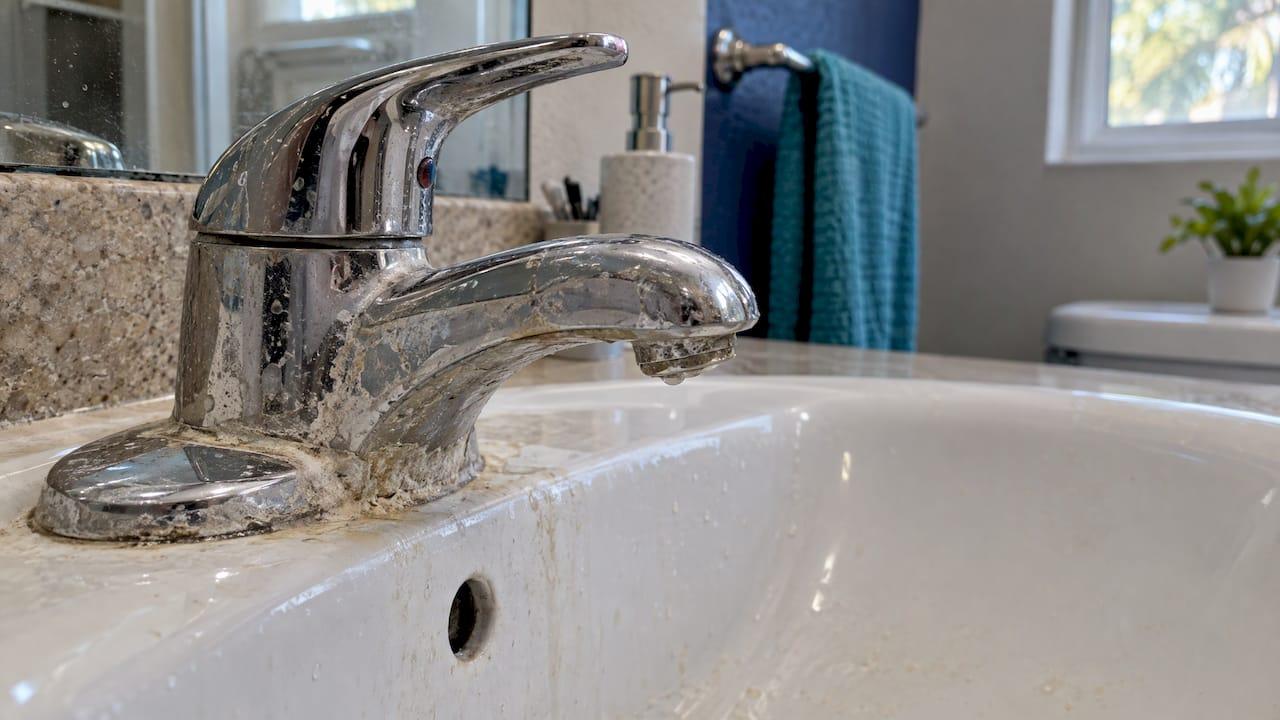
Yes, Cerritos has hard water. Published lab results for the city’s water system put hardness at roughly 165 to 217 mg/L, which sits in the hard range and touches the very hard line. It is safe to drink, but it leaves scale in water heaters, fixtures and pipes. If you want it handled once and correctly, our licensed team installs softening and filtration systems across Cerritos and Long Beach.
TL;DR
- Cerritos water is hard: one analysis of the city system’s 2021 to 2024 lab results gives a median of 175.5 mg/L (10.3 gpg), and the range runs up to about 217 mg/L.
- Hard water is not a health concern. The cost shows up in scale, water heater efficiency and appliance life.
- Your own tap can differ from the utility report, so check which provider serves your address and measure at home.
- A salt-based softener removes the minerals. A filter handles taste and chlorine. They are two different jobs.
- We install both, and one team can also look at your water heater and pipes at the same visit.
Table of Contents
- How hard is Cerritos water?
- Where your Cerritos water comes from
- Is hard water safe to drink?
- What hard water does to your home
- How to check your own water hardness
- Softener, conditioner or filter: what each does
- What a softener costs and what it takes to maintain
- Perspective
- Talk to us about softening your water
- FAQ
- Sources
How hard is Cerritos water?
Hardness is the amount of dissolved calcium and magnesium in water. Reports give it in milligrams per liter (mg/L) as calcium carbonate, or in grains per gallon (gpg). One gpg equals 17.1 mg/L.
The U.S. Geological Survey scale works like this:
| Class | mg/L as calcium carbonate | Approx. gpg |
|---|---|---|
| Soft | 0 to 60 | 0 to 3.5 |
| Moderately hard | 61 to 120 | 3.6 to 7 |
| Hard | 121 to 180 | 7 to 10.5 |
| Very hard | Above 180 | Above 10.5 |
The City of Cerritos 2025 Consumer Confidence Report lists total hardness by well: 180 mg/L (range 170 to 200), 240 mg/L (range 190 to 280) and 230 mg/L (range 190 to 280). Independent summaries of state lab data for the same system are a little lower. One reports a median of 175.5 mg/L, 10.3 gpg, and another reports a range of 170 to 217 mg/L. Both point the same way: hard water, at or near the top of the scale.
Figures like these are published for a period and change as the city blends its sources, so read the latest annual report rather than treating any one number as fixed. The report is released each year, and the city posted its 2025 report in June 2026.
Where your Cerritos water comes from
Most of the city’s supply is local groundwater. The 2025 report describes three wells in the Central Groundwater Basin, 640 to 1,000 feet deep, which supplied about 97.7% of the year’s water. The rest was treated surface water from the Metropolitan Water District. Groundwater picks up minerals from the rock it passes through, which is why it tends to be hard.
Not every address is on the city system. The City of Cerritos Water Department is listed with the State Water Board as serving about 46,851 people. Golden State Water Company also serves portions of Cerritos in its Central Basin East area. Check your bill to see which one sends it. If you are on the city system and want your water tested, the Water Division can be reached at (562) 407-2674.

Is hard water safe to drink?
Yes. The city states that its water meets all primary state and federal drinking water standards, and the EPA’s WaterSense guide says hard water is not a health concern. The issue is what it does to your house.
What hard water does to your home
When hard water is heated, calcium carbonate comes out of solution and forms scale. Over time that scale can:
- Coat the inside of your water heater, so it takes more energy to heat water and the tank wears sooner.
- Narrow pipes gradually, which reduces flow and pressure.
- Clog showerheads and faucet aerators.
- Shorten the life of toilet components and washing machines, according to the EPA.
- Leave soap scum, spotted glassware, gray-looking laundry and sticky-feeling hair and skin, as NDSU Extension describes.
The water heater is where most Cerritos homeowners feel it first. A heater that runs long, rumbles, or delivers less hot water than it used to may have a scale problem, though not every fault is hard water. If your heater is struggling, a plumber should look at the tank itself, and our water heater installation and repair team does that. Our guide to what water heater repair costs in Cerritos explains the price factors.
How to check your own water hardness
A utility report reflects water leaving the treatment system. The USGS notes that regional data is not meant for decisions about an individual home, so measure at your tap.
- Read the annual report. Find hardness listed as calcium carbonate and compare it with the table above.
- Try a test strip. Dip, wait 15 to 30 seconds and compare the color to the chart. It is a quick screen, and you can find strips at hardware stores.
- Do a soap test. Put 10 drops of pure liquid soap in a bottle of tap water and shake it. Shallow suds and cloudy water suggest hard water.
- Use a lab for a precise number. A hardness test typically costs about $10 to $20.
Visible white crust is a clue, not a measurement. Measure first, then decide on treatment. Virginia Cooperative Extension says hardness under 7 gpg (120 mg/L) generally does not need treatment. Cerritos readings are above that, and the EPA notes softeners are often recommended above 180 mg/L (10 gpg), which is where many Cerritos readings sit.
Softener, conditioner or filter: what each does
These are three different tools, and people often buy the wrong one.
- Salt-based softener (ion exchange). Removes calcium and magnesium by swapping in sodium. This is the option that actually removes hardness. The CDC notes softeners mainly remove calcium and magnesium and do not remove germs.
- Salt-free conditioner. Changes how minerals form crystals instead of removing them. It uses no salt, but it is a different result from softening.
- Whole-house carbon filter. Improves taste and smell by removing chlorine and chloramine. It does not soften.
- Reverse osmosis. Usually a drinking-water system at the kitchen tap, with much finer filtration.
A common setup is a softener on the whole house, with a separate drinking-water filter in the kitchen. We install water softeners and water filtration systems, so you can have both sized and installed together.
What a softener costs and what it takes to maintain
One published 2026 guide puts salt-based softeners at $600 to $2,000 for the unit, salt-free conditioners at $500 to $1,500, whole-house carbon filters at $500 to $1,800, and installation at $300 to $1,000. Salt runs roughly $60 to $180 a year. These are national ranges. We do not publish a price list, so ask us for a quote for your house.

Two practical points. Softeners regenerate with brine, and the EPA says that can waste water and create salty discharge, so correct sizing and settings matter. And the right size depends on your household and your hardness, which is why the measurement step comes first. For a broader look at how water damage affects floors in your home, see this guide on hardwood floor water damage repair.
Perspective
Most homeowners we talk to in Cerritos do not need to be scared of their water. It is safe. What they need is a clear picture of what scale is doing to the water heater and the pipes behind the walls.
We handle plumbing, electrical and handyman work with one licensed in-house team, so a softener install does not turn into three contractors. The same plumber who sets the softener can look at your water heater, your fixtures and your water lines.
Our approach is simple: measure the hardness, explain the options in plain language, and give you upfront pricing before work starts. Softening and filtration are different jobs, and we size each to your home.
Van Castaneda
Talk to us about softening your water
System Wide Services is a veteran and woman-owned company based in Cerritos, serving 24+ cities in Los Angeles and Orange County, with a 5.0 average customer rating. Our plumbers install water softeners and filtration systems, and also handle water heaters, leak detection and water lines.
See our water softener installation page or contact us to schedule. If you want ongoing care, ask about our VIP Club membership.
FAQ
Does Cerritos have hard water?
Yes. The city’s 2025 report lists well hardness between 170 and 280 mg/L, and independent summaries of state lab data give a median near 175 mg/L (about 10 gpg). That is hard to very hard on the USGS scale.
Is Cerritos tap water safe to drink?
The city reports that its water meets all primary state and federal drinking water standards. Hardness itself is not a health concern. It is mainly a scale and appliance issue.
Will a water softener fix my water heater problems?
A softener reduces the minerals that form scale, which helps protect the heater and pipes going forward. It does not remove scale already built up, and a heater that is failing needs inspection. We can look at both.
Do I need a filter as well as a softener?
They do different jobs. A softener removes hardness, while a carbon filter improves taste and smell. Many homes use a whole-house softener and a separate kitchen drinking-water filter.
Sources
- City of Cerritos 2025 Consumer Confidence Report
- Cerritos 2025 Water Quality Report Available
- California State Water Boards, Water System Details
- Golden State Water Company, Central Basin East
- Water hardness in Cerritos, WaterHardnessAtlas
- Cerritos City Water Dept. water quality report, Tapbuff
- Hardness of Water, U.S. Geological Survey
- EPA WaterSense softener guide
- Virginia Household Water Quality Program: Hardness
- NDSU Extension, Hard water issues
- How to Test for Hard Water, The Spruce
- Hardness in Well Water, PrivateWellWater.org
- About Home Water Treatment Systems, CDC
- Whole House Water Softener & Filtration System, DG Floors
- Hardwood Floor Water Damage Repair
Recommended
Need a hand with this? We've got you covered.
System Wide Services handles plumbing, electrical, and handyman work across Long Beach and LA & Orange County.