
Find Your Sewer Cleanout: Where to Look and What to Do
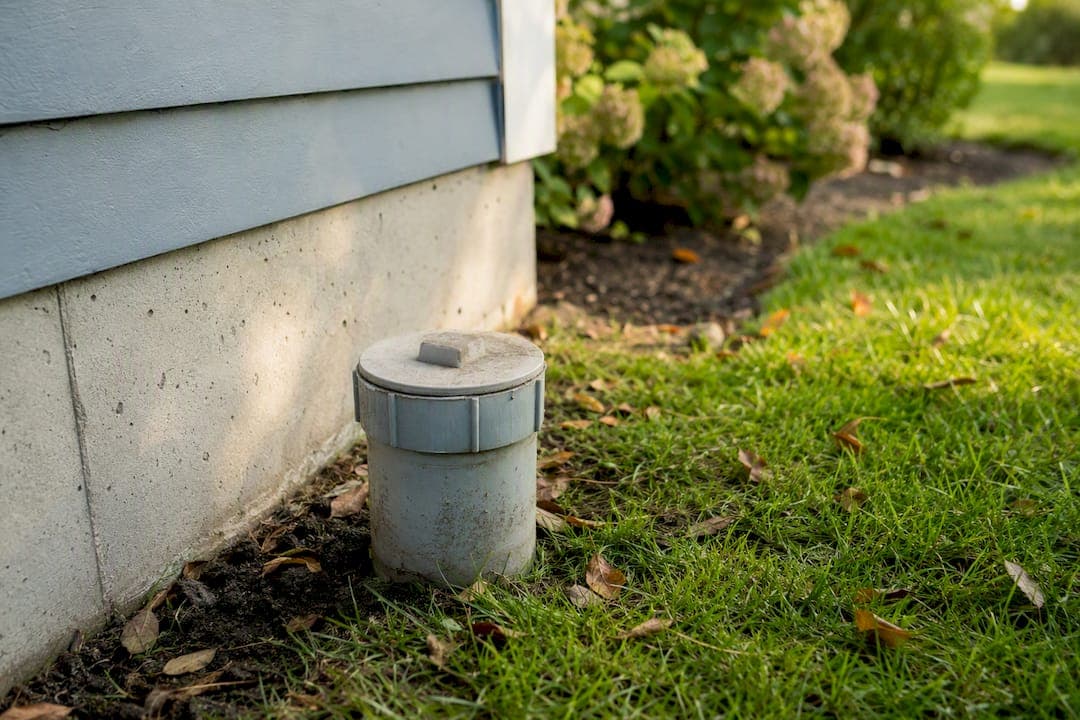
Most homes have a sewer cleanout within a few feet of the foundation, sitting along the straight path between your house and the street or septic tank, though plenty of houses hide one in a basement, garage, or utility room instead. If you already see sewage backing up, smell it in the yard, or feel pressure pushing back at you near a pipe cap, stop what you’re doing and call a licensed plumber before you touch anything. That kind of pressure often means the line is under load, and the International Plumbing Code treats cleanout access as a safety feature, not a curiosity. When conditions are dry and calm, though, you can usually track one down yourself in under 20 minutes.
Key Takeaways
A sewer cleanout is almost always found by tracing the shortest path between your house and the street or septic tank, and calling a licensed plumber is the right move the moment you spot sewage or pressure.
| Point | Details |
|---|---|
| Follow the lateral path | Trace a straight line from the street connection or septic tank toward your foundation. |
| Watch for visual clues | Look for a curb “S” stamp, a yard depression, or a capped pipe near landscaping beds. |
| Check indoors if needed | Search basements, garages, and utility rooms along the main soil stack if outdoor search fails. |
| Test caps carefully | Loosen slowly with a wrench and stop immediately if you feel pressure or smell sewage. |
| Call a pro when stuck | System Wide Services can locate, raise, or install a cleanout to code across its Los Angeles and Orange County service area. |
Table of Contents
- What Is a Sewer Cleanout, and Why Does It Matter?
- Where Are Sewer Cleanouts Usually Located?
- How Do You Locate a Cleanout Step by Step?
- How Do You Identify and Test a Cleanout Safely?
- What If the Cleanout Is Buried or Missing?
- How Do You Maintain and Mark Your Cleanout?
- When Should You Call a Plumber?
- A Note From Our Team
- Get Professional Help Locating or Installing a Cleanout
- Sources
- FAQ
What Is a Sewer Cleanout, and Why Does It Matter?
A sewer cleanout is a capped access pipe that connects directly to your home’s main sewer lateral, the line that carries wastewater from your house to the municipal sewer or a septic tank. It exists for one purpose: to give a plumber a direct entry point to run a snake, feed a camera, or blast a hydro-jet through the line without tearing into your walls or yard. SERVPRO describes it as a short vertical pipe with a removable cap, and that simple design is what saves you from a much bigger repair bill later.
Here’s why locating it matters before you have a problem:
- It’s your fastest, cheapest access point during a backup, before a plumber even arrives.
- Finding it in advance means you’re not searching for it in a panic while sewage backs into your tub.
- The IPC requires cleanouts at set intervals and at sharp bends in the line, so most homes built to code have more than one.
Where Are Sewer Cleanouts Usually Located?
Start outside, following the shortest practical route between your house and the street or septic tank. SERVPRO notes that outdoor cleanouts commonly sit along that exact path, usually within a few feet of the foundation, and appear as a short capped pipe poking a few inches out of the ground. Look for a round or hexagonal cap, sometimes plastic, sometimes brass on older homes, with a raised square or hex nut on top.
If the yard search comes up empty, move indoors. Check basements, crawl spaces, garages, and utility or bathroom floors, especially where you see a T or Y fitting branching off a vertical pipe. That fitting with a threaded plug is your cleanout, and it’s common in homes where digging up the yard just wasn’t practical when the house was built.
Watch for these visual cues wherever you’re searching:
- A small concrete or metal box cover, sometimes stamped “sewer,” recessed into the lawn or driveway.
- A slight depression in the grass running between the house and the curb.
- An “S” carved or stamped into the curb itself, a clue several city public works departments point homeowners toward.
- Overgrown mulch beds or grass clumps hiding a cap that’s been there for years.
Pro Tip: Before you assume there’s no cleanout at all, walk the entire foundation line and check every landscaping bed. A lot of “missing” cleanouts are just buried under six inches of mulch nobody’s moved since the last owner planted it.
How Do You Locate a Cleanout Step by Step?
Work from the least invasive method to the most, and stop the moment you spot trouble.
- Identify your reference point: the municipal maintenance hole, an “S” stamped on the curb, or your septic tank if you have one.
- Draw a mental straight line from that point to your house. The Spruce confirms that sewer laterals almost always take the shortest practical route, so this line is your search corridor.
- Walk that corridor slowly, scanning the ground within a foot or two on either side.
- Check any utility box covers, concrete pads, or slight depressions along the way.
- If nothing turns up outside, go back in and trace your main soil stack (the big vertical pipe, usually in a basement or garage) down to where it exits the foundation.
- Check garage floor drains and low horizontal pipe runs near bathroom walls.
A few things to keep in mind while you search:
- Probe only with a thin rod or long screwdriver, and only within that narrow corridor.
- Never dig deep. Shallow probing is fine; digging with a shovel risks hitting other buried utility lines.
- If you find sewage pooling, smell it strongly, or feel pressure pushing back when you touch a cap, stop immediately and call a plumber.
- If you’ve searched carefully and still can’t find anything after 20 to 30 minutes, that’s your signal to bring in a professional rather than keep digging blind.
How Do You Identify and Test a Cleanout Safely?
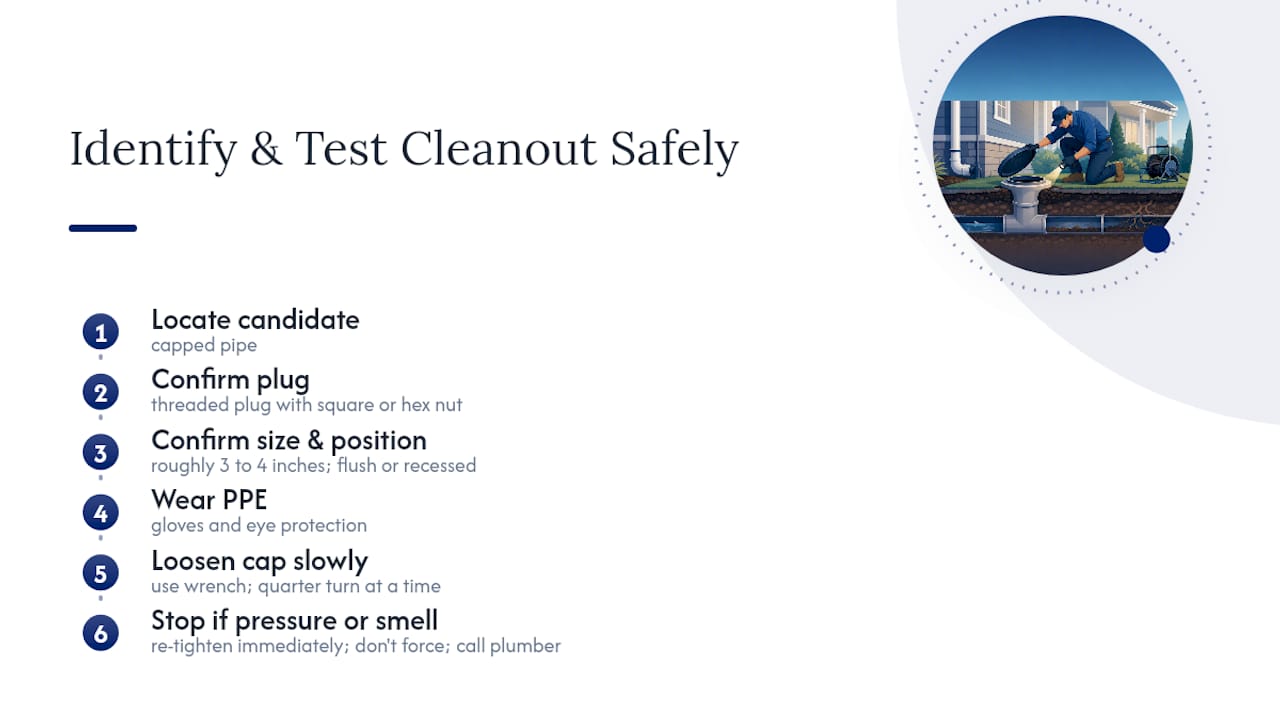
Once you’ve found a candidate, confirm it before you go further. A true cleanout has a threaded plug with a square or hex nut on top, sits on a pipe roughly 3 to 4 inches in diameter, and is either flush with the soil or recessed inside a small box.
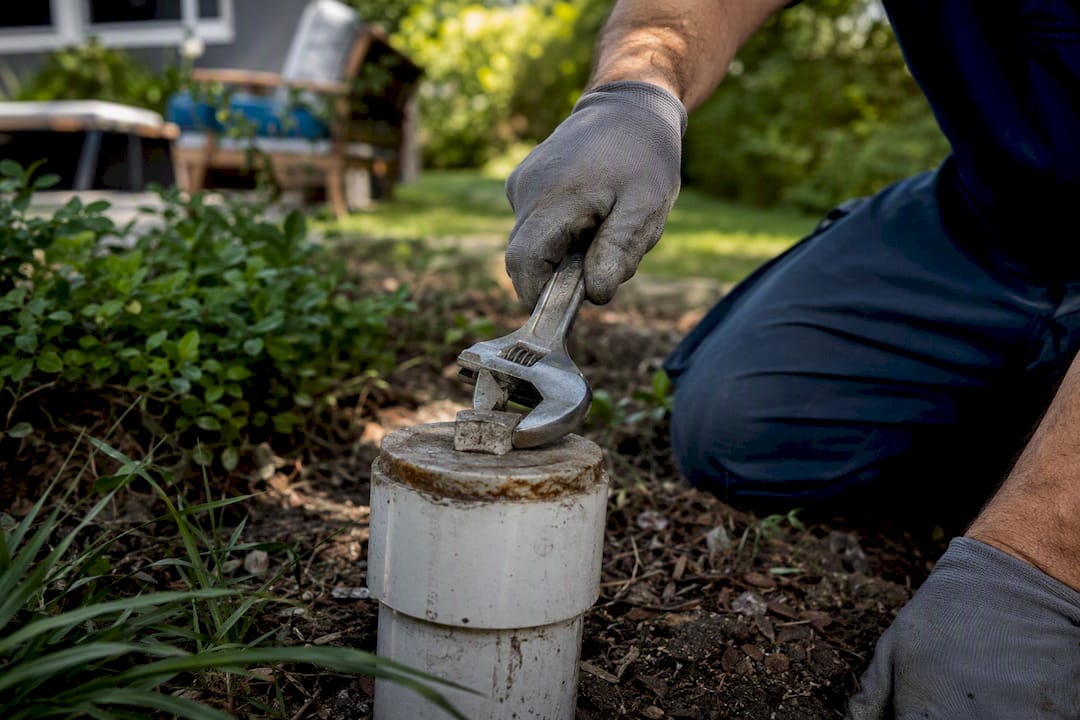
To test it safely, put on gloves and eye protection first. Loosen the cap slowly with a wrench, turning just a quarter turn at a time. If you feel resistance that suggests pressure, or catch a whiff of sewage building underneath, stop and re-tighten it immediately rather than forcing it open. A plumber checking the same cap will look for backflow and use it as a camera entry point, which is exactly why a stuck or pressurized cap should never be muscled open by hand.
Pro Tip: If the nut is rounded off or rusted solid, don’t fight it with pliers. A plumber has specialty cleanout wrenches built for exactly this problem, and forcing a stripped cap often cracks the fitting.
What If the Cleanout Is Buried or Missing?
Start with your local public works or engineering records office. Some counties, including Anne Arundel County, maintain lookup files that show lateral connections and cleanout placement without any digging on your part.
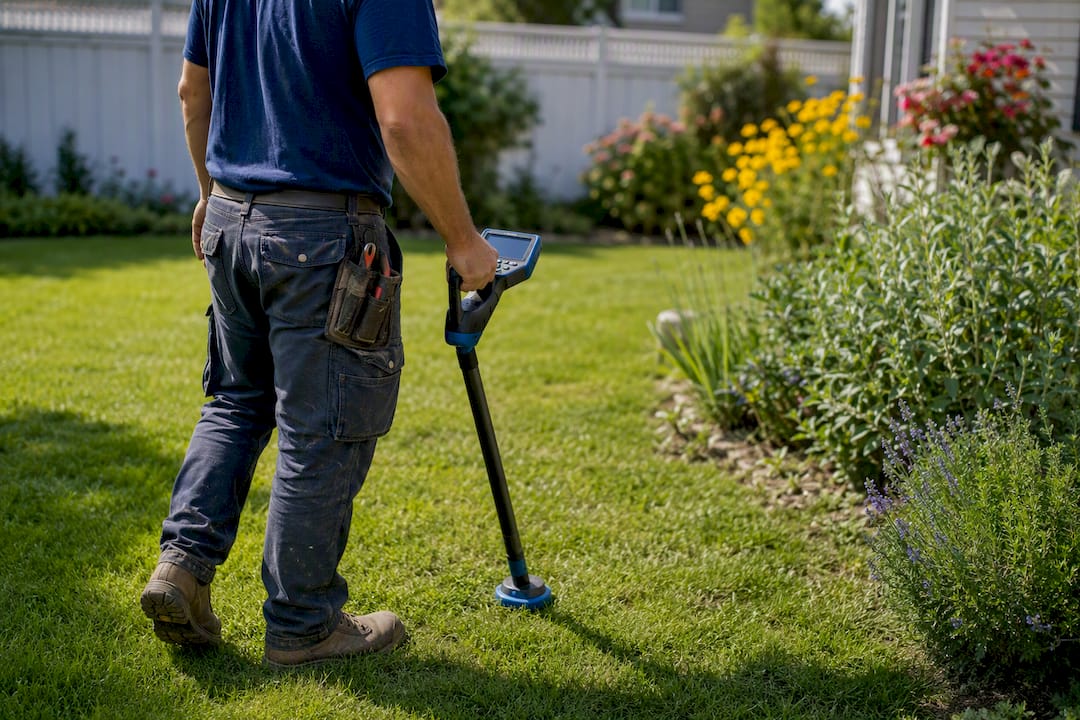
If records don’t help, professionals use line locators, sewer cameras, and sometimes ground-penetrating equipment to pinpoint a buried cap and raise it to grade. Costs vary by job, but locating and exposing an existing cleanout tends to run on the lower end, while installing a brand-new cleanout or raising a buried one to grade costs more because it usually involves permits and code compliance. Get at least one written estimate from a licensed plumber, and ask about permit requirements before anyone breaks ground.
Pro Tip: A partner resource from JM Septic on cleanout purpose is worth a read if your home runs on a septic system, since locating logic shifts slightly when you’re tracing to a tank instead of a municipal line.
How Do You Maintain and Mark Your Cleanout?
Once you’ve found it, don’t lose it again. Trim back plants growing near the cap, and drop a flagged stake or small landscape marker right at the spot so you (or the next homeowner) can find it in seconds.
- Do a quick visual check on the cap once a year, just to confirm it’s still visible and hasn’t been buried by new landscaping or mulch.
- Test the plug occasionally with gloves on to make sure it still turns freely instead of rusting shut.
- Avoid planting anything with an aggressive root system directly over the lateral line.
- Never park a vehicle or store heavy equipment on top of a recessed cover.
Pro Tip: Snap a photo of the cleanout’s location relative to a fixed landmark, like a fence post or downspout, and keep it with your home maintenance records. It sounds small, but it saves real time during an emergency.
When Should You Call a Plumber?
Call a professional the moment you see active sewage backup, feel pressure pushing back on a cap, or spend more than 30 minutes searching without success. The same applies if locating your cleanout would require actual excavation or camera work, since that’s a job for people with the right equipment.
A licensed plumber will pull records, use line locators or a camera to confirm the exact path of your lateral, and then clear the blockage with a snake or hydro-jetting depending on what’s causing the problem. If needed, they’ll unearth a buried cap, raise it to grade, or install a new cleanout that meets code. Hiring someone local who already knows the common lateral layouts in your area saves you the guesswork and the risk of striking another utility line while you dig.
A Note From Our Team
System Wide Services has spent roughly eight years handling drain and sewer cleaning, leak detection, and sewer line repair for homeowners across the Cerritos and Long Beach area, and cleanout calls are some of the most common jobs on our schedule. A missing or buried cleanout isn’t a lost cause. A licensed plumber can locate it, raise it to grade, or install a new one to code, usually faster than a homeowner expects.
Get Professional Help Locating or Installing a Cleanout
If you’ve walked the yard, checked the basement, and still can’t confirm where your cleanout is, System Wide Services can find it, expose it, and get it working again without the guesswork. Our licensed plumbers carry line locators and sewer cameras to pinpoint a buried cap fast, then handle everything from raising it to grade to full hydro-jetting if a blockage is already backing things up.

Whether you’re in Cerritos, Long Beach, or anywhere else across our Los Angeles and Orange County service area, we respond quickly and give upfront pricing before any work starts, no surprise charges after the fact. If your cleanout search has hit a wall or you’re dealing with a backup right now, schedule an inspection through our plumbing services page and we’ll get someone out to locate, test, or install the access point your home needs.
Sources
- Sewer Cleanout: What it is & How to Find it | SERVPRO
- How to Locate Your Sewer or Plumbing Cleanout | The Spruce
- Clean-Outs | City of San José
- Sewer Cleanouts | Anne Arundel County Government
- Code requirements for drainage system cleanouts | ICC code excerpt
FAQ
How do you locate a sewer cleanout?
Trace a straight line from the street connection or septic tank toward your house, since laterals typically follow the shortest practical route, then look for a capped pipe or recessed cover along that path.
Where can I find the sewer cleanout if it’s not outside?
Check basements, crawl spaces, garages, and utility rooms along the main soil stack, looking for a T or Y fitting with a threaded plug.
How much does it cost to clear a sewer line?
Costs depend on blockage severity and access, but locating and exposing an existing cleanout tends to cost less than installing a new one or raising a buried cap to grade; a written estimate from a licensed plumber like System Wide Services will give you an exact number for your situation.
Can I snake my own sewer cleanout?
You can attempt light snaking on a cleanout you’ve confirmed is safe to open, but stop immediately if you feel pressure or see sewage, and call a plumber for anything beyond a minor clog since forcing a stuck or pressurized cap risks a backup inside the house.
Recommended
Need a hand with this? We've got you covered.
System Wide Services handles plumbing, electrical, and handyman work across Long Beach and LA & Orange County.