
Homeowners: Acoustic Leak Detection and Water Tests Before Repipe
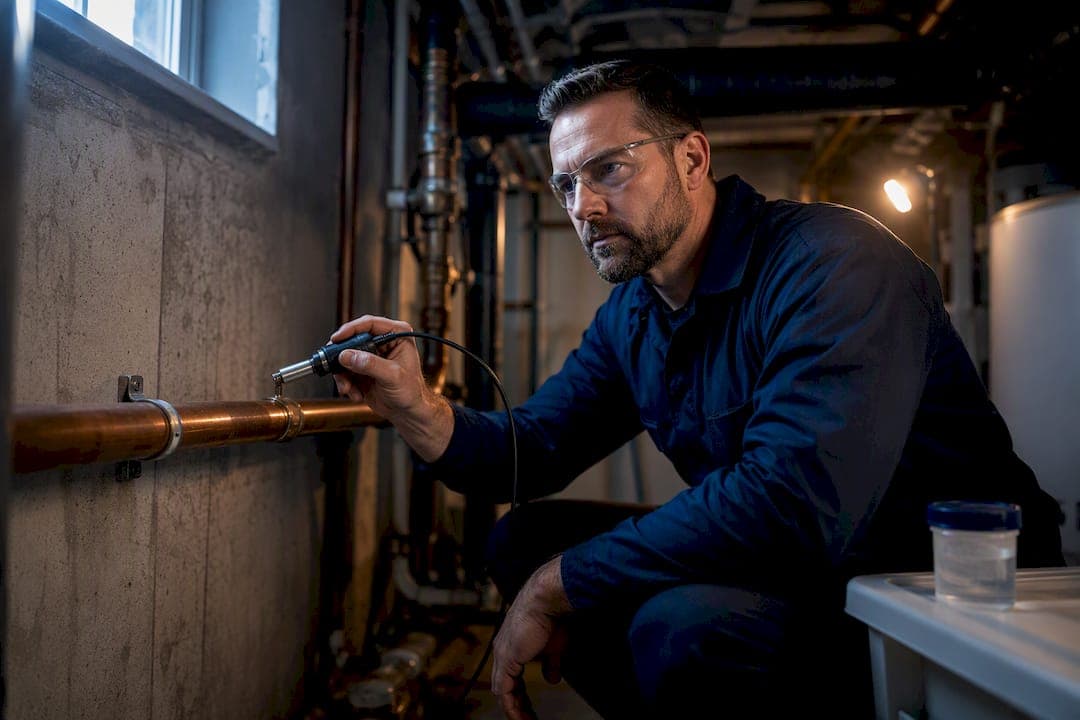
If you’re dealing with recurring leaks in different rooms, rust-colored water, low pressure at every faucet, visible corrosion or repair bills that keep piling up, your plumbing is likely telling you the system itself has failed, not just one section of pipe. These signs usually call for a professional inspection, and in many cases a whole-home repipe is the most reliable fix. If your home is older or the water looks discolored, testing for lead is worth doing before you decide anything.
TL;DR:
- Widespread signs like recurring leaks in multiple locations, low water pressure across fixtures, and visible corrosion indicate systemic pipe deterioration requiring full repiping.
- Visible corrosion, pinhole leaks, or signs of problematic materials such as galvanized steel or polybutylene often mean the system needs replacement rather than patch repairs.
- A full reassessment is recommended if repair costs approach the minimum expense of a full repipe, especially in homes with old or lead-based plumbing components.
- The decision to repair or replace hinges on the extent of corrosion, leak pattern, material age, and water testing results, particularly in homes built before 1986 with lead risks.
- Proper inspection, including acoustic leak detection and water testing, is essential before undertaking a repipe, along with detailed bids and contractor credentials.
Table of Contents
- 1. Warning signs your pipes are failing system-wide
- 2. When to repair a section versus repipe the whole house
- 3. What happens during a whole-home repipe
- 4. Repipe costs and how long a new system should last
- 5. Diagnostic tests worth requesting before you decide
- 6. Choosing a contractor and the questions worth asking
- 7. What years of plumbing calls have taught us about repiping
- How System Wide Services can help you decide
- Where to learn more about pipe corrosion and water quality
- Sources
- FAQ
1. Warning signs your pipes are failing system-wide
Not every leak means your whole plumbing system is done. But certain patterns point past a single bad fitting and toward broad deterioration.
Recurring leaks in new spots. One leak is a repair. A second or third leak in a different wall, floor, or fixture within a year is a pattern. When pipes fail in unrelated locations, it usually means the material itself is degrading rather than one section taking damage.
Discolored or rust-colored water. Water that runs orange, brown, or rust tinted after you haven’t used a faucet for a while often points to internal corrosion in galvanized steel pipes. If your home was built before 1986, the EPA notes that older plumbing components like lead service lines and lead solder were common, which makes water testing worth doing alongside a visual check.

Low pressure across multiple fixtures. Weak flow at one faucet usually means a clogged aerator or a fixture problem. Weak flow at every faucet, upstairs and downstairs, points to something systemic: narrowing pipe interiors, scale buildup, or corrosion reducing flow throughout the house. Test both a single fixture and a whole-house tap at the same time to tell the difference.
Noisy plumbing. Banging, whistling, or a hard thump when you shut off a faucet (commonly called water hammer) can signal loose pipes, failing valves, or pressure irregularities tied to aging pipe walls. Occasional noise isn’t an emergency. Frequent noise across several fixtures is a sign the system is under stress.
Visible corrosion, pinhole leaks, and problem materials. Look for greenish stains on copper, flaking or rust on galvanized steel, or small pinhole leaks that seem to appear out of nowhere. Pinholes in copper often trace back to erosion-corrosion that started with an installation defect, and ASPE’s analysis of copper corrosion notes that a burr found at one failed section usually means the same workmanship issue exists elsewhere in the system. Polybutylene and galvanized steel are both considered problem materials that plumbers commonly recommend replacing outright rather than patching.
Frequent patch repairs. If you’ve called a plumber for the third or fourth pipe repair this year, the cumulative cost of those visits is worth tracking. Small fixes that keep recurring are often cheaper individually but expensive as a pattern.
Age of the system. Homes with original plumbing several decades old, or built with galvanized or polybutylene pipe, carry higher risk regardless of visible symptoms yet.
- Recurring leaks in different locations within 12 months
- Rust-colored or discolored water, especially after periods of no use
- Low pressure at multiple fixtures, not just one
- Banging, whistling, or knocking pipe noises
- Visible corrosion, flaking, or pinhole leaks
- Three or more separate repair calls in a year
Pro Tip: Keep a simple log of every plumbing repair with the date and location. A pattern that’s invisible in the moment becomes obvious once you see it written down.
2. When to repair a section versus repipe the whole house
Not every warning sign requires a full repipe, but a few clear thresholds make the decision easier.
- If you’ve had leaks in multiple distinct locations within about a year, treat that as a system-wide signal rather than isolated bad luck.
- If repairs have affected different plumbing runs (not the same pipe twice) that also points to broad deterioration rather than one weak spot.
- If corrosion is visible in more than one zone of the house (basement, under a sink, in the attic) the problem isn’t local.
- If your accumulated repair costs over a recent period are approaching the typical lower end estimate for repiping, repiping becomes the more efficient investment.
- If water testing shows elevated lead or your water runs consistently discolored, treat that as a health-driven trigger that overrides a wait-and-see approach.
- If a leak seems to be hidden, under a slab or behind a wall with no clear source, escalate to a full diagnostic audit before deciding on repair or repipe.
3. What happens during a whole-home repipe
A repipe follows a fairly predictable sequence, even though every house presents its own access challenges.
The process typically starts with an inspection to map existing pipe routes and identify problem materials, followed by permitting, then removal of old pipe, installation of new lines, pressure testing, and finally restoration of walls, floors, or fixtures that were opened up. A single-family home without slab plumbing often takes a few days to a week; homes with slab-set pipes, limited wall access, or complicated permitting can take longer.
Material choice matters, but so does how the system is installed. PEX is flexible and resists scale buildup, copper is durable and has a long track record, and CPVC resists corrosion but can be more rigid to work with. Beyond material, industry research on water chemistry shows that disinfectant levels, water hardness, and installation quality affect how long any of these materials actually last. A well-installed copper system in compatible water can outperform a poorly installed plastic one, and the reverse is also true.
- Ask how the crew protects floors, fixtures, and finishes during wall and slab access.
- Ask how dust and debris are contained during demolition and installation.
- Confirm whether the quote includes drywall patching, paint touch-up, or flooring repair.
- Ask what happens if hidden damage is found once walls are opened.
Pro Tip: Request a written day-by-day plan before work starts. Knowing which days you’ll have no water and which rooms will be inaccessible makes it much easier to plan around the job.
4. Repipe costs and how long a new system should last
Repipe costs vary based on square footage, whether pipes run through a slab, material choice, how many fixtures need reconnecting, permitting fees, and how easy the walls and crawl spaces are to access. A single-story home with open attic access is generally faster and cheaper to repipe than a multi-story home with slab plumbing, which often requires cutting into concrete.
Expected lifespan depends heavily on material and conditions. Copper systems can last decades, but ASPE’s research on copper corrosion shows that poor installation practices, like unreamed pipe ends, or high water velocity can shorten that lifespan through pitting or erosion. PEX and CPVC are generally resistant to the corrosion issues that affect metal pipe, though NAHB guidance notes that PEX can be sensitive to UV exposure if it’s stored or installed improperly.
- Get at least two or three detailed, itemized bids rather than a single bottom-line number.
- Compare what each bid includes: permits, restoration work, fixture reconnections, and warranty length.
- Check your homeowner’s insurance policy: sudden pipe failure is often covered, but gradual wear and tear typically isn’t.
- Ask each contractor to explain any price gap in writing rather than assuming the cheaper bid is the better deal.
5. Diagnostic tests worth requesting before you decide
A proper inspection should give you more than a guess. It should identify exactly where problems exist and why.
Acoustic leak detection uses listening equipment to locate hidden leaks behind walls or under slabs without unnecessary demolition. The Department of Energy’s guidance on distribution system audits recommends this kind of prescreening to prioritize where repairs or replacement are actually needed, and different pipe materials transmit sound at different frequencies, so equipment tuned to your home’s piping matters for accurate results.
Water testing for lead and metals matters most in older housing stock. The EPA points out that homes built before 1986 carry a higher risk because of components like lead service lines and lead solder that were common before federal bans phased in.
- Ask for a written inspection report with photos of problem areas, not just a verbal summary.
- Request that the report map specific problem locations rather than describing the house in general terms.
- Confirm whether pipe material was visually identified or confirmed with a magnet test, since galvanized steel often needs full replacement rather than patching.
- Make sure the report includes a recommended scope, whether that’s targeted repair or full repipe.
Statistic Callout: The EPA identifies pre-1986 homes as carrying elevated lead risk due to leaded plumbing components that were phased out after federal bans took effect. That single fact is often reason enough to test water before deciding between repair and repipe in older housing.
6. Choosing a contractor and the questions worth asking
The right contractor will welcome scrutiny, not resist it.
- Confirm the contractor is licensed and insured, and ask about lead-safe certification if your home was built before 1978.
- Ask specifically about experience with whole-home repipes, not just general plumbing repair, and how they handle slab access and fixture protection.
- Request a written inspection report, an itemized estimate, a realistic timeline, and clear warranty terms before signing anything.
- Watch for red flags: no permit plan, a vague scope of work, or reluctance to share past project photos or references.
Pro Tip: A contractor who hesitates to walk you through their permit process is a contractor worth questioning further.
7. What years of plumbing calls have taught us about repiping

When a home shows three or more of the signs above, a full diagnostic inspection is almost always worth the cost before committing to either repair or repipe. Patching the same symptom over and over rarely saves money once you count the labor and disruption of repeated visits. Our own writing on copper pinhole leaks and water testing covers a pattern we see often: homeowners who patch one pinhole leak only to find another months later in a different wall.
Before calling anyone for bids, gather your repair receipts, take photos of any staining or corrosion, and get your water tested if discoloration is present. That groundwork makes every estimate you receive more accurate.
— Van Castaneda
How System Wide Services can help you decide
If your home is showing several of these signs, a professional inspection is the fastest way to know whether you’re looking at a repair or a repipe. System Wide Services provides plumbing inspections, water leak detection, and whole-home repipe work throughout the Cerritos and Long Beach area, all handled by a licensed, in-house team so you’re not coordinating separate contractors for related work.
Before your visit, have your repair history, any photos of staining or leaks, and recent water test results ready. That gives the technician a clear starting point instead of starting from scratch.
- Whole-home plumbing inspections and diagnostic testing
- Acoustic leak detection for hidden or slab leaks
- Same-day and emergency response with upfront pricing
Schedule an inspection through our Whole-Home Repipe service page to get a clear answer on whether repair or repipe makes sense for your home.
Where to learn more about pipe corrosion and water quality
For further reading, the EPA covers lead in drinking water and identifying service line materials, while NAHB’s research on plumbing design covers how system design affects long-term durability. For homeowners dealing with pressure complaints specifically, this guide on diagnosing low water pressure offers useful supplemental steps.
Sources
- Basic information about lead in drinking water | US EPA
- How water chemistry impacts residential plumbing materials | PM Engineer / PM Magazine
- Best Management Practice #3: Distribution System Audits, Leak Detection, and Repair | Department of Energy
- Plumbing design for success: understanding and preventing copper corrosion | ASPE Pipeline
FAQ
How much does it cost to repipe a 2,000 square foot house?
Repipe costs for a house that size depend heavily on slab access, material choice, and how many fixtures need reconnecting, so the most accurate number comes from an in-person inspection rather than a general estimate. Getting two or three itemized bids is the most reliable way to understand what’s realistic for your specific layout.
Will insurance pay to repipe a house?
Homeowner’s insurance typically covers sudden, accidental pipe failure but generally excludes damage caused by gradual wear and tear or aging materials. Check your specific policy language and consider calling your insurer before starting a repipe project to understand what documentation they require.
How long does repiping a house last?
Lifespan depends on material and installation quality rather than material alone. Copper and PEX systems can both last decades when properly installed and matched to your home’s water chemistry, but installation defects and water conditions can shorten that lifespan considerably.
How much does it cost to repipe a house that is on a slab?
Slab repipes typically cost more than homes with open attic or crawl space access because they often require cutting into concrete to reach or reroute pipes. The exact cost depends on how much slab work is needed and how many fixtures sit above the affected area, which is best assessed through an in-person inspection.
Recommended
Need a hand with this? We've got you covered.
System Wide Services handles plumbing, electrical, and handyman work across Long Beach and LA & Orange County.