
Low-Flow Fixtures in California: Rules, Limits and Retrofits
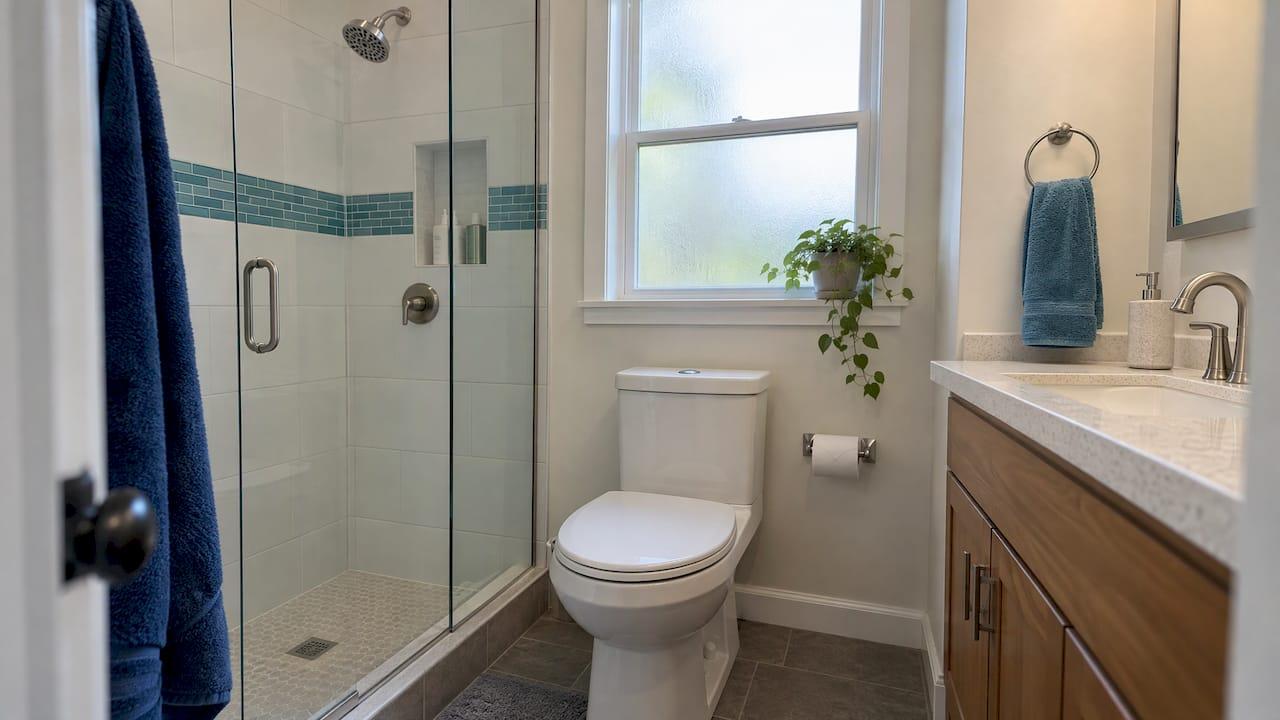
In California, a low-flow fixture is a toilet, showerhead or faucet that stays under a set water limit: 1.28 gallons per flush for toilets, 1.8 gallons per minute for showerheads and 1.2 gallons per minute for bathroom faucets under the current code. If your home was built in 1994 or earlier, a permitted remodel can require you to replace every older fixture before the permit is finalized. We are a licensed, veteran and woman-owned plumbing, electrical and handyman company in Cerritos, and this guide covers the limits, the trigger rules and how to plan the work so the final inspection goes smoothly.
TL;DR
- Current limits for new fixtures: toilets 1.28 gpf, showerheads 1.8 gpm, bathroom faucets 1.2 gpm, kitchen faucets 1.8 gpm (2025 code, effective January 1, 2026).
- State law treats a toilet over 1.6 gpf, a showerhead over 2.5 gpm or a faucet over 2.2 gpm as “noncompliant” and requires replacement when certain permitted work happens in older homes.
- A water heater swap, repiping or an EV charger alone does not trigger the fixture rule, but a remodel permit does.
- Sellers must disclose noncompliant fixtures in writing, so planning the swap before listing avoids surprises.
- Bundle fixture replacement with the plumbing or remodeling work already on your schedule.
Table of Contents
- What “low-flow” means in California
- Current limits for new fixtures
- When you have to replace fixtures
- How to check whether your fixtures comply
- What you can save
- Plan the swap around work you are already doing
- Our perspective
- Getting it done in one visit
- FAQ
- Sources
What “low-flow” means in California
Flow rate is measured in gallons per minute (gpm) for showerheads and faucets, and gallons per flush (gpf) for toilets and urinals. Two sets of numbers matter, and people often mix them up.
The first set defines what the law calls a noncompliant fixture. Under California Civil Code Section 1101.3, that means:
- a toilet that uses more than 1.6 gallons per flush,
- a urinal that uses more than 1 gallon per flush,
- a showerhead that uses more than 2.5 gallons per minute,
- an interior faucet that uses more than 2.2 gallons per minute.
The second set is what a new fixture must meet today. The law defines a water-conserving fixture as one that meets the current building standard for newly constructed property of the same type. That standard has tightened over the years, which is why a fixture that was legal when installed can be noncompliant now.
Current limits for new fixtures
The 2025 California Plumbing Code and CALGreen (the state’s green building standards) took effect on January 1, 2026. According to the City of Dublin’s summary of those rules, the maximums are:
| Fixture | Maximum flow | Notes |
|---|---|---|
| Toilet | 1.28 gpf | Tank-type toilets must be WaterSense certified |
| Urinal | 0.5 gpf (0.125 gpf wall-mounted) | |
| Showerhead | 1.8 gpm at 80 psi | WaterSense certified; multiple heads on one valve share a combined 1.8 gpm |
| Bathroom (lavatory) faucet | 1.2 gpm at 60 psi | Minimum 0.8 gpm at 20 psi |
| Kitchen faucet | 1.8 gpm at 60 psi | May temporarily rise to 2.2 gpm but must default back to 1.8 gpm |
WaterSense is the EPA’s efficiency label. The 2025 CALGreen residential code as adopted in Pasadena ties toilets and showerheads to that certification, so the label on the box is your first quick check when shopping.
The showerhead limit used to be looser. The state’s CALGreen installation certificate shows it dropped from 2.0 gpm to 1.8 gpm at 80 psi on July 1, 2018. A showerhead from before then may be legal to own but will not meet the standard for a new installation.
Los Angeles can be stricter
Cerritos sits in Los Angeles County, and cities can layer their own rules on the state’s. The Los Angeles Department of Water and Power explains that when codes conflict, the most stringent requirement prevails. Its example: the CALGreen kitchen faucet limit in Los Angeles is 1.5 gpm, lower than the 1.8 gpm in the plumbing code. Before you buy, confirm with your city’s building department which limit applies to your address and permit.
When you have to replace fixtures
This is the part that surprises most homeowners. California does not send an inspector to your house to count showerheads. The requirement attaches to specific events.
Permitted work in a home built in 1994 or earlier
Under Civil Code Section 1101.4, as amended by AB 892 in 2020, when a single-family home gets a permitted alteration or improvement, the permit applicant must replace all noncompliant plumbing fixtures with water-conserving ones. That is a condition of final completion, occupancy or final permit approval. In other words, the inspector will not sign off until the old fixtures are gone.
Two details from Marin County’s 2025 SB 407 guideline are worth knowing, since counties apply the same state law:
- When the work triggers the rule, every noncompliant fixture in that building must be upgraded, not just the ones in the room you are remodeling.
- Work in one building does not trigger upgrades in another. A detached garage or second unit project, for example, does not force changes in the main house.
Work that does not trigger the rule
The same Marin guideline says repairs and maintenance do not trigger fixture upgrades. It also lists work that does not trigger SB 407, including:
- water heater replacement,
- piping and sewer line replacement,
- electrical or mechanical system changes,
- EV charging stations and roof-mounted solar,
- re-roofs, window and door replacement, foundation and seismic work.
So a new water heater, a drain cleaning or an EV charger installation will not by itself require you to swap your showerheads. A bathroom or kitchen remodel with a permit will.
Selling your home
The law set a deadline of January 1, 2017 for single-family homes to have compliant fixtures regardless of any remodel, and sellers must disclose the requirement and any noncompliant fixtures in writing, per Civil Code Section 1101.4. Some cities have dropped their own paperwork. San Diego, for instance, stopped requiring a Water Conservation Certificate at resale in 2022, but it notes sellers must still disclose noncompliant fixtures, typically on the transfer disclosure statement. Replacing old fixtures before you list turns that disclosure into a non-issue.

New construction and larger projects
CALGreen applies fully to new buildings, and, per LADWP, to additions and alterations only when the project valuation is $200,000 or more. For new residential buildings in Los Angeles, Ordinance 184248 asks for a demonstrated 20% reduction in water use, which can be met with the listed fixtures, an approved calculation or recycled water, according to LADWP’s code guide. If you are building an ADU, confirm the fixture schedule with your plans examiner early.
How to check whether your fixtures comply
You can do a first pass in about ten minutes.
- Toilets: lift the tank lid and look for a gallons-per-flush stamp, or check the bowl or the back of the tank. Older toilets often show a date. A toilet marked 1.6 gpf is below the old state threshold of “noncompliant” but above today’s 1.28 gpf standard for new installations.
- Showerheads: many have the flow rate molded into the head or printed on the packaging. A WaterSense-labeled head meets the 1.8 gpm standard for new installations.
- Faucets and aerators: the rate is often marked on the faucet body or on the small aerator screwed into the spout. Bathroom faucets should be 1.2 gpm or less, kitchen faucets 1.8 gpm or less.
- No markings? An unmarked fixture on an older home is a good candidate for replacement. If you are planning a permitted remodel, your plumber can review the fixture list against the permit before the inspection.
The flow ratings on a fixture are measured at specific pressures, 60 psi for faucets and 80 psi for showerheads. If your water pressure is unusually high or low, the fixture will perform differently from its rating, and a plumber can check your pressure while on site.
What you can save
The EPA says bathrooms account for about 60 percent of indoor water use. WaterSense fixtures use at least 20 percent less water than standard models, and upgrading a main bathroom with a WaterSense toilet, faucet and showerhead can save an average family nearly 10,000 gallons a year. Because less hot water is used, energy use drops too.
Toilets are where the biggest gains sit. A Sacramento-area water district’s conservation staff notes that swapping a 3.5 gpf toilet for a 1.28 gpf model saves about 4,600 gallons a year, and that one WaterSense showerhead saves around 2,900 gallons annually plus roughly $70 in utility costs. Your own result depends on household size, habits and the age of what you replace, so treat these as typical figures, not a promise. The lesson from California field research is the same: net savings should be measured against other conservation factors, and the older the fixture, the more it tends to gain.

Plan the swap around work you are already doing
The cheapest time to replace fixtures is when walls are open or a plumber is already on site. Three common situations:
- Bathroom or kitchen remodel. Fixtures are part of the permit’s final inspection, so choose compliant ones from the start. Our bathroom remodel permit guide for Cerritos walks through what the city looks for, and the 2026 bathroom remodel budget guide helps you plan costs.
- Water heater replacement. It does not trigger the fixture rule on its own, but a plumber is already in the house and can swap an old showerhead or faucet aerator at the same visit. Permits matter here too, and we cover them in our California water heater permit guide.
- Repipe. A whole-home repipe opens up the plumbing system, and it is a natural time to replace fixtures. See the repipe cost guide for what drives the price.
If you are a property manager, the same limits apply to tenant units. Our commercial plumbing page covers the work we do for small commercial properties around Long Beach and Orange County.
Our perspective
Most of the calls we get about fixtures start with a different problem: a failing water heater, a leak, a bathroom that needs to be redone. The fixture rule shows up halfway through the project, usually when the homeowner learns that a permit means the old toilet and showerhead have to go.
That is why we like to look at the whole job at the start. Our licensed, in-house team handles plumbing, electrical and handyman work, so the plumbing, the tile, the drywall and the final fixtures are planned together rather than passed between separate contractors. You get one point of contact, upfront pricing and clear communication about what the inspector will ask for.
Compliant fixtures are not a burden. They are one more line on the checklist, and when they are chosen before the walls are closed they cost very little extra time. We would rather you know the rules before the permit is pulled than find out at the final inspection.
Van Castaneda
Getting it done in one visit
We provide plumbing, electrical and handyman services across Los Angeles and Orange County, with a focus on Cerritos and the Long Beach area. If you are replacing a water heater, planning a remodel or opening up your plumbing, tell us the age of your home and we will account for the fixture rules in the scope of work. Our plumbing services cover water heater installation and repair, whole-home repipe and leak detection, and our bathroom and kitchen remodeling team handles the finishing details so the permit closes cleanly.
If you want to see the quality of finished work first, browse our recent project gallery. Our VIP Club membership is another way to stay on top of home maintenance; details are on the membership page.
FAQ
Do I have to replace my old toilet if I do not remodel?
Not because of an inspection. The state set a January 1, 2017 deadline for single-family homes, but in practice the requirement is enforced when you pull a permit for an alteration or sell the home, according to Civil Code Section 1101.4. Sellers must disclose noncompliant fixtures in writing.
Does replacing a water heater require new fixtures?
No. Marin County’s SB 407 guideline lists water heater replacement among the work that does not trigger fixture upgrades. If a remodel permit is involved, the rule applies to the whole building. Our water heater installation and repair page explains what we handle.
What is the maximum flow rate for a new showerhead in California?
The 2025 code sets 1.8 gallons per minute at 80 psi, with WaterSense certification. Multiple heads on one valve share that combined 1.8 gpm. Before July 2018, the limit was 2.0 gpm.
Do Los Angeles and Cerritos follow the same limits as the state?
The state code is the baseline, and a city or county can add stricter rules. LADWP, for example, shows a 1.5 gpm kitchen faucet limit under its CALGreen requirement. Check with your building department for the limit that applies to your permit.
Sources
- California Civil Code Section 1101.3
- California Civil Code Section 1101.4
- City of Dublin, Water-Conserving Plumbing Fixtures
- 2025 California Green Building Standards Code, residential (City of Pasadena)
- 2016 CALGreen Installation Certificate (California HCD)
- LADWP, State and City Plumbing Codes
- Marin County, Guideline: Plumbing Fixture Replacement (SB 407)
- City of San Diego, Plumbing Retrofit
- US EPA WaterSense, The Current: Winter 2022
- Be Water Smart, WaterSense Makes Sense
- CALWEP, BMP Costs & Savings Study
Recommended
Need a hand with this? We've got you covered.
System Wide Services handles plumbing, electrical, and handyman work across Long Beach and LA & Orange County.