
How to Fix a Clogged Bathtub Drain Fast
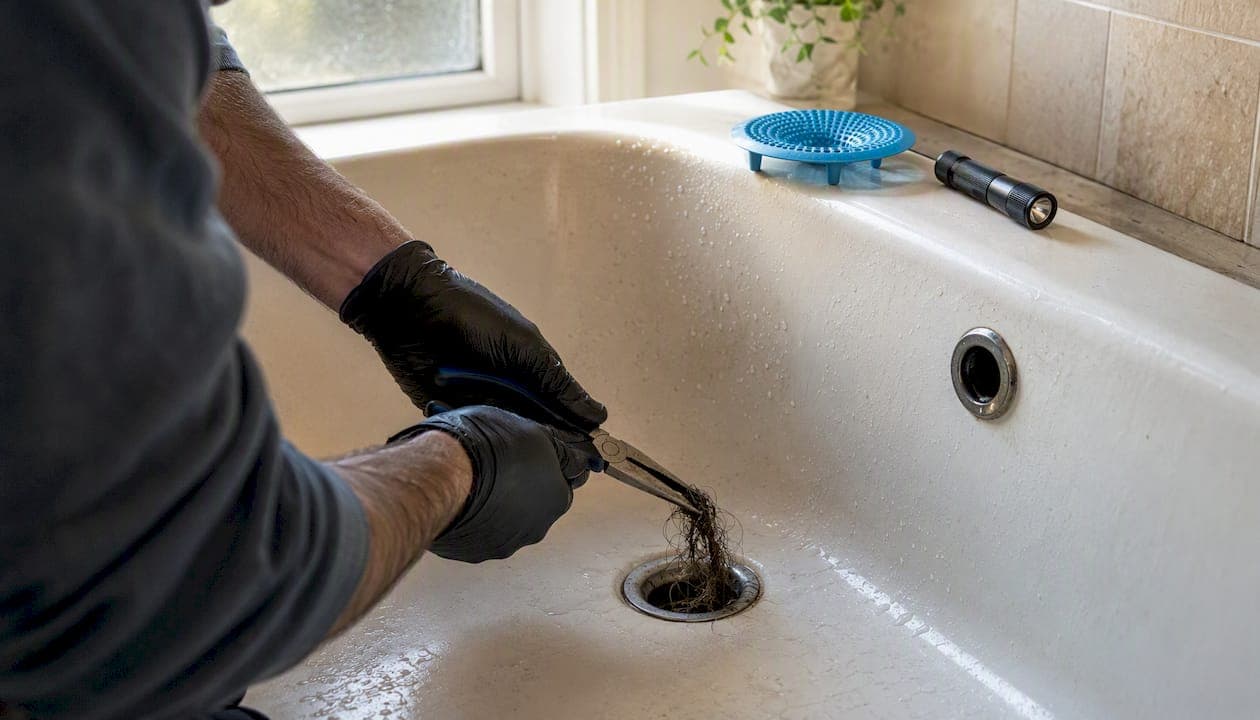
A clogged bathtub drain is almost always a hair problem, and you can clear it with a short sequence of mechanical steps using tools you likely already own. Here is the fastest reliable path: remove standing water, pull out the stopper and extract visible hair, seal the overflow and plunge, then snake if the clog holds. Hair combined with soap scum and oils is the primary cause of bathtub blockages, and tubs accumulate that buildup faster than showers because of longer water contact during bathing.
Start here — your quick DIY checklist:
- Scoop or bail out standing water so you can see and access the drain.
- Remove the stopper and pull out any visible hair with your fingers, tweezers, or a plastic hair tool.
- Seal the overflow plate with a wet rag or tape, then plunge with 15–30 firm strokes.
- If the drain is still slow, feed a snake through the overflow opening to break up or retrieve the clog.
- Flush with hot water for 60 seconds to confirm the drain is clear.
You’ll know it worked when water drains freely with no gurgling. Stop DIY and call a plumber if you’ve completed all four steps and the drain is still blocked, if multiple fixtures are affected, or if you smell sewer gas.
Key Takeaways
A clogged bathtub drain is almost always a hair-and-soap-scum problem that clears with mechanical removal — plunging and snaking — before you ever need to consider chemicals.
| Point | Details |
|---|---|
| Start mechanical, not chemical | Pull hair with a plastic tool or tweezers first; most tub clogs clear without any chemical product. |
| Seal the overflow when plunging | Covering the overflow plate is required for plunging to build pressure and actually work. |
| Snake through the overflow | Routing the snake through the overflow opening gives a straighter path to the P-trap than the drain hole. |
| Know when to stop DIY | Multiple slow drains, sewer odor, or no improvement after plunging and snaking all signal a deeper line issue. |
| System Wide Services | Handles drain cleaning, hydro jetting, and camera inspection across Los Angeles and Orange County when DIY falls short. |
Table of Contents
- What tools do you need before you start?
- How to unclog a bathtub drain: step-by-step methods
- How do you remove and clean different stopper types?
- Are chemical drain cleaners safe to use in a bathtub?
- When should you stop DIY and call a plumber?
- How do you prevent bathtub drain clogs from coming back?
- Why mechanical methods beat chemicals every time
- When System Wide Services is the right call
- Sources
- FAQ
What tools do you need before you start?
Having the right gear before you begin saves you from stopping mid-job with a wet floor and a half-cleared drain. Most of these cost under $15 at any hardware or big-box retailer.
Must-have tools and supplies:
- Rubber gloves (nitrile or thick rubber for chemical resistance)
- Flashlight or headlamp to see inside the drain
- Flat-cup (cup) plunger — NOT a flange plunger, which is designed for toilets
- Plastic hair removal tool (Zip-It or similar barbed drain snake, 18–24 inches)
- Needle-nose pliers or tweezers for pulling hair near the surface
- Bucket or large cup to remove standing water
- Old towels to protect the floor and absorb spills
- Flathead and Phillips screwdrivers for stopper removal
- A wet rag or a few inches of duct tape to seal the overflow plate
- Basic eye protection if you plan to use any chemical product
Pro Tip: A Zip-It style plastic hair tool beats a metal coat hanger every time. The barbs grip hair and pull it out cleanly, while an improvised wire hook tends to push the clog deeper or scratch your drain finish. They cost just a few dollars and are available at most hardware stores.
For a deeper look at how professional drain-cleaning tools compare to DIY options, the drain cleaning homeowner guide from USA Plumbing & Septic covers the full range from manual tools to hydro jetting.
How to unclog a bathtub drain: step-by-step methods
Work through these steps in order. Each one takes only a few minutes and handles the majority of residential tub clogs. Most hair clogs clear with manual extraction or a short snake — no major plumbing work needed.

Safety and prep (2–5 minutes)
Put on your gloves and eye protection before touching anything. If there is standing water in the tub, scoop it out with a cup or bucket until the drain is visible. You need to see what you’re working with, and some steps (plunging, in particular) work better with just an inch or two of water rather than a full tub.
Step 1: Remove the stopper and pull hair (2–10 minutes)
Lift, unscrew, or press the stopper to remove it — the exact method depends on your stopper type (covered in the next section). Once it’s out, shine your flashlight into the drain. You will almost certainly see a hair mass. Pull it out with your fingers, tweezers, or needle-nose pliers. Rinse the stopper under running water before setting it aside.
Step 2: Use a plastic hair tool (5–10 minutes)
Insert a Zip-It or similar barbed plastic tool into the drain opening and push it down 6–12 inches. Rotate it slightly, then pull up slowly. The barbs catch hair and drag it out. Repeat 3–4 times, wiping the tool clean between passes. This single step clears the majority of bathtub drain blockages because most hair accumulates within the first foot of pipe.
Step 3: Plunge the drain (5–15 minutes)
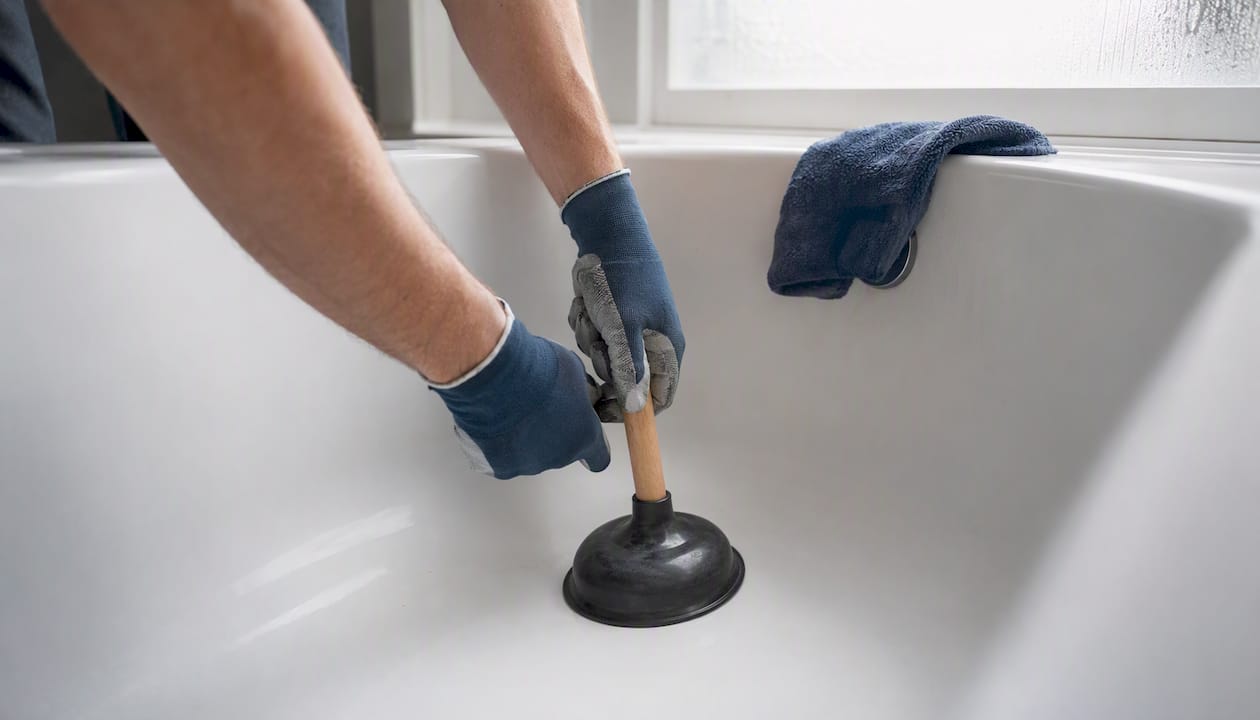
Cover the overflow plate completely with a wet rag or duct tape — this is the small oval opening near the top of the tub wall. Without that seal, air escapes through the overflow and your plunger loses all pressure. Add enough water to cover the plunger cup by about an inch. Position the cup directly over the drain, press down firmly to create a seal, and pump with 15–30 vigorous strokes. Sealing the overflow before plunging is the single most common technique mistake homeowners make, and fixing it often turns a failed attempt into a successful one. Remove the rag and check whether water drains freely.
Step 4: Snake through the overflow (10–30 minutes)
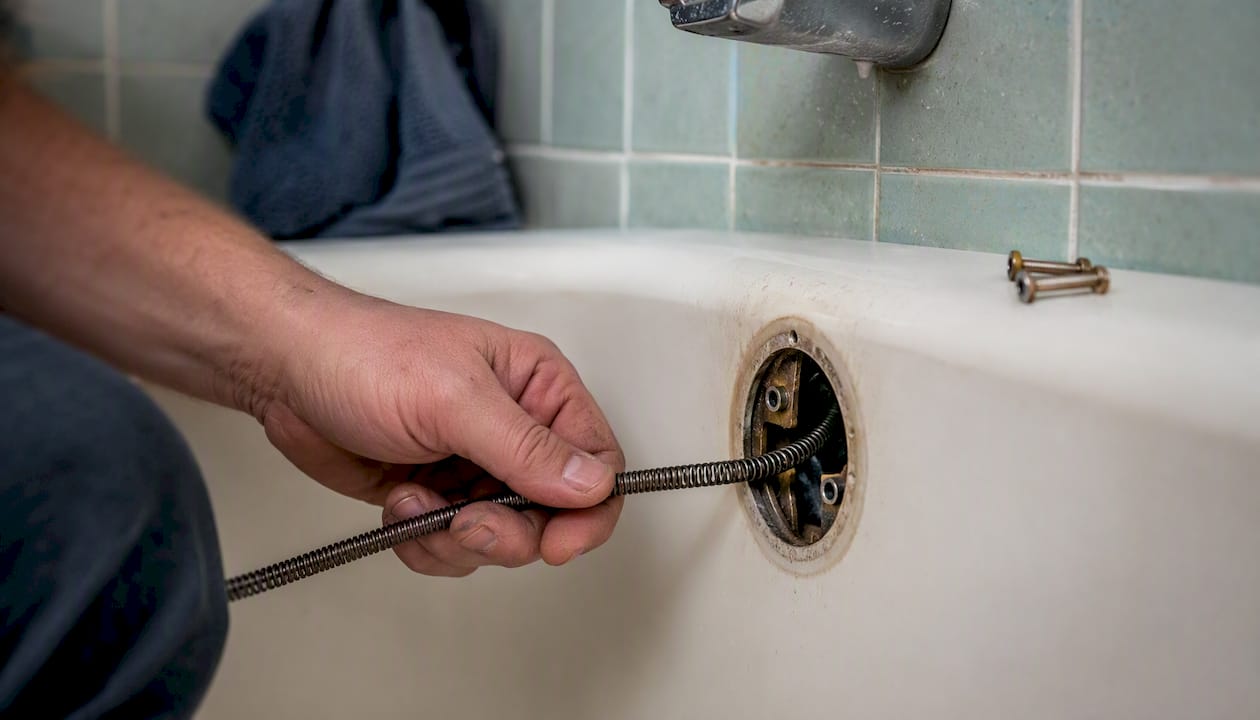
If plunging doesn’t clear it, remove the overflow plate (two screws) and feed a hand auger or 3–6 foot drain snake into the overflow opening rather than the drain itself. Routing the snake through the overflow gives you a straighter path to the P-trap and avoids forcing the tool through sharp bends at the drain bottom. Advance the snake until you feel resistance, crank the handle to break up or hook the clog, then slowly retract it. Flush with hot water to confirm the line is clear.
Step 5: Baking soda + vinegar and hot water (10–15 minutes)
This method works best as a follow-up to mechanical cleaning, not a replacement for it. Pour half a cup of baking soda into the drain, followed by half a cup of white vinegar. The fizzing reaction agitates and loosens light soap scum and organic residue, but it does not chemically dissolve hair fibers. Let it sit for 15 minutes, then flush with the hottest tap water you can run. Manufacturer guidance from Kohler recommends this approach for light buildup and odor maintenance, not as a primary fix for a compacted hair clog.
Step 6: When mechanical attempts fail
If you’ve completed Steps 1–4 and the drain is still blocked, do not pour chemical drain cleaner into standing water. That combination creates a hazardous situation and can damage your pipes. Instead, keep the overflow plate off, place a bucket under the P-trap access if you have one, and call a licensed plumber. The clog is likely deeper in the line than DIY tools can safely reach.
Troubleshooting signs to watch for
- Gurgling after plunging: air is trapped in the line — the clog may have shifted but not cleared. Try snaking.
- Foul sewer gas odor: a dry or damaged P-trap, or a venting issue. Stop DIY and call a plumber.
- Partial improvement only: the clog is partially broken up. Repeat the snake step before moving to chemicals.
Common mistakes to avoid
- Pushing the clog deeper by forcing a snake too aggressively without rotating the head
- Using a metal coat hanger, which can scratch pipe walls and rarely grabs hair effectively
- Pouring chemical cleaner into standing water — this is a safety hazard
- Skipping the overflow seal when plunging, which makes the effort nearly useless
How do you remove and clean different stopper types?
Stopper removal is where most homeowners hesitate, but each type has a straightforward removal method. Identifying yours takes about 10 seconds.
- Push-pull stopper: Grip the cap and unscrew it counterclockwise. The post underneath usually unscrews from a brass insert in the drain.
- Lift-and-turn stopper: Lift the stopper to the open position, then turn counterclockwise while lifting until it releases from the threaded post.
- Toe-touch (foot-actuated) stopper: Open it by pressing down, then unscrew the cap counterclockwise by hand.
- Pop-up stopper (rocker arm): Pull the stopper straight up. The rocker arm underneath may need a gentle wiggle to disengage from the pivot rod.
- Trip-lever stopper: This type has no visible stopper at the drain opening. The mechanism is inside the overflow tube. Remove the two screws on the overflow plate, pull the plate and the attached linkage out of the wall, and clean the plunger or rocker assembly attached to it.
Once the stopper is out, clean hair and soap scum from the stopper body, the pivot rod, and the drain crossbars. A small brush or old toothbrush works well. Before reassembling, check O-rings for cracking and apply a thin coat of plumber’s grease to pivot points so the stopper seats and seals correctly.
Pro Tip: If the stopper is heavily corroded or the threads strip when you try to remove it, don’t force it. A broken stopper assembly can drop parts into the drain or damage the drain fitting. That’s a straightforward replacement job — handyman services can handle a stopper swap quickly if you’d rather not risk it.
If you want a visual walkthrough of stopper removal and plunging technique, this Home Depot how-to video shows the physical steps clearly.
Are chemical drain cleaners safe to use in a bathtub?
The short answer is: use them rarely, and never as your first move. Chemical drain cleaners can corrode pipes, emit harmful fumes, and should be treated as a last resort — mechanical removal is safer and more effective for hair-based clogs.
How the main types work:
- Caustic (alkaline) cleaners (sodium hydroxide-based): generate heat to break down grease and organic matter. Can soften PVC and damage older metal pipes with repeated use.
- Oxidizing cleaners (bleach or peroxide-based): release gas to break down organic material. Produce fumes and can bleach tub finishes.
- Enzymatic cleaners: use bacteria to digest organic buildup slowly. Safer for pipes and finishes, but too slow for an active blockage.
The specific problem with hair clogs is that caustic and oxidizing products often can’t fully dissolve a dense, compacted hair mass. They may soften the outer layer while the core stays intact, giving you the false impression the clog cleared — until it backs up again within days.
Safety checklist if you decide to use a chemical product:
- Ventilate the bathroom fully — open windows and run the exhaust fan
- Wear rubber gloves and eye protection
- Never pour into standing water
- Never mix two different chemical products
- Follow label instructions exactly, including wait times
- Flush with plenty of cold water as directed after the wait period
Pro Tip: Enzymatic drain treatments used monthly as a maintenance step are far less risky than caustic cleaners and help prevent buildup from forming. They won’t clear an existing clog, but they’re worth keeping under the sink.
When should you stop DIY and call a plumber?
Some symptoms tell you the problem is beyond what a plunger and snake can fix. Recognizing them early saves you time and prevents accidental pipe damage.
Call a licensed plumber when you notice any of these:
- Multiple drains in the house are slow or backed up at the same time
- Water backs up in the toilet or sink when the tub drains
- Persistent gurgling from other fixtures after you’ve cleared the tub
- A strong sewer gas smell that doesn’t go away after checking the P-trap
- The clog returns within a few days of clearing it
- No improvement after completing plunging and snaking steps
- Visible cracks, corrosion, or damage around the drain fitting or overflow plate
- You’ve attempted DIY twice and the drain is still not draining
When one fixture backs up while another drains, or multiple drains are slow simultaneously, the blockage is likely in the main line or involves a venting problem — neither of which a hand auger can reach. These situations require a camera inspection, hydro jetting, or access to the main cleanout.
When you call, describe your symptoms clearly: which fixtures are affected, whether you smell gas, and what DIY steps you’ve already taken. That information helps the dispatcher send the right technician with the right equipment. For more on what distinguishes a localized drain clog from a shared-line issue, the bathroom drains slow causes and fixes guide covers the diagnostic differences well.
How do you prevent bathtub drain clogs from coming back?
Prevention is mostly about one consistent habit: keep hair out of the drain. Everything else is maintenance.
Weekly:
- Run the hottest tap water for 60 seconds after every shower or bath to flush loose soap residue down the line before it can bind to hair.
- Check the hair catcher after each use and pull out any collected hair immediately.
Monthly:
- Remove the stopper and rinse it clean under running water.
- Pour half a cup of baking soda followed by half a cup of white vinegar into the drain, let it fizz for 15 minutes, then flush with hot water. This keeps light soap scum from accumulating between deep cleanings.
- Inspect the stopper’s O-rings and pivot points for wear.
Product and behavior tips:
- Install a low-profile silicone hair catcher with fine teeth over the drain opening. Silicone is easier to clean than metal mesh and doesn’t rust.
- Brush your hair before bathing to remove loose strands before they reach the drain.
- Avoid rinsing thick hair masks, heavy conditioners, or oil treatments directly down the tub. Wipe excess product with a paper towel first.
- Limit pouring greasy or thick rinse products into the tub drain — they bind to hair and accelerate buildup.
When to upgrade hardware: If your stopper is corroded, seats poorly, or is more than 8–10 years old, replace it. A worn stopper traps hair and debris underneath it more readily than a properly seated one. Choose a finish rated for wet environments (brushed nickel or chrome) for longevity.
Simple upkeep like cleaning hair catchers and flushing with hot water regularly reduces the likelihood of major clogs forming and cuts how often you need to do a full mechanical cleaning.
Why mechanical methods beat chemicals every time
Most homeowners reach for a bottle of drain cleaner because it feels like the fastest fix. The reality is that for a hair-based tub clog, a $3 plastic Zip-It tool outperforms a $10 bottle of caustic cleaner — and it does so without the risk of pipe damage, toxic fumes, or a chemical burn if the product splashes back.
The deeper issue with chemical-first thinking is that it treats the symptom rather than removing the source. A caustic cleaner might soften the outer layer of a hair mass, but the core often stays lodged in the pipe. Pull the hair out mechanically, and the problem is actually gone. That’s why plumbers consistently recommend mechanical removal first, and why the same drain that “cleared” with chemicals backs up again within a week.
There’s also a practical safety point worth stating plainly: if you pour a chemical cleaner into a drain and it doesn’t work, you now have a tub full of caustic water that you cannot safely plunge or snake. You’ve eliminated your best options and created a hazard. Mechanical first, chemicals last — that sequence protects both you and your pipes.
When the clog is genuinely beyond DIY reach, the right call is a licensed plumber with a camera and a hydro-jet, not a stronger chemical. System Wide Services handles exactly those situations across Los Angeles and Orange County.
When System Wide Services is the right call
DIY gets most bathtub clogs cleared in under 30 minutes. But when the drain keeps coming back, multiple fixtures are affected, or you suspect a deeper line issue, the fastest path to a permanent fix is a licensed plumber with the right equipment.

System Wide Services provides residential drain cleaning and plumbing services across Los Angeles and Orange County, including Cerritos, Long Beach, Torrance, and 20+ surrounding cities. The team handles everything from manual drain clearing and P-trap access to hydro jetting and camera inspection for recurring or deep-line clogs. As a veteran and woman-owned company with a 5.0 customer rating, System Wide Services operates with upfront pricing and no upsell pressure.
If DIY hasn’t resolved the problem, schedule a residential plumbing visit and include your address, a description of which fixtures are affected, and the DIY steps you’ve already tried. That information gets the right technician to your door with the right tools on the first visit.
Sources
- How fix slow draining bathtub
- How to remove hair from bathtub drain
- How to Clean a Bath Drain Without Harsh Chemicals
FAQ
Can you pour boiling water down a bathtub drain?
Very hot tap water is safe and useful for flushing light soap scum after mechanical cleaning. True boiling water can soften PVC pipe joints with repeated use, so stick to the hottest water your tap produces rather than water straight from a kettle.
What actually dissolves hair in a drain?
No common household product reliably dissolves a compacted hair mass. Caustic drain cleaners can soften hair partially, but mechanical removal with a plastic hair tool or drain snake is faster, safer, and more thorough for a hair clog bathtub situation.
Can you use Drano in a tub with standing water?
No. Pouring any chemical drain cleaner into standing water is a safety hazard — it can splash caustic liquid onto your skin or eyes and eliminates the option to plunge or snake safely. Remove standing water first, and consider mechanical methods before reaching for any chemical product.
What do plumbers recommend instead of Drano?
Licensed plumbers consistently recommend mechanical removal first: a plastic hair tool, plunging with a sealed overflow, and a hand auger or snake. For persistent or recurring clogs, professional hydro jetting clears the full pipe diameter without the corrosion risk that chemical cleaners carry.
Recommended
Need a hand with this? We've got you covered.
System Wide Services handles plumbing, electrical, and handyman work across Long Beach and LA & Orange County.