
One Visit, Not Three: Pass California Title 24 Lighting Inspections
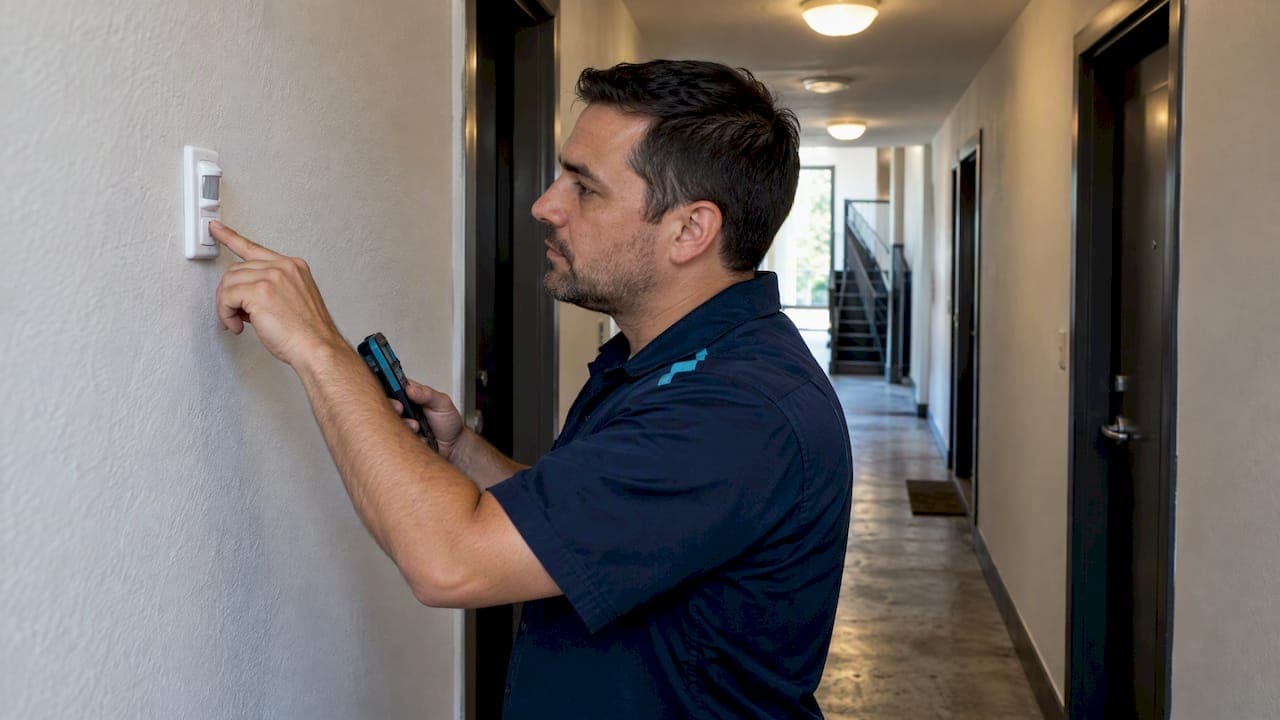
California Energy Commission Title 24, Part 6 sets two very different compliance tracks for lighting: residential projects need high-efficacy JA8-certified sources in most fixtures, while nonresidential and multifamily common areas need occupancy and daylighting controls, lighting power density limits, and formal acceptance testing. Getting the wrong track means failed inspections, rework, and delayed permits. This guide breaks down both paths so you know exactly what applies to your project before you order fixtures or call for inspection.
TL;DR:
- Property classification determines whether residential JA8-certified fixtures or nonresidential controls and zone layouts apply to the project.
- Installing the correct JA8-2025-E fixtures in enclosed recessed cans is essential to prevent early failures and inspection delays.
- Proper documentation, including fixture specs, LPD calculations, and wiring diagrams, is critical for plan approval and inspection success.
- Pre-testing sensors and controls before inspection helps avoid zone wiring errors that cause final inspection failures.
- Bringing in licensed electricians early and ensuring comprehensive documentation can reduce rework and speed up project approval.
Table of Contents
- Which projects fall under Title 24 lighting rules
- Residential compliance: JA8 fixtures and room-specific rules
- Nonresidential and multifamily common areas: controls, zoning, and daylighting
- Outdoor lighting and signage: controls, curfews, and exceptions
- Plan check and acceptance testing: documents and inspection steps
- What California job sites teach about lighting compliance mistakes
- Getting your lighting project inspection-ready with System Wide Services
- Sources
- FAQ
Which projects fall under Title 24 lighting rules
Title 24 splits coverage into two buckets: residential (single-family homes and dwelling units in multifamily buildings) and nonresidential (offices, retail, common areas in apartment or condo buildings, and mixed-use projects). Most home remodels and new builds follow prescriptive rules, meaning you install what the code specifies, fixture by fixture. Larger commercial buildings sometimes use performance compliance instead, running energy models to trade flexibility in one area for stricter requirements elsewhere. That path usually needs a title 24 consultant or energy analyst, so most residential contractors stick with prescriptive compliance.
Before ordering materials, classify your project with a quick checklist:
- Is the space a dwelling unit (house, condo, apartment) or a common area (lobby, hallway, parking structure)?
- Does the project scope include new construction, an addition, or an alteration to existing lighting circuits?
- Will the space use prescriptive compliance or does it require performance modeling?
Residential compliance: JA8 fixtures and room-specific rules
For homes and individual dwelling units, Title 24 residential lighting compliance centers on JA8 high-efficacy certification. Nearly every permanently installed fixture in a home, including recessed cans, undercabinet lighting, and bathroom vanity fixtures, needs to use a JA8-listed light source. CLTC’s residential lighting guide walks through which fixture types trigger the requirement and how installers verify compliant products before rough-in.
One detail trips up even experienced electricians: enclosed or recessed fixtures need the JA8-2025-E variant, which reflects elevated-temperature testing appropriate for tighter, hotter enclosures. Installing a standard JA8 fixture in a fully enclosed recessed can is a common field mistake, and it can shorten the life of the light source well before it should fail.
Beyond fixture selection, several control rules typically apply during remodels:
- Bathrooms, garages, laundry rooms, and utility rooms need vacancy sensor controls (manual-on, auto-off) rather than simple switches.
- Kitchens and other high-use rooms often require at least one high-efficacy fixture as the primary light source.
- Dimmers or other manual controls are required in habitable rooms unless a vacancy sensor already governs the space.
Pro Tip: Keep JA8 listing documentation and product cut sheets with your plans on site. Inspectors frequently ask for proof at rough-in and final, and having it ready avoids a callback visit.
Nonresidential and multifamily common areas: controls, zoning, and daylighting
Once you move into offices, retail spaces, or the shared hallways and lobbies of multifamily buildings, the compliance conversation shifts from fixture certification to control strategy. CLTC’s nonresidential lighting guide covers the control zoning, daylighting, and power density considerations that typically drive compliance in these spaces.
Occupancy and vacancy sensors are mandatory in most enclosed nonresidential spaces, and control zones are capped in size so that a single sensor or switch doesn’t govern an oversized area. Recent code cycles have tightened zone-sizing guidance for open office areas, so it’s worth confirming current zone limits with the Energy Commission before finalizing a control layout.

Daylight harvesting adds another layer. Spaces with enough usable daylight through skylights or windows need photocontrols that dim or switch off electric lighting when natural light is sufficient. CLTC’s daylight harvesting guide covers sensor placement and calibration, which matters because poorly placed photosensors cause lights to cycle erratically and frustrate occupants.
Lighting power density, the allowed watts per square foot for a space type, sets the ceiling on total lighting load and shapes fixture selection from the start. Many nonresidential and multifamily common-area systems also need automatic demand-response capability, letting the lighting system reduce output during a utility signal. Plan check reviewers look for all of this together:
- LPD calculations showing the space stays under its allowed watts per square foot.
- Control zone diagrams showing sensor coverage and zone boundaries.
- Documentation confirming demand-response wiring or receiver readiness where required.
Outdoor lighting and signage: controls, curfews, and exceptions
Exterior lighting has its own control requirements. Most outdoor fixtures need automatic shutoff during part of the night, commonly called a curfew or part-night control, with exceptions carved out for pathway safety lighting, security lighting tied to motion sensors, and lighting serving spaces that operate around the clock. Illuminated signs follow a separate set of control rules, typically requiring automatic scheduling rather than manual switches, and documentation at plan check should show the control type and schedule logic for each sign circuit.
A few practical moves help meet illuminance needs without overusing energy:
- Pair motion sensors with lower-wattage baseline lighting so pathways stay lit without full output all night.
- Use photocontrols to prevent exterior fixtures from running during daylight hours.
- Confirm with your local jurisdiction whether stricter curfew hours apply beyond the state minimum.
For a broader look at practical exterior lighting layout, our outdoor and landscape lighting team also uses homeowner-focused planning checklists as a starting point for design conversations.
Plan check and acceptance testing: documents and inspection steps
A smooth plan check depends on what you submit up front. Missing paperwork is the single most common reason lighting plans bounce back for corrections.
- Submit fixture spec sheets and JA8 listing proof for every high-efficacy fixture in the project.
- Include LPD calculations for nonresidential and multifamily common-area spaces.
- Attach control wiring diagrams showing sensor zones, daylighting circuits, and demand-response connections.
- Schedule acceptance testing (ATT) for any nonresidential or multifamily common-area control system before final inspection.
- Confirm your Acceptance Test Technician is ATTCP-certified and bring completed, signed ATT forms to the final walk-through.
Acceptance testing verifies that installed controls actually function as designed, and skipping it is a frequent cause of failed final inspections on commercial and multifamily jobs.
Pro Tip: Pre-test occupancy sensors and daylight controls yourself before the ATT appointment. Fixing a miswired zone on your own schedule beats fixing it in front of an inspector.
What California job sites teach about lighting compliance mistakes
The most expensive mistakes happen before rough-in, not during inspection. Specifying a standard JA8 fixture for an enclosed can instead of the JA8-E variant leads to early failures that show up months after the final walk-through, long after the contractor has moved on. Sequencing matters too: install fixtures, label control wiring at the junction box, pre-commission sensors, then schedule ATT. Skipping the pre-commissioning step is how zone wiring errors turn into failed acceptance tests. When a project’s control scope grows beyond simple vacancy sensors, bringing in a licensed electrical contractor early, and asking for wiring diagrams and JA8 documentation up front, saves a second trip to the panel.
— Van Castaneda
Getting your lighting project inspection-ready with System Wide Services
Meeting Title 24 lighting requirements means getting the fixture selection, control wiring, and documentation right the first time, and having a licensed in-house team can make the difference between one visit and three. A qualified local service provider can handle the full scope on residential and small commercial lighting projects in Los Angeles and Orange County.
Our electricians install JA8-compliant indoor fixtures, wire and commission occupancy and daylighting controls, and coordinate outdoor lighting layouts built around part-night curfew rules. We also handle the electrical inspection and panel work that often comes up alongside a lighting upgrade, all under one licensed team instead of separate contractors for each trade.
- Indoor and outdoor lighting installation sized to your fixture and control requirements.
- Electrical inspection and documentation support for plan check submissions.
- Panel upgrades and rewiring when older circuits can’t support new control systems.
If you’re planning a remodel or new lighting layout, check our indoor lighting installation page or explore the full electrical services lineup to get a quote for your project.
FAQ
What are the exemptions for Title 24 lighting?
Certain low-wattage decorative fixtures, some emergency and exit lighting, and specific historic building alterations can qualify for exemptions, though the exact scope depends on fixture type and project category. Always confirm exemption eligibility with your local building department before assuming a fixture is exempt, since misclassifying an exempt fixture is a common plan check correction.
What are the electrical requirements for Title 24 in California?
Title 24 electrical requirements cover lighting power density limits, mandatory occupancy and daylighting controls for nonresidential spaces, and high-efficacy JA8 fixtures for residential dwelling units. Electrical panel capacity and circuit design also need to support any new control wiring, which is why a panel upgrade sometimes accompanies a lighting retrofit.
What are the Title 24 window requirements for 2026 in California?
Window requirements under Title 24 fall under the building envelope sections of the code rather than the lighting sections, covering factors like U-factor and solar heat gain coefficient. Because these standards are updated on their own cycle, check current Energy Commission publications directly rather than relying on older summaries for the exact figures.
What are the requirements for lighting?
Residential lighting requires high-efficacy JA8-certified fixtures in most permanently installed locations, along with vacancy sensors in bathrooms and garages. Nonresidential and multifamily common areas require occupancy and daylighting controls, lighting power density compliance, and acceptance testing to verify the controls work as designed.
Is acceptance testing always required for lighting controls?
Acceptance testing is required for most nonresidential and multifamily common-area lighting control systems, but it typically isn’t required for standard residential dwelling unit lighting. Skipping required acceptance testing is one of the most common reasons final inspections get delayed.
Recommended
Need a hand with this? We've got you covered.
System Wide Services handles plumbing, electrical, and handyman work across Long Beach and LA & Orange County.