
Avoid Escrow Delays: R314 Smoke Alarm Rules for LA, Orange County
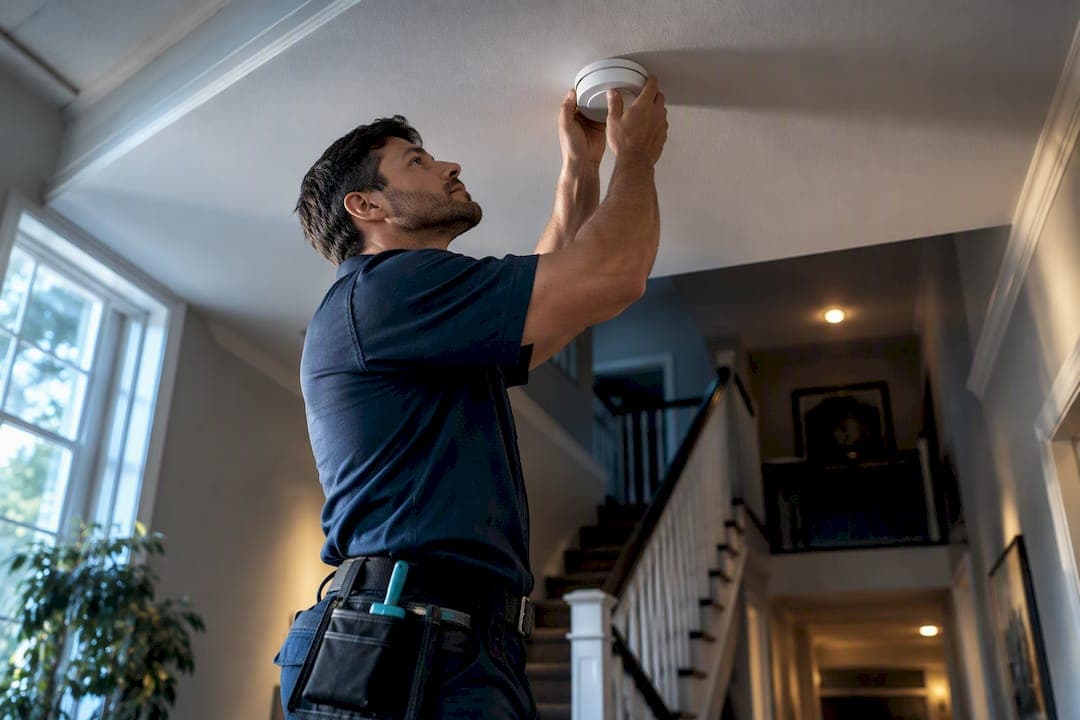
Under California code, smoke alarms installed for new construction or during permitted work must be powered by the building wiring with battery backup and be interconnected. Limited exceptions allow battery-only units in many existing, non-permitted situations, including homes without commercial power or certain older wiring setups. Whether the rule applies to your property depends mostly on whether you have pulled a permit for work that opens a wall or ceiling.
TL;DR:
- New construction and permitted renovations require hardwired, interconnected smoke alarms with battery backup; battery-only units are permitted in certain unpermitted or older wiring cases.
- Alarms must be placed inside every bedroom, outside sleeping areas, and on all stories, including basements and attics, with ceiling mounting preferred over wall placement.
- Major work opening walls or ceilings automatically triggers a requirement for a licensed electrician to install compliant wiring and interconnection; existing homes with no permit work can retain battery-only alarms.
- Alarms must carry an OSFM listing, and combination smoke and carbon monoxide alarms are allowed if properly listed for both functions; sealed 10-year battery models are the standard for replacements.
- All work involving wiring or adding alarms should be performed by licensed electricians, with permit and documentation requirements emphasized for compliance and inspection readiness.
Table of Contents
- California code: power source and interconnection rules under R314
- How many alarms you need and where to put them
- What actually triggers a hardwired, interconnected upgrade
- What makes a smoke alarm legal to install here
- Permits, inspections, and hiring the right electrician
- A quick compliance checklist you can run this weekend
- How System Wide Services approaches code-compliant alarm installs
- Get your home’s alarms inspected and brought up to code
- Sources
- FAQ
California code: power source and interconnection rules under R314
California’s residential code, based on the ICC’s R314 provisions, sets two separate requirements that often get confused: how the alarm gets its power, and how multiple alarms talk to each other.
On power, alarms in new construction or permitted alterations must draw their primary power from the building’s wiring, with a battery backup for outages. The wiring has to be permanent, and the circuit cannot include a disconnecting switch other than the breaker used for overcurrent protection, according to industry-standard R314 code text. That detail matters because it stops anyone from wiring an alarm to a switched outlet that could get turned off by accident.
On interconnection, when a dwelling requires more than one smoke alarm, activating one must trigger all of them. Physical wiring between units is not required if you use listed wireless alarms that are approved to interconnect wirelessly, an allowance confirmed in Berkeley’s guidance on R314. NFPA 72 standards inform how these systems are expected to perform, and the State Fire Marshal’s office is the body that decides which specific products meet California’s bar.

How many alarms you need and where to put them
California’s location rules are straightforward once you break them down by area. You need a smoke alarm inside every sleeping room, one just outside each sleeping area, and at least one on every story of the home, including basements and any habitable attic space, a requirement summarized in Santa Cruz County’s guidance page.
Mounting matters too. Ceiling placement is generally preferred over wall mounting, and alarms should sit away from kitchen appliances and bathroom doors to reduce false alarms from cooking steam or shower humidity. A little distance from supply vents also helps, since a steady draft can delay smoke from reaching the sensor.

If you are getting nuisance alarms from cooking, moving the unit farther from the stove or switching to a photoelectric sensor near the kitchen usually solves it without compromising coverage elsewhere in the home.
What actually triggers a hardwired, interconnected upgrade
Not every California home needs hardwired alarms today. The trigger is permitted work, not the calendar. New construction always requires hardwired, interconnected alarms in every required location. So does any permitted alteration, repair, or addition, especially one that opens up wall or ceiling finishes where an electrician can run wire.
Several exceptions let existing dwellings keep battery-only alarms:
- No permit work has been done or is planned on the home.
- The building has no commercial power source available.
- The home relies on knob-and-tube wiring in areas without accessible attic or crawl space, according to Berkeley’s practical R314 interpretation.
- Limited exterior repairs that never open interior finishes typically fall outside the trigger.
In practice, inspectors tend to treat any opened wall or ceiling as a reason to bring the whole home’s alarms up to current code rather than leaving older battery units in place. If your remodel adds a bedroom or touches ceiling drywall near a hallway, plan for hardwiring from the start. If you are rewiring an older home with knob-and-tube wiring, that project is a natural point to upgrade your alarms at the same time.
What makes a smoke alarm legal to install here
Buying a smoke alarm with a UL label is not the whole story in California. The Office of the State Fire Marshal keeps its own listing and approval process, and that OSFM listing is what local jurisdictions actually check during inspection, per the OSFM’s Fire Engineering and Investigations division. A UL217 or UL2034 label is necessary, but it does not automatically mean an inspector will accept the product.
Combination smoke and carbon monoxide alarms are allowed as long as they carry the proper listing for both functions. If you are replacing an older alarm, look for a sealed, non-removable 10-year battery on the unit itself, which has become the standard for newer alarms sold for California homes and eliminates the yearly battery swap.
Permits, inspections, and hiring the right electrician
Getting this right starts with knowing when a permit is actually required. Any project that adds living space, moves walls, or touches your electrical panel usually needs one, and pulling that permit is what brings your whole alarm system under current code rather than letting old hardware stay grandfathered in.
Hardwiring or interconnecting alarms means running new circuits, which is electrical work that should go to a licensed electrician, particularly in older homes where knob-and-tube wiring or limited panel capacity complicates the job. Before hiring anyone, ask a few direct questions:
- Are you licensed and insured to perform residential electrical work in this county?
- Will you pull the permit, or is that my responsibility?
- Does the quote include interconnecting all required alarm locations, not just adding one unit?
Pro Tip: Keep your permit sign-off, the electrician’s invoice, and the OSFM listing label from the alarm packaging together in one folder. Landlords and sellers get asked for exactly this documentation during escrow or tenant turnover.
A quick compliance checklist you can run this weekend
- Audit your current alarms: check each one’s power source, its OSFM listing, and whether it sits in every required location.
- If you have work planned that opens walls or ceilings: budget for hardwired, interconnected alarms, pull the permit, and schedule a licensed electrician.
- If no work is planned: replace aging units with OSFM-listed, sealed-battery alarms and save the receipts and labels for your records.
How System Wide Services approaches code-compliant alarm installs
Across Los Angeles and Orange County, we see the same pattern: a kitchen remodel or panel upgrade turns into the moment a homeowner finally converts scattered battery alarms into one hardwired, interconnected system. Licensed electricians handle the wiring, the permit, and the documentation so nothing gets missed at inspection or later at escrow.
— Van Castaneda
Get your home’s alarms inspected and brought up to code
If you are planning a remodel, adding a bedroom, or just replacing aging alarms, A qualified company can confirm what your home actually needs before you buy anything, and licensed electricians can handle the inspection, permit paperwork, and hardwiring in one visit, so you are not coordinating between separate contractors for a straightforward job.

Before you call, have three things ready: your home’s approximate age, whether the planned work will open any walls or ceilings, and what kind of alarms you currently have installed. From there we can quote the electrical inspection or the panel and wiring work needed to bring your alarms current. Get in touch with our electrical services team to schedule a visit.
- Electrical inspection to confirm current alarm compliance.
- Hardwired, interconnected alarm installation during any permitted remodel.
- Permit handling and documentation for landlords and sellers.
Sources
- Smoke alarm requirements in single-family dwellings (Berkeley guidance PDF)
- Smoke & Carbon Monoxide Alarms — Santa Cruz County guidance (county FAQ page)
- OSFM Fire Engineering and Investigations (State Fire Marshal site)
FAQ
How many smoke detectors do I need in a 3-bedroom house?
A 3-bedroom house typically needs one alarm inside each bedroom, one in the hallway outside the sleeping area, and one on every additional story, including a basement or habitable attic. That usually works out to five or more alarms depending on the home’s layout, per the location requirements county guidance summarizes.
What are the California code requirements for smoke detectors?
California requires smoke alarms in every sleeping room, outside sleeping areas, and on each story of the home. New construction and permitted alterations must use hardwired, interconnected, OSFM-listed alarms with battery backup, while many existing homes without permitted work can keep battery-only units.
Do I need an electrician to replace hardwired smoke detectors?
Replacing a hardwired alarm with an identical listed model on the existing wiring is often manageable for a confident homeowner, but any work that adds wiring, interconnects new locations, or touches the panel should go to a licensed electrician. That is especially true in older homes with knob-and-tube wiring or limited panel capacity.
Does California require 10-year smoke detectors?
California does not mandate a specific battery duration by name, but current alarms sold with sealed, non-removable batteries generally carry a 10-year life span and have become the practical standard for replacements. Choosing an OSFM-listed alarm with this feature satisfies both the battery backup and low-battery signal expectations under the code.
Recommended
Need a hand with this? We've got you covered.
System Wide Services handles plumbing, electrical, and handyman work across Long Beach and LA & Orange County.